
SpaceX Starship's 15th Test Flight to Challenge Two-Stage Capture, Aiming for Humanity's First Fully Reusable Orbital Rocket

 Prefer us on Google



Imagine this: every time you fly to a destination, the airline has to throw away the plane and replace it with a new one. Or your car can only make one trip before it’s scrapped.
SpaceX CEO Elon Musk told the audience at the 2025 X Takeover event that rocket launches used to work like this.
"If every time you drove to a place, you had to throw away the car when you were done, you would definitely think: this car is ridiculous, it’s thrown away after one use. But that’s how rockets used to operate," Musk said to the audience.
However, that’s a thing of the past. Companies like Blue Origin, SpaceX, and an increasing number of emerging rocket firms are developing reusable space launch systems, which could fundamentally change the cost structure and sustainability of space missions.
Casey Dreier, director of space policy at the Planetary Society, said in an interview: "Relatively speaking, the cheap part of a launch is actually the fuel. So achieving reusability, especially rapid reusability with minimal maintenance, can significantly reduce the cost of launching into orbit while increasing the total payload delivered to space, which is also the direction SpaceX has been pushing for."
SpaceX's Starship is expected to become the first fully reusable rocket and spacecraft in human history. But to achieve this goal, SpaceX must prove that both stages of this largest and most powerful rocket in the world can return to the launch site and be captured by the massive mechanical "chopsticks" of the launch tower.
Dreier said: "This is a giant rocket, successfully capturing it is a major validation and a key step towards achieving reusability and rapid reusability. In a sense, this is the foundation for all its subsequent plans. They need to be ready for relaunch within days, preferably within a day, and to do that, they must achieve rocket capture recovery."
If weather and rocket conditions permit, SpaceX plans to conduct the 15th test flight of Starship at 5:45 PM Eastern Time on Friday at the Starbase in Cameron County, Texas, attempting to achieve this milestone for the first time. The launch window lasts 75 minutes, and if it exceeds that time, the launch will be canceled.
"You build an extremely complex and expensive piece of equipment, and when it’s used, you throw it away. So why not find a way to reuse it and launch it multiple times?" said Austin Spiegel, a former SpaceX engineer and now CEO of Sift, a company that provides testing data collection and analysis services for rocket manufacturers.
Musk often says a famous quote: "Rockets are hard." Spiegel noted that Musk has another saying to explain why achieving rocket reusability is even more challenging.
"It’s like trying to make a toothpick land steadily in a hurricane," Spiegel said.
The mission flow for this test flight is largely consistent with previous Starship test flights. The 407-foot tall Super Heavy booster and Starship spacecraft will lift off from the launch pad, and about six minutes later, the first stage booster will return to the launch site, where the mechanical arm of the launch tower will attempt to capture it. SpaceX has previously completed three captures with earlier versions of the booster, but this will be the first capture attempt with the latest version.
After that, Starship will release 26 V3 Starlink satellites to expand the capacity of SpaceX's orbital communication network.
The entire flight will last over 22 hours, with Starship orbiting the Earth approximately 14 times, and SpaceX will monitor the rocket's status throughout. The company stated that this flight profile allows for multiple opportunities to abort if a failure occurs, enabling an early deorbit over the ocean.
If everything goes smoothly and the rocket's condition is normal, the main event will take place around 4:15 PM Eastern Time on Saturday: after completing the deorbit burn, Starship will return to the launch pad, and SpaceX will attempt for the first time to capture the upper stage of Starship using the launch tower's mechanical "chopsticks." If both stages are successfully captured, Starship will become the first fully recovered orbital-class rocket in history.
However, even if the 15th test flight is successful, it does not mean that space launches will become as routine as commercial airline flights.
Dreier believes that the biggest bottleneck for Starship to achieve rapid reusability is the thermal protection system, which prevents the spacecraft from being burned up upon re-entry into the atmosphere.
"A vehicle of this size returning to Earth needs to dissipate a massive amount of heat. The spacecraft is covered in heat tiles, and we need to be able to quickly check for cracks in the tiles and repair them quickly, rather than spending months inspecting each one to make it ready for another launch."
Musk also acknowledged that developing a thermal protection system that supports rapid reusability is a significant engineering challenge that has never been accomplished before.
Dreier said: "My view is, don’t underestimate SpaceX, especially with these kinds of engineering challenges. If any company can do it, it’s them."
-- Price
This content is provided for general informational purposes only and doesn't constitute financial, investment, legal, or tax advice. Any events, rewards, online promotions, or related information mentioned herein should not be considered a recommendation, solicitation, or invitation to purchase, sell, trade, or otherwise deal in any crypto assets. Crypto assets are highly volatile and may result in loss. The availability of WEEX services, products, and related events may vary by region. You are responsible for ensuring that your participation is in accordance with applicable local laws and regulations.
You may also like

Helius encrypts Solana transfers without removing operator trust
Apple's Market Cap Grew From $347 Billion to $4.6 Trillion During Tim Cook's 15 Years as CEO. Here's What That Growth Curve Means for Apple's Next Chapter Under John Ternus.

Rumble (RUM) Sells Two-Thirds Of Its Bitcoin As AI Business Grows

Apple Becomes a Safe Haven Amid AI Sell-off, Bernstein: 37x P/E Still Not Expensive

Deutsche Bank Introduces Custody Services for Five Cryptocurrencies

Net Short Positions of Leveraged Funds Drop to 12,955 BTC, Down 89% from Peak

Intuitive Machines Q3 Revenue Reaches $269.3 Million, Raises Full-Year Guidance to $920 Million to $950 Million
The Hidden Costs of Sandwich Attacks: How Much Retail Investors Overpay for 'Free Trading'?
From Coinbase to Wall Street: Digital Asset Custody Enters a New Phase of Institutionalization

The Next Battle in Crypto Security: How to Rebuild the Authorization System Beyond Smart Contracts?
Greg Abel Has Plowed $14.4 Billion Into Warren Buffett's Favorite Stock This Year, and It's Not Apple
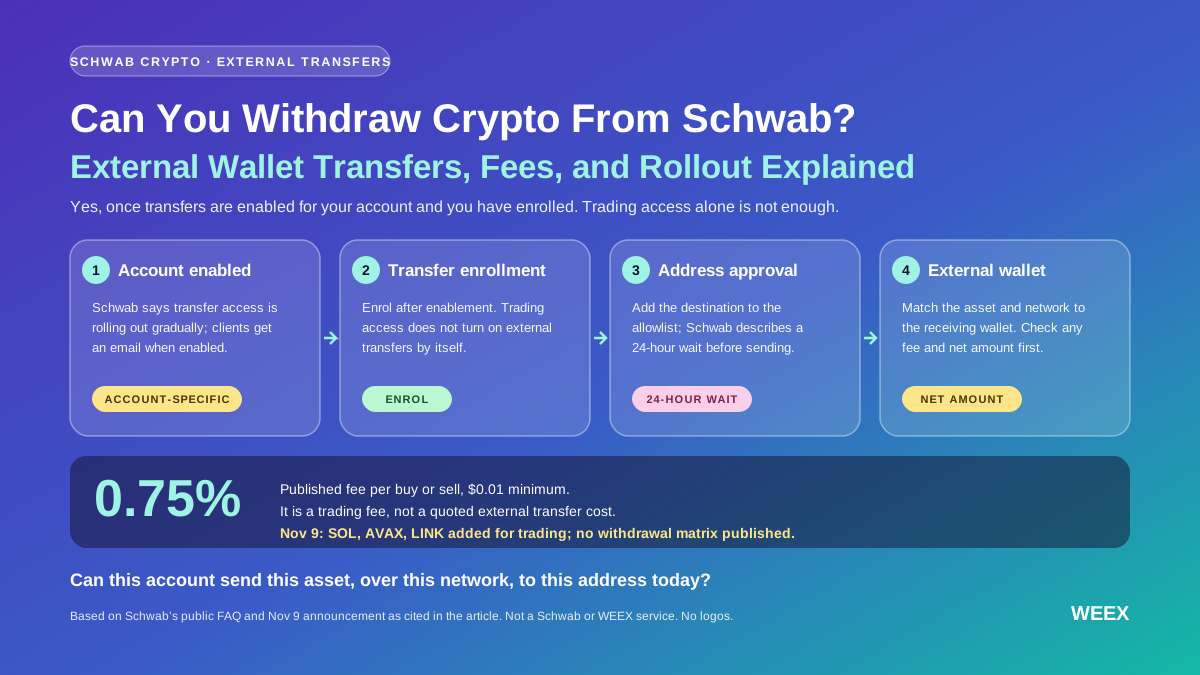
Can You Withdraw Crypto From Schwab? External Wallet Transfers, Fees, and Rollout Explained
Find out when Schwab Crypto allows external wallet withdrawals, how the 24-hour address wait works, and why the 0.75% trading fee is separate.

BAE Systems Raises Full-Year Free Cash Flow Guidance to £3 Billion

Zhang Yiming's Latest Statement: ByteDance Has the Capability to Compete with Anthropic and OpenAI, but Catching Up to the Cutting Edge Will Not Happen Until 2029 at the Earliest

End-of-2026 Review: Politics, AI, and the Federal Reserve - The Market is Experiencing a "Risk Repricing"
Saxo Bank: Uncertainty Surrounding Nvidia Provides Opportunities for Competitors

BitMine posts $2.8B quarterly profit driven by Ethereum gains, but yearly net loss surpasses $6B
How Should Institutions Manage Exchange Exposure After a Series of Thefts?
Bull Market Gains, Bear Market Losses: How to Calculate Taxes on Cryptocurrency Investments?
Bitcoin whales stack coins while ETF investors dump millions daily

PNC lets businesses accept USDC without keeping the crypto
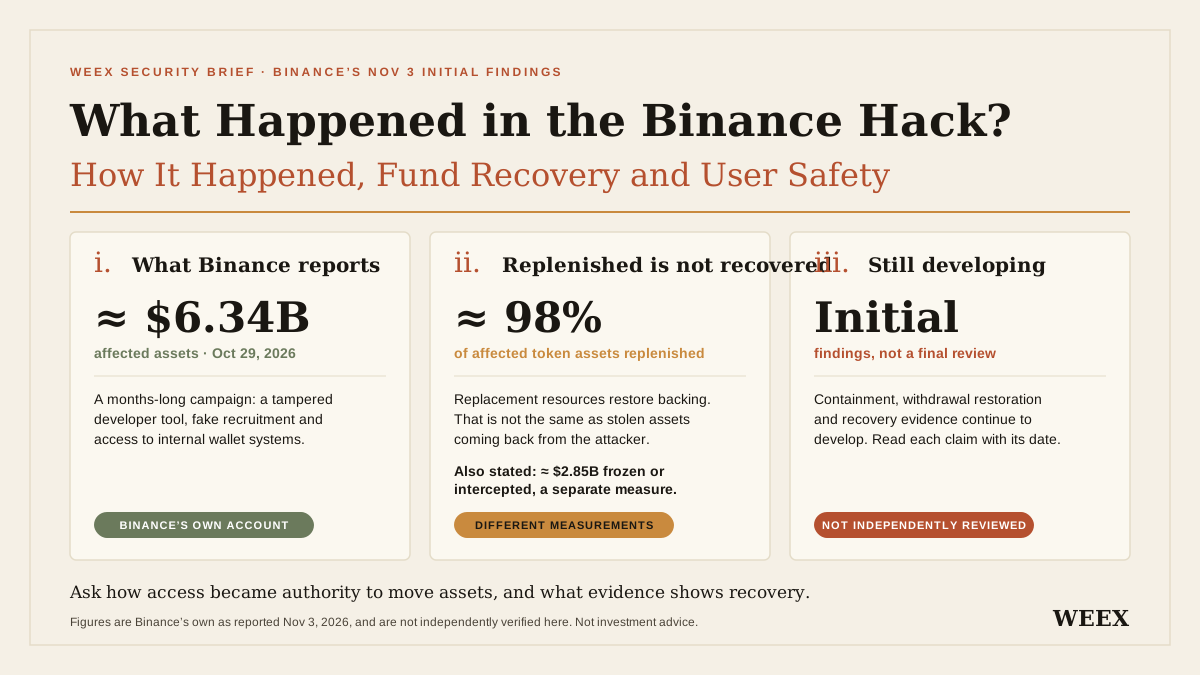
What Happened in the Binance Hack? How It Happened, Fund Recovery and User Safety
What happened in the Binance hack? Review the attack timeline, latest fund replenishment, recovery limits and practical steps to protect your account.

CPI Higher Than Expected in the U.S.: What It Means for Investors

AI Agents Do More Than Just Place Orders: The Next Entrepreneurial Opportunity Lies in Matching and Trust
Chainalysis: The Shadow Market Behind China's AI Model "Distillation Tide" Bypassing U.S. Export Controls
How Much Revenue Can Anthropic Generate for Every $1 Spent on Computing Power?

SharpLink, an Ethereum Reserve Company, Reports Q3 Earnings: Net Profit Reaches $751.4 Million, Up 6.2 Times Year-on-Year
ETH Burn Rate Fails to Keep Up with Issuance, Is Vitalik Starting to Discuss Value Storage?

Brian Hong Joins fomo to Lead APAC Region

a16z Frontier Partner: Agents Should Rebuild Uber-like Transaction Networks
Helius encrypts Solana transfers without removing operator trust
Apple's Market Cap Grew From $347 Billion to $4.6 Trillion During Tim Cook's 15 Years as CEO. Here's What That Growth Curve Means for Apple's Next Chapter Under John Ternus.
Rumble (RUM) Sells Two-Thirds Of Its Bitcoin As AI Business Grows
Apple Becomes a Safe Haven Amid AI Sell-off, Bernstein: 37x P/E Still Not Expensive
Deutsche Bank Introduces Custody Services for Five Cryptocurrencies
Net Short Positions of Leveraged Funds Drop to 12,955 BTC, Down 89% from Peak
Latest articles


Latest coin listings on WEEX


