
PNC lets businesses accept USDC without keeping the crypto

 Prefer us on Google



PNC's incoming stablecoin pilot gives businesses a way to accept USDC without keeping their receipts in crypto. Under the limited program announced Nov. 9, eligible Corporate & Institutional Banking clients receive USDC on Ethereum, with payments automatically converted 1-to-1 into dollars and deposited into a designated PNC account.
The payment travels over stablecoin infrastructure, but the receiving customer's balance ends up at the bank. That design keeps the deposit account in the payment relationship, even as the way of paying changes.
Coinbase supplies the underlying payment infrastructure through its Payment APIs, while PNC provides banking and treasury-management services.
The offering is a route for incoming USDC to become dollars in a banking relationship. It does not announce a PNC-issued stablecoin or put customer deposits on a blockchain.
Stablecoin in. Bank deposit out.
Announced Nov. 9, 2026: PNC's limited pilot converts eligible corporate and institutional clients' incoming USDC into dollar deposits.
PNC stablecoin payments and deposits Announced pilot route: USDC on Ethereum, automatic 1-to-1 dollar conversion, designated PNC client deposit account. THE ANNOUNCED CUSTOMER ROUTE USDC on Ethereum 1:1 Automatic conversion USDC into U.S. dollars PNC ACCOUNT Dollar deposit Designated client account Incoming payment
PNC stablecoin payments and deposits Vertical announced route from Ethereum USDC through automatic 1:1 dollar conversion into the client's designated PNC deposit account. USDC on Ethereum 1:1 Automatic dollar conversion DESIGNATED PNC ACCOUNT Dollar deposit Eligible corporate / institutional client
What the deposit endpoint cannot establish
What the deposit endpoint cannot establishUSDC supplyBank funding
Dollar conversion alone does not reveal whether tokens are redeemed or transferred. The announcements do not identify either mechanism.
PNC stablecoin payments and deposits Undisclosed conversion mechanism. Redemption with the issuer and transfer to another holder are possibilities, not identified PNC routes. USDC ? Issuer redemption One possible mechanism Transfer to another holder Tokens can remain in inventory Incoming tokens Mechanism undisclosed
PNC stablecoin payments and deposits The announcements do not identify which conversion mechanism is used. Issuer redemption and transfer of token inventory are alternatives, not established PNC operations. What happens to the USDC? ? Issuer redemption Transfer to another holder Possible mechanisms; neither is identified for this pilot.
The disclosed PNC deposit endpoint is one part of the picture. Changes in payer and conversion balances, issuer bank deposits and reserve allocation determine the wider effect.
PNC stablecoin payments and deposits The disclosed PNC customer deposit endpoint and undisclosed offsetting balances are needed to assess total bank funding; no net amount is measured. DISCLOSED DESTINATION PNC customer deposit Trace changes elsewhere Changes in other balances Payer / conversion balances Issuer deposits / reserve allocation ? Net bank funding No net funding effect disclosed
PNC stablecoin payments and deposits A customer's PNC deposit is one part of the wider balance sheet. Other balances are undisclosed and the net banking-system effect is unmeasured. DISCLOSED DESTINATION PNC customer deposit Trace changes elsewhere Changes in other balances Payer / conversion balances Issuer deposits / reserve allocation ? Net bank funding Unmeasured
The customer's settlement destination is disclosed. Token supply and banking-system funding effects are separate questions.
Limited eligible-client pilot. Conversion counterparty, redemption versus inventory route, timing, fees, usage and measured deposit effects are undisclosed. Dashed paths illustrate unknown mechanisms or information needed for analysis, not verified PNC fund flows. Fed material is staff analysis, not PNC outcome data.
Sources and evidence
Sources
- PNC pilot announcement, Nov. 9
- Coinbase implementation announcement, Nov. 9
- Fed staff bank-adaptation analysis, May 1
- Fed staff cross-border model, March 30
Supporting facts
- PNC announced on November 9, 2026 that it was initially offering incoming USDC payments on a limited basis to eligible Corporate & Institutional Banking clients through a pilot. [1]
- PNC says the pilot accepts USDC payments on Ethereum, automatically converts receipts 1-to-1 into U.S. dollars, and deposits them into a designated PNC deposit account. [1] [2]
- Coinbase says its Payment APIs provide the pilot's underlying stablecoin payment infrastructure, while PNC supplies banking services and treasury-management capabilities. [2]
- The disclosed PNC payment route ends with a customer dollar deposit rather than a continuing customer USDC balance, so accepting a stablecoin payment does not require this recipient to retain stablecoins. [1] [2]
- The two pilot announcements do not disclose whether automatic conversion redeems USDC with its issuer or transfers existing tokens to another holder, and do not establish that the process burns tokens or reduces USDC supply. [1] [2]
- A credit to a PNC customer's deposit account alone cannot establish net new banking-system funding, because the overall effect also depends on how the payer obtained USDC, who supplies the conversion dollars and where issuer reserves and other parties' balances end up. [1] [3] [4]
Method
Qualitative route diagram from the November 9 provider announcements. Arrows in the main view show the announced customer sequence, not timing or volume. Selectable views distinguish unresolved token disposition from systemwide funding analysis. No calculations or quantitative charts.
Scope
Limited eligible-client pilot. Conversion counterparty, redemption versus inventory route, timing, fees, usage and measured deposit effects are undisclosed. Dashed paths illustrate unknown mechanisms or information needed for analysis, not verified PNC fund flows. Fed material is staff analysis, not PNC outcome data.
Infographic by CryptoSlate
CryptoSlate's September coverage of the Coinbase and Moov banking partnership left institution-specific fiat settlement routes unresolved. PNC names the receiving account for its own pilot, answering a practical question for a corporate treasury: where do the proceeds arrive after someone pays in stablecoins?
For banks, that design fits an adaptation strategy described by Federal Reserve staff: respond to new payment competition through products, infrastructure and partnerships while continuing to serve customers. The pilot puts that approach into a specific receiving-payment service.
A customer deposit is only one side of the flow
A credit in the receiving customer's PNC account tells us where that customer's money arrives. It does not tell us how the payer acquired USDC, who supplied the conversion dollars, or which other balances changed along the way. Those offsetting movements matter to whether the banking system gains funding overall.
A March 30 Federal Reserve staff model illustrates a possible inventory route. In its hypothetical cross-border payment, a recipient can sell stablecoins and deposit local currency while an intermediary retains the tokens. Fees and delays in exchanging tokens for currency can influence how much inventory intermediaries hold.
In a May 1 analysis of banks' responses to stablecoins, Fed staff distinguished aggregate deposit levels from their composition. Money can return to banks through issuers holding reserve deposits or through securities dealers redepositing proceeds. Stablecoin activity can shift the ownership and location of deposits without necessarily reducing the banking system's total deposits one-for-one.
The receiving customer's conversion is also separate from the issuer-side reserve choices discussed in CryptoSlate's October coverage.
For a business, the practical test is how efficiently those receipts become usable cash. PNC and Coinbase describe faster access to funds and greater cross-border efficiency as intended benefits. Their November announcements leave the precise settlement deadline, spendable-funds availability, operating hours, restrictions and pilot fees unspecified.
Those terms matter when comparing a blockchain transfer with the time it takes for the resulting bank balance to become available to spend. The companies have also disclosed no participating-client count, processed transaction volume or measured deposit effect in these announcements.
PNC has specified the customer's destination: a dollar deposit. The next evidence to watch is whether eligible businesses use the route and how it performs for their treasury operations.
-- Price
This content is provided for general informational purposes only and doesn't constitute financial, investment, legal, or tax advice. Any events, rewards, online promotions, or related information mentioned herein should not be considered a recommendation, solicitation, or invitation to purchase, sell, trade, or otherwise deal in any crypto assets. Crypto assets are highly volatile and may result in loss. The availability of WEEX services, products, and related events may vary by region. You are responsible for ensuring that your participation is in accordance with applicable local laws and regulations.
You may also like

Helius encrypts Solana transfers without removing operator trust

Apple's Market Cap Grew From $347 Billion to $4.6 Trillion During Tim Cook's 15 Years as CEO. Here's What That Growth Curve Means for Apple's Next Chapter Under John Ternus.

Rumble (RUM) Sells Two-Thirds Of Its Bitcoin As AI Business Grows

Apple Becomes a Safe Haven Amid AI Sell-off, Bernstein: 37x P/E Still Not Expensive

SpaceX Starship's 15th Test Flight to Challenge Two-Stage Capture, Aiming for Humanity's First Fully Reusable Orbital Rocket

Deutsche Bank Introduces Custody Services for Five Cryptocurrencies

Net Short Positions of Leveraged Funds Drop to 12,955 BTC, Down 89% from Peak

Intuitive Machines Q3 Revenue Reaches $269.3 Million, Raises Full-Year Guidance to $920 Million to $950 Million
The Hidden Costs of Sandwich Attacks: How Much Retail Investors Overpay for 'Free Trading'?

From Coinbase to Wall Street: Digital Asset Custody Enters a New Phase of Institutionalization

The Next Battle in Crypto Security: How to Rebuild the Authorization System Beyond Smart Contracts?

Greg Abel Has Plowed $14.4 Billion Into Warren Buffett's Favorite Stock This Year, and It's Not Apple
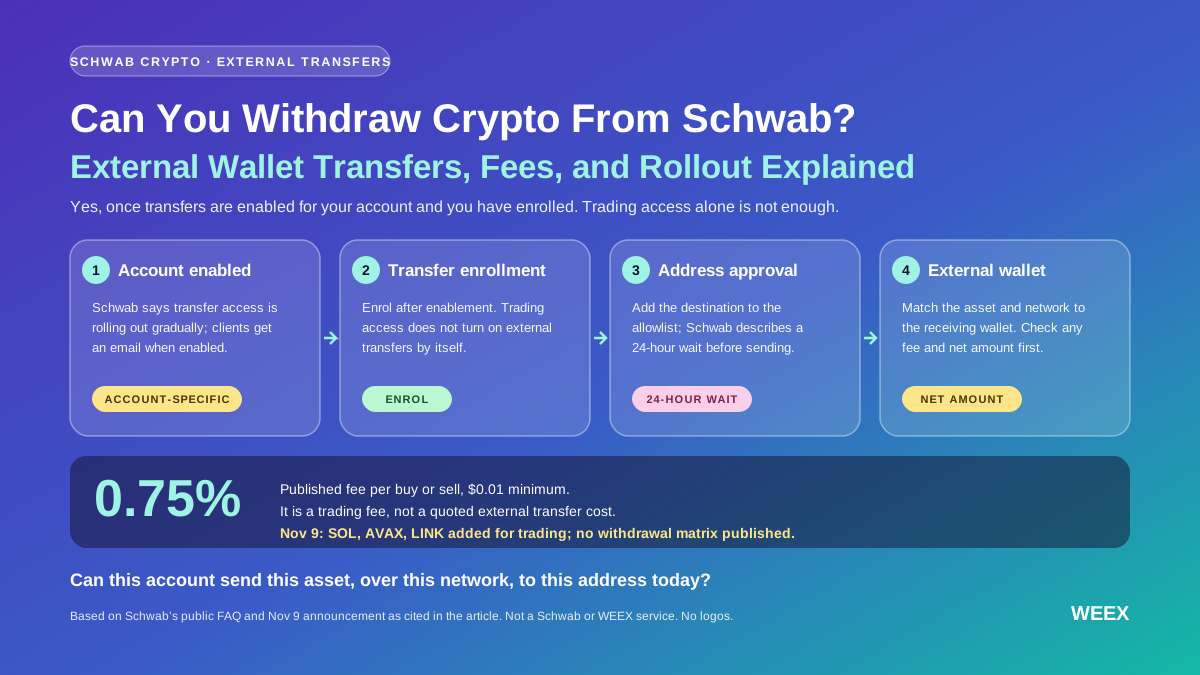
Can You Withdraw Crypto From Schwab? External Wallet Transfers, Fees, and Rollout Explained
Find out when Schwab Crypto allows external wallet withdrawals, how the 24-hour address wait works, and why the 0.75% trading fee is separate.

BAE Systems Raises Full-Year Free Cash Flow Guidance to £3 Billion

Zhang Yiming's Latest Statement: ByteDance Has the Capability to Compete with Anthropic and OpenAI, but Catching Up to the Cutting Edge Will Not Happen Until 2029 at the Earliest

End-of-2026 Review: Politics, AI, and the Federal Reserve - The Market is Experiencing a "Risk Repricing"

Saxo Bank: Uncertainty Surrounding Nvidia Provides Opportunities for Competitors

BitMine posts $2.8B quarterly profit driven by Ethereum gains, but yearly net loss surpasses $6B

How Should Institutions Manage Exchange Exposure After a Series of Thefts?

Bull Market Gains, Bear Market Losses: How to Calculate Taxes on Cryptocurrency Investments?

Bitcoin whales stack coins while ETF investors dump millions daily
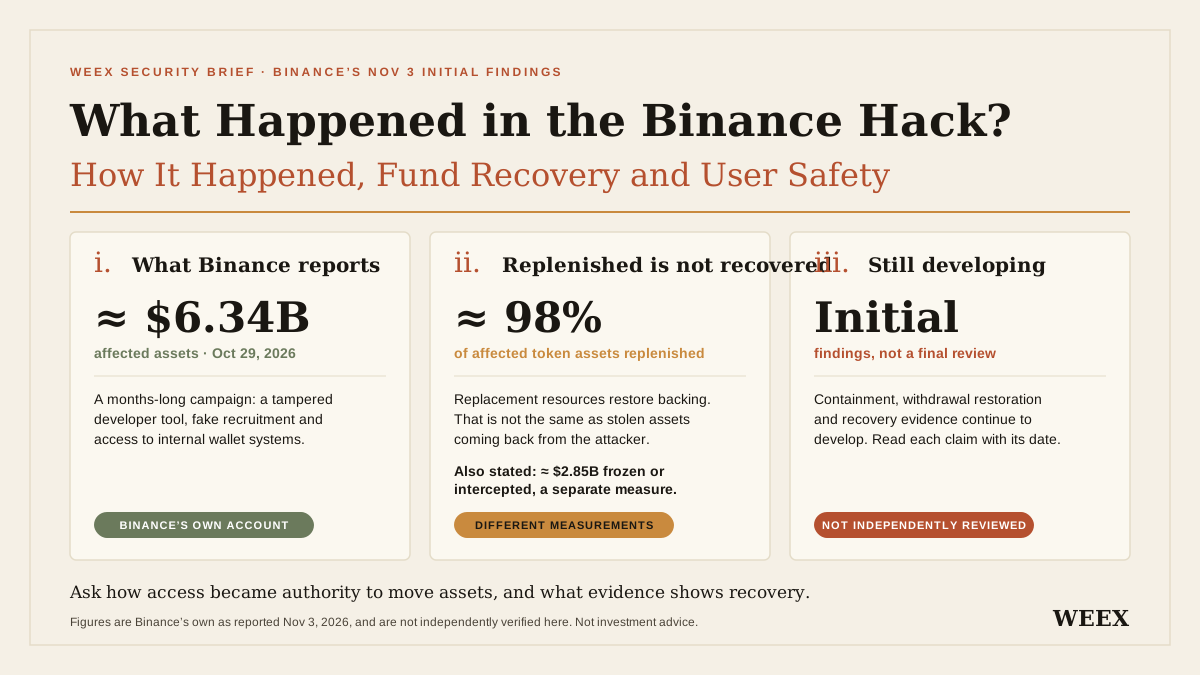
What Happened in the Binance Hack? How It Happened, Fund Recovery and User Safety
What happened in the Binance hack? Review the attack timeline, latest fund replenishment, recovery limits and practical steps to protect your account.

CPI Higher Than Expected in the U.S.: What It Means for Investors

AI Agents Do More Than Just Place Orders: The Next Entrepreneurial Opportunity Lies in Matching and Trust
Chainalysis: The Shadow Market Behind China's AI Model "Distillation Tide" Bypassing U.S. Export Controls
How Much Revenue Can Anthropic Generate for Every $1 Spent on Computing Power?

SharpLink, an Ethereum Reserve Company, Reports Q3 Earnings: Net Profit Reaches $751.4 Million, Up 6.2 Times Year-on-Year
ETH Burn Rate Fails to Keep Up with Issuance, Is Vitalik Starting to Discuss Value Storage?

Brian Hong Joins fomo to Lead APAC Region
a16z Frontier Partner: Agents Should Rebuild Uber-like Transaction Networks
Helius encrypts Solana transfers without removing operator trust
Apple's Market Cap Grew From $347 Billion to $4.6 Trillion During Tim Cook's 15 Years as CEO. Here's What That Growth Curve Means for Apple's Next Chapter Under John Ternus.
Rumble (RUM) Sells Two-Thirds Of Its Bitcoin As AI Business Grows
Apple Becomes a Safe Haven Amid AI Sell-off, Bernstein: 37x P/E Still Not Expensive
SpaceX Starship's 15th Test Flight to Challenge Two-Stage Capture, Aiming for Humanity's First Fully Reusable Orbital Rocket
Deutsche Bank Introduces Custody Services for Five Cryptocurrencies
Latest articles


Latest coin listings on WEEX


