
Apple's Market Cap Grew From $347 Billion to $4.6 Trillion During Tim Cook's 15 Years as CEO. Here's What That Growth Curve Means for Apple's Next Chapter Under John Ternus.

 Prefer us on Google



Apple (AAPL +0.53%) had a market capitalization of $347 billion when Tim Cook became CEO in August 2011. When he stepped down 15 years later, the company was worth $4.6 trillion, and it has only gotten bigger since. Today, Apple has a market cap north of $5 trillion, making it the most valuable company in the world.
Cook inherited a company with one wildly successful product: the iPhone. He left his successor, John Ternus, with something considerably bigger -- a technology giant generating nearly half a trillion dollars in annual revenue, with enormous financial resources, and an installed base exceeding 2.5 billion active devices.
I don't expect Apple under Ternus to replicate the extraordinary growth it delivered on Cook's watch. But I believe its financial strength gives its new CEO opportunities that few competitors can match. Ternus is already putting those resources to work.
Former Apple CEO Tim Cook. Image source: Apple.
Cook built an extraordinary financial machine
Apple's annual revenue jumped from $108 billion in its fiscal 2011 to $478.8 billion in its fiscal 2026. That includes a 15% increase in the most recent fiscal year, demonstrating that Apple can still deliver impressive growth despite its enormous size.
Its fiscal fourth-quarter results reinforced that point. Revenue increased 12% to $114.5 billion, including $57.6 billion in iPhone sales, up 17%. Mac revenue jumped 24% to $10.8 billion, while services revenue reached a record $31.6 billion.
Apple's services business is particularly valuable. Its gross margin reached 76% during the quarter, providing a highly profitable revenue stream alongside the company's hardware operations.
The cash keeps coming. Apple showed $28 billion in operating cash flow in the quarter, and returned approximately the same amount to shareholders through dividends and stock repurchases. As of the end of its latest fiscal year, Apple held $137 billion in cash and marketable securities against approximately $80 billion in debt.
That's an impressive cushion for a company entering an expensive new phase of product development.
Ternus is already expanding Apple's ambitions
Ternus became CEO on Sept. 1, and his first months suggest he has little interest in simply maintaining the business Cook built.
Apple introduced its first foldable iPhone, the iPhone Duo, alongside the iPhone 18 lineup. It also unveiled its first touchscreen MacBook Pro, expanding its premium laptop offerings with a model starting at $2,899. Then there's HomeView, a $299 smart home display built around its upgraded Siri AI assistant.
These products give Apple opportunities to generate additional revenue from existing customers while attracting new ones.
Ternus may have even bigger ambitions. Apple has reportedly explored developing AI servers using its custom processors and Nvidia's NVLink technology. That would represent a return to the enterprise server market after a 15-year absence.
John Ternus became Apple CEO on Sept. 1 and is already making big moves. Image source: Apple.
The project remains unannounced, with no commercial launch expected before 2029. Still, it illustrates the possibilities available to a company with Apple's financial resources.
Apple is spending heavily to develop those possibilities.
Apple's next chapter won't come cheap
Apple spent $45.8 billion on research and development (R&D) during fiscal 2026, up from $34.6 billion the previous year.
During its fiscal Q4 earnings call in November, management emphasized that AI investment remains a priority. Operating expenses increased 21% in the quarter, driven largely by additional R&D spending.
However, that budget expansion is creating financial pressures. Apple reported a 47.9% gross margin in the quarter, including approximately 1 percentage point of benefit from tariff refunds. Management expects that margin to decline to between 45% and 46% in the first quarter of its fiscal 2027, primarily because of higher memory costs and expenses associated with launching Siri AI.
Ternus described the current memory pricing environment as unprecedented. That's a meaningful challenge, particularly as Apple introduces more expensive hardware and expands its AI capabilities.
Still, I believe the company's financial strength provides considerable flexibility. Apple can invest billions in new products without depending on any single initiative to succeed.
The bigger challenge is its size. Adding $100 billion in annual revenue would have nearly doubled Apple's business in 2011. Today, it would represent growth of approximately 21% from fiscal 2026 levels.
Cook's extraordinary run established Apple's financial foundation. Ternus now has the resources to expand its products, develop AI capabilities, and pursue entirely new markets. I don't expect another 13-fold increase in Apple's valuation. However, I believe the company Cook built has plenty of room to become more valuable under Ternus.
-- Price
This content is provided for general informational purposes only and doesn't constitute financial, investment, legal, or tax advice. Any events, rewards, online promotions, or related information mentioned herein should not be considered a recommendation, solicitation, or invitation to purchase, sell, trade, or otherwise deal in any crypto assets. Crypto assets are highly volatile and may result in loss. The availability of WEEX services, products, and related events may vary by region. You are responsible for ensuring that your participation is in accordance with applicable local laws and regulations.
You may also like
Helius encrypts Solana transfers without removing operator trust

Rumble (RUM) Sells Two-Thirds Of Its Bitcoin As AI Business Grows
Apple Becomes a Safe Haven Amid AI Sell-off, Bernstein: 37x P/E Still Not Expensive

SpaceX Starship's 15th Test Flight to Challenge Two-Stage Capture, Aiming for Humanity's First Fully Reusable Orbital Rocket
Deutsche Bank Introduces Custody Services for Five Cryptocurrencies

Net Short Positions of Leveraged Funds Drop to 12,955 BTC, Down 89% from Peak
Intuitive Machines Q3 Revenue Reaches $269.3 Million, Raises Full-Year Guidance to $920 Million to $950 Million
The Hidden Costs of Sandwich Attacks: How Much Retail Investors Overpay for 'Free Trading'?

From Coinbase to Wall Street: Digital Asset Custody Enters a New Phase of Institutionalization

The Next Battle in Crypto Security: How to Rebuild the Authorization System Beyond Smart Contracts?
Greg Abel Has Plowed $14.4 Billion Into Warren Buffett's Favorite Stock This Year, and It's Not Apple
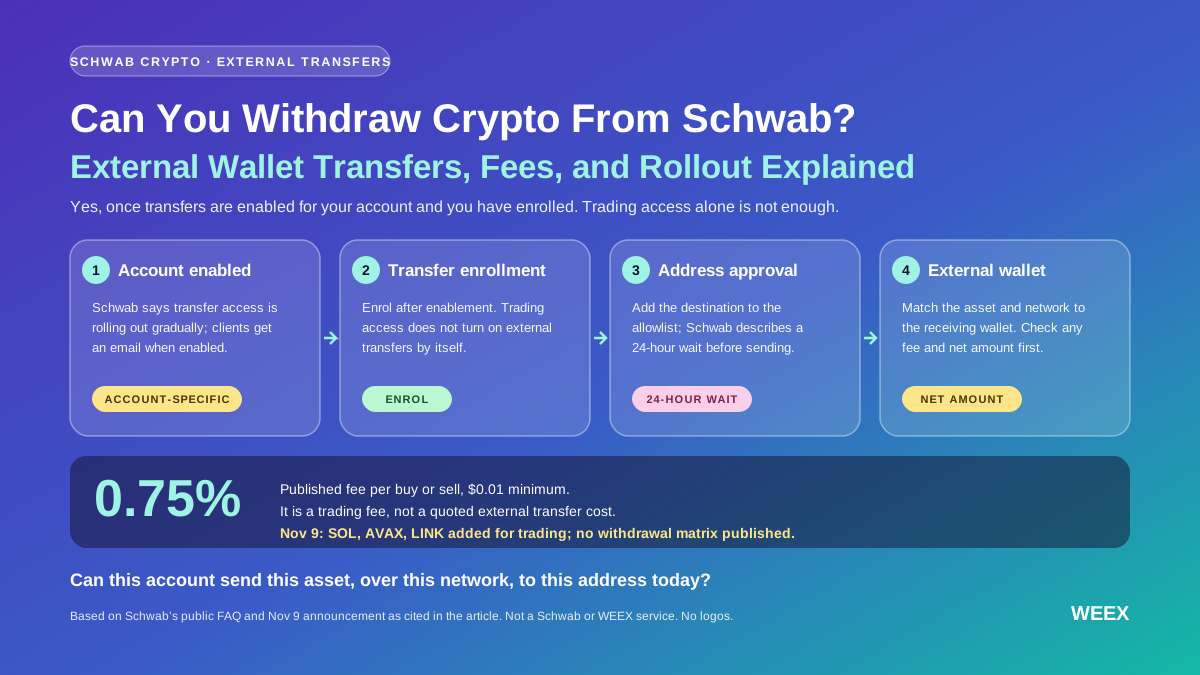
Can You Withdraw Crypto From Schwab? External Wallet Transfers, Fees, and Rollout Explained
Find out when Schwab Crypto allows external wallet withdrawals, how the 24-hour address wait works, and why the 0.75% trading fee is separate.

BAE Systems Raises Full-Year Free Cash Flow Guidance to £3 Billion

Zhang Yiming's Latest Statement: ByteDance Has the Capability to Compete with Anthropic and OpenAI, but Catching Up to the Cutting Edge Will Not Happen Until 2029 at the Earliest

End-of-2026 Review: Politics, AI, and the Federal Reserve - The Market is Experiencing a "Risk Repricing"
Saxo Bank: Uncertainty Surrounding Nvidia Provides Opportunities for Competitors

BitMine posts $2.8B quarterly profit driven by Ethereum gains, but yearly net loss surpasses $6B

How Should Institutions Manage Exchange Exposure After a Series of Thefts?
Bull Market Gains, Bear Market Losses: How to Calculate Taxes on Cryptocurrency Investments?
Bitcoin whales stack coins while ETF investors dump millions daily

PNC lets businesses accept USDC without keeping the crypto
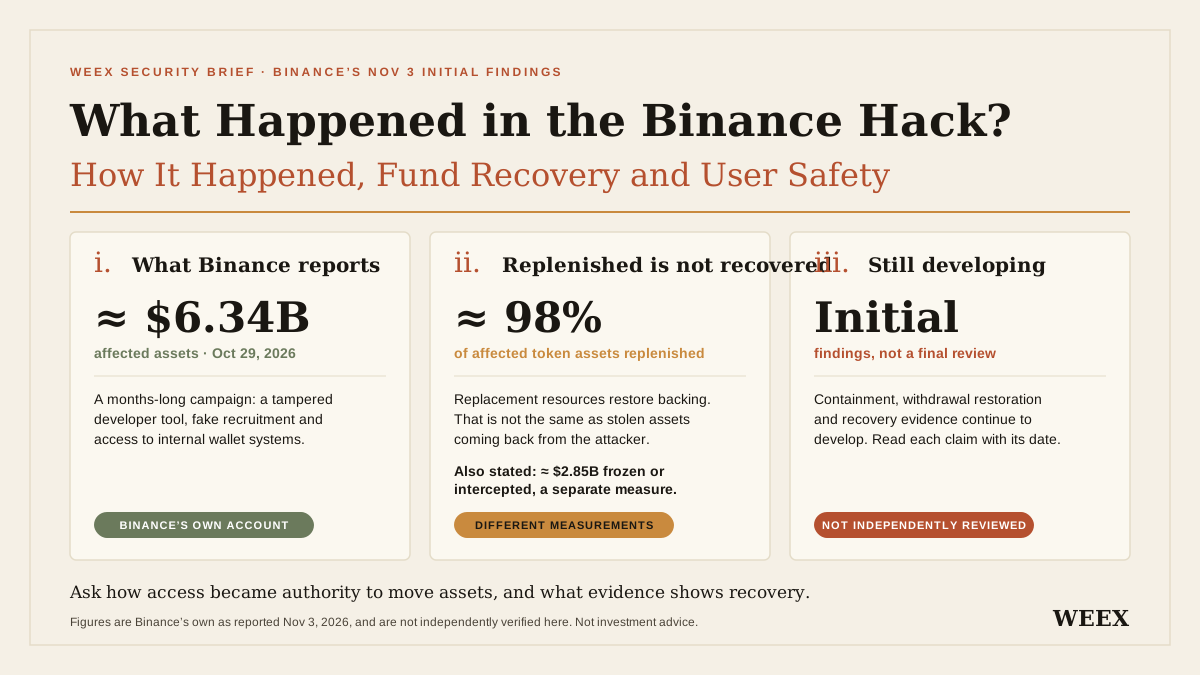
What Happened in the Binance Hack? How It Happened, Fund Recovery and User Safety
What happened in the Binance hack? Review the attack timeline, latest fund replenishment, recovery limits and practical steps to protect your account.

CPI Higher Than Expected in the U.S.: What It Means for Investors

AI Agents Do More Than Just Place Orders: The Next Entrepreneurial Opportunity Lies in Matching and Trust
Chainalysis: The Shadow Market Behind China's AI Model "Distillation Tide" Bypassing U.S. Export Controls
How Much Revenue Can Anthropic Generate for Every $1 Spent on Computing Power?

SharpLink, an Ethereum Reserve Company, Reports Q3 Earnings: Net Profit Reaches $751.4 Million, Up 6.2 Times Year-on-Year
ETH Burn Rate Fails to Keep Up with Issuance, Is Vitalik Starting to Discuss Value Storage?

Brian Hong Joins fomo to Lead APAC Region
a16z Frontier Partner: Agents Should Rebuild Uber-like Transaction Networks
Helius encrypts Solana transfers without removing operator trust
Rumble (RUM) Sells Two-Thirds Of Its Bitcoin As AI Business Grows
Apple Becomes a Safe Haven Amid AI Sell-off, Bernstein: 37x P/E Still Not Expensive
SpaceX Starship's 15th Test Flight to Challenge Two-Stage Capture, Aiming for Humanity's First Fully Reusable Orbital Rocket
Deutsche Bank Introduces Custody Services for Five Cryptocurrencies
Net Short Positions of Leveraged Funds Drop to 12,955 BTC, Down 89% from Peak
Latest articles


Latest coin listings on WEEX


