
Intel Stock: Why SK Hynix Manufacturing Talks Keep Pushing Shares Higher

 Prefer us on Google


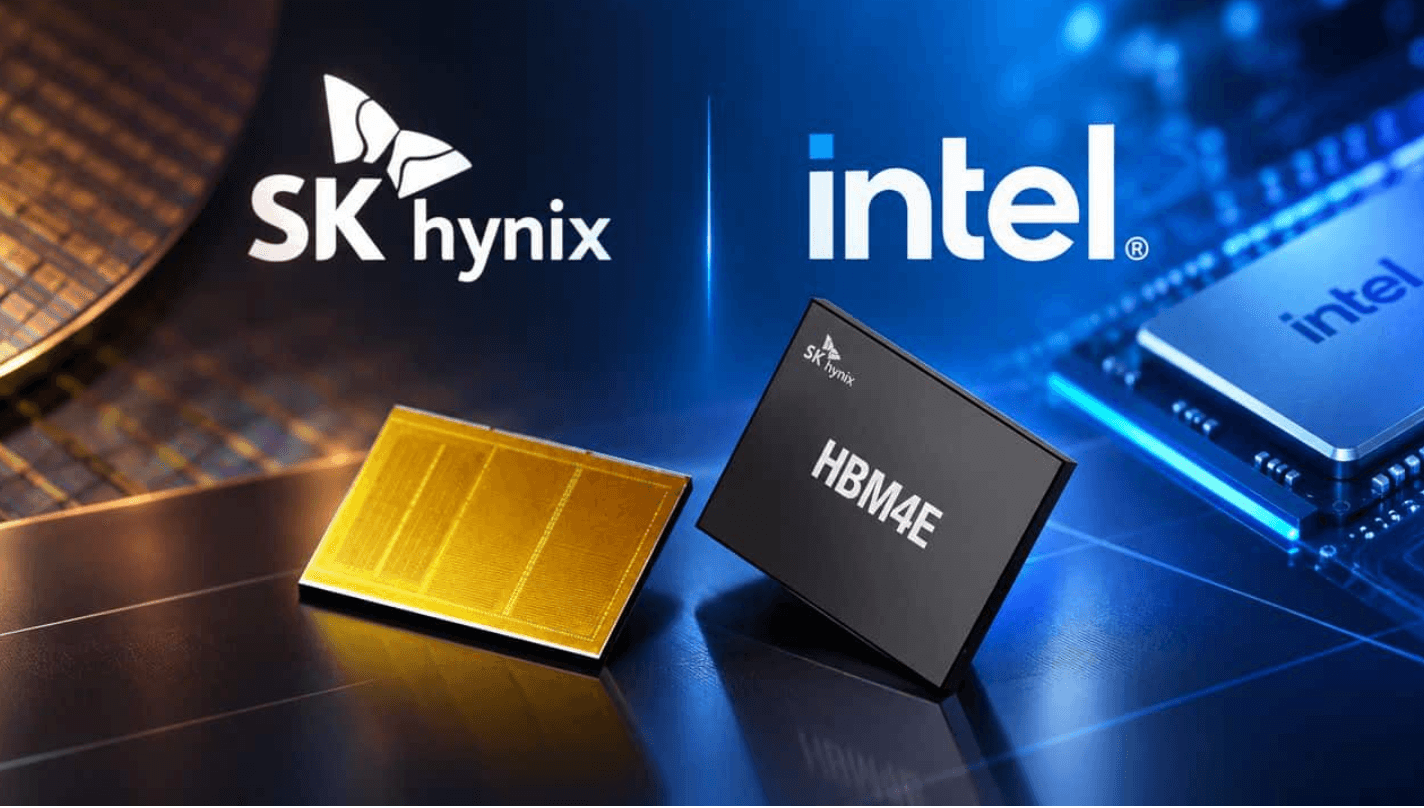
Intel stock jumped as much as 5.6% in premarket trading the day Reuters first reported SK Hynix was in exploratory talks with Intel about manufacturing memory chips on US soil for the first time.
Intel stock kept climbing through the sessions that followed, touching $108.80 before extending to $112.23 in after hours trading, and shares have since pushed as high as $114.56, up more than 7% from a recent intraday low. Intel stock's persistent rise over the past several trading days traces back to a single, still unconfirmed set of talks, and understanding exactly what's being discussed, and what isn't, matters more than the headline percentage moves alone.
What's Actually Being Discussed
The core of these talks centers on Intel's long-delayed chipmaking facility in Ohio, a $28 billion campus that currently isn't expected to begin operations until 2030 or 2031. According to three sources familiar with the discussions cited by Reuters, one scenario under consideration would have SK Hynix lease space directly inside that Ohio facility. A second option would involve SK Hynix forming a joint venture with Intel and major cloud computing companies looking to secure their own dedicated memory chip supply as AI infrastructure demand continues straining global capacity.
Neither company has confirmed anything close to a final agreement. One source specifically characterized the talks as "exploratory," and SK Hynix issued a formal statement saying it is "reviewing ways to strengthen its memory business" but that "no matters have been determined." Intel, for its part, called the reports "speculation" while confirming it remains committed to Ohio and continues investing to get the site ready. Reuters itself was unable to determine what specific type of memory SK Hynix might actually produce there.
Why This Matters More Than A Typical Rumor
What separates this from routine chi industry speculation is the specific history between these two companies. Intel sold its NAND memory business to SK Hynix in a $9 billion deal, meaning any agreement to bring SK Hynix into an Intel owned campus would effectively put the company that bought Intel's old memory business back onto Intel property, according to Motley Fool's coverage of the reports. That history gives this specific rumor a credibility that a deal between two unrelated companies wouldn't carry on its own, since SK Hynix already has deep operational familiarity with the exact kind of memory manufacturing assets Intel is trying to fill space with.
The stakes for Intel specifically are tied directly to how troubled the Ohio project has been. The site has struggled to attract outside commitments since it was first announced, and Intel is now part owned by the US government following earlier support tied to domestic chip manufacturing policy. A confirmed memory tenant would do more than fill physical space: it would give Intel its clearest evidence yet that the Ohio campus can attract meaningful outside capital and demand, rather than continuing to function as a facility that, in Motley Fool's framing, "today only consumes cash."
Why SK Hynix Has A Real Reason To Want This
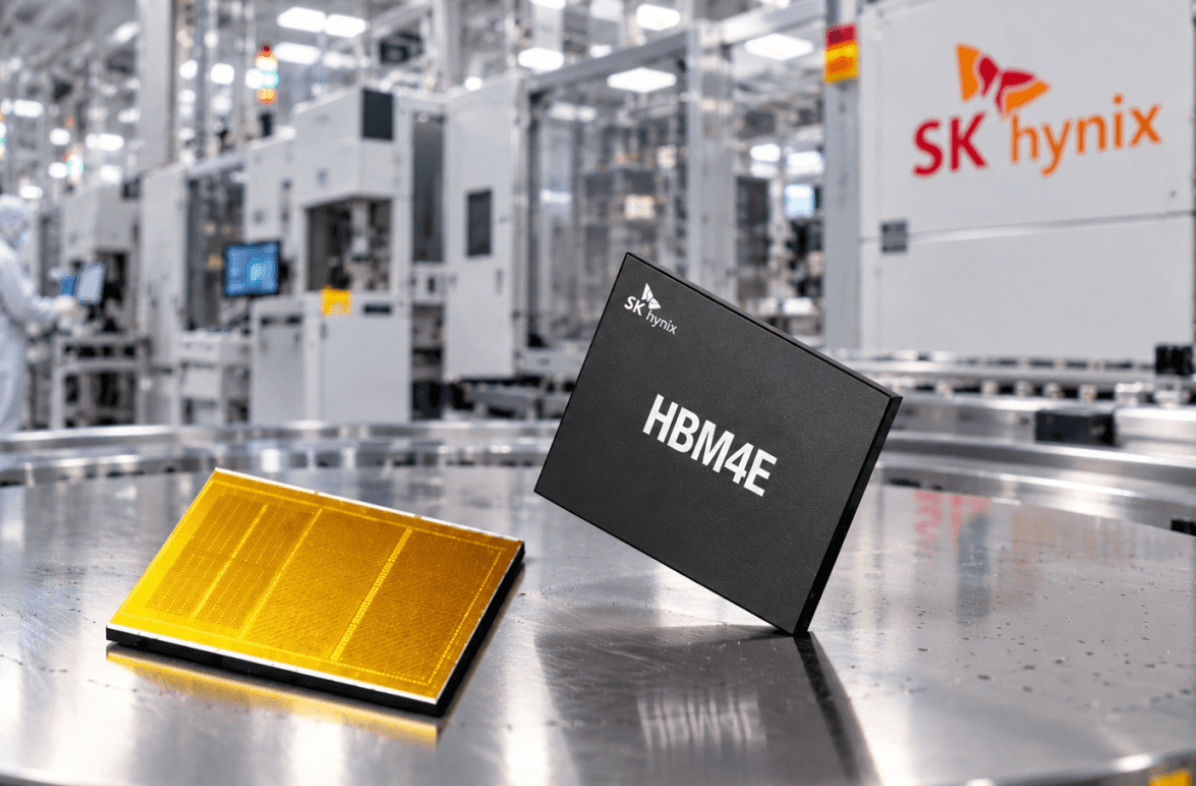
The interest isn't one sided. SK Hynix CEO Kwak Noh-jung warned earlier this year that 2027 will bring the most severe memory supply crunch the industry has ever seen, with customer demand expected to outpace production capacity well beyond 2030. That warning gives SK Hynix a direct commercial reason to secure additional manufacturing capacity now, rather than waiting for the crunch to fully materialize. SK Hynix has already committed more than $4 billion to a separate HBM packaging facility in West Lafayette, Indiana, with mass production of next-generation high-bandwidth memory expected there in the second half of 2029.
A deal with Intel in Ohio would complement, rather than replace, that Indiana investment. According to TheStreet's analysis of the reports, one plausible structure would have Ohio handle front-end wafer fabrication while Indiana handles advanced HBM packaging and testing, with finished memory then moving to the same US customers driving AI infrastructure demand. That division of labor would give SK Hynix something its Indiana project alone doesn't provide: front end memory manufacturing capacity actually located on US soil, rather than packaging and testing capacity built around wafers still fabricated elsewhere.
-- Price
The Political Complication Sitting Underneath This Deal
This isn't purely a business decision either company can finalize on its own terms. The Trump administration has been actively pushing chipmakers to expand domestic production as AI demand strains global memory supply, a policy tailwind that favors exactly this kind of Intel-SK Hynix arrangement. But South Korea's own government could complicate the picture significantly. If SK Hynix plans to produce advanced memory like HBM or DRAM in Ohio specifically, that could trigger a formal review under South Korea's Industrial Technology Protection Act, since those chip types are classified as sensitive technology under Korean law.
That regulatory risk is worth taking seriously rather than treating as a footnote. A deal that makes commercial sense for both companies, and that aligns with US policy priorities, can still stall or require significant restructuring if Korean regulators determine that shifting advanced memory production to Ohio compromises technology considered strategically important to South Korea. Reuters' reporting flagged this specific friction point directly, citing three separate sources on the potential review.
What The Stock Price Reaction Actually Tells You
The market's reaction across this stretch has been consistent enough to be worth reading as a genuine signal rather than noise. Intel rose roughly 5% on the initial September 16 report, according to CNBC, while SK Hynix's own Nasdaq-listed shares climbed about 2% the same session, and SK Hynix's Seoul-listed stock finished 4.1% higher separately. That both stocks moved together, rather than one gaining at the other's expense, suggests investors are reading this as a genuinely mutually beneficial arrangement rather than a one-sided win for either party.
The 5.5% pop in Intel stock specifically, even with so much of the deal still undecided, indicates investors see real upside in a potential SK Hynix partnership regardless of the deal's final structure. That's a meaningful distinction: the market isn't waiting for confirmation to start pricing in the possibility, which is part of why Intel stock has continued grinding higher across multiple sessions rather than giving back the initial pop once the "no deal confirmed yet" caveat became clear.
What Would Actually Need To Happen Next
None of this is resolved yet, and it's worth being precise about what still needs to occur before this moves from rumor to reality. A specific structure, whether SK Hynix leasing Ohio space directly or a broader joint venture including cloud computing partners, would need to actually get finalized and publicly confirmed by both companies. South Korea's Industrial Technology Protection Act review, if triggered by the specific type of memory involved, would need to clear without forcing a substantial restructuring of whatever deal gets proposed. And given that domestic US manufacturing costs considerably more than production in South Korea, according to Reuters' reporting on the added expense of higher wages and construction costs relative to Asia's denser semiconductor supply chain, both companies would need to agree on how those additional costs get absorbed or offset before any final agreement makes commercial sense for SK Hynix specifically.
Trading Intel Stock Through This Developing Story
Intel trades on WEEX Spot, letting traders take a direct position on shares with USDT as this SK Hynix story continues to develop, without needing a separate brokerage account to react to the next Reuters update or official confirmation from either company.
Trading on WEEX is backed by a publicly disclosed 1,000 BTC protection fund, worth knowing for anyone holding a position in a stock that's already moved more than 7% within a single session purely on unconfirmed reports, since a story this sensitive to headline risk can move just as sharply if the talks stall as it has while they've progressed.
Conclusion
Intel stock's climb from around $101 to above $114 over the past five sessions traces directly back to reports that SK Hynix is exploring memory chip manufacturing at Intel's delayed Ohio facility, a deal that would bring the buyer of Intel's old NAND business back onto Intel property and give the struggling $28 billion campus its first real commercial validation. Nothing has been finalized, and a formal South Korean regulatory review remains a genuine risk if advanced memory technology is involved, but the consistent gains across both Intel and SK Hynix stock since the initial report suggest investors are treating this as a credible, mutually beneficial arrangement rather than speculative noise.
FAQ
1. Has Intel and SK Hynix's manufacturing deal been finalized?
No. Both companies have described the talks as exploratory, with SK Hynix stating no specific plans or arrangements have been determined and Intel calling the reports speculation while confirming continued investment in the Ohio site.
2. What are the two main deal structures being discussed?
SK Hynix could lease space directly inside Intel's Ohio facility, or the two companies could form a joint venture together with major cloud computing firms seeking to secure their own memory chip supply.
3. Why would this deal matter for Intel's struggling Ohio project?
Intel's Ohio campus, a $28 billion investment not expected to begin operations until 2030 or 2031, has struggled to attract outside commitments, and a confirmed SK Hynix partnership would provide its clearest validation yet.
4. What regulatory risk could complicate this deal?
If SK Hynix produces advanced memory like HBM or DRAM in Ohio, it could trigger a review under South Korea's Industrial Technology Protection Act, since those chip types are considered sensitive technology under Korean law.
5. Have Intel and SK Hynix worked together before?
Yes, in a sense. Intel sold its NAND memory business to SK Hynix in a $9 billion deal, meaning a new Ohio arrangement would put SK Hynix back in close proximity to assets it previously acquired from Intel.
This content is provided for general informational purposes only and doesn't constitute financial, investment, legal, or tax advice. Any events, rewards, online promotions, or related information mentioned herein should not be considered a recommendation, solicitation, or invitation to purchase, sell, trade, or otherwise deal in any crypto assets. Crypto assets are highly volatile and may result in loss. The availability of WEEX services, products, and related events may vary by region. You are responsible for ensuring that your participation is in accordance with applicable local laws and regulations.
You may also like

France: No mandatory declaration of crypto wallets exceeding €100,000

Banks Control Korean Won Stablecoin, Tech Companies Compete for Customers
15,400 people lost over $13 million after copying the wallet of a crypto specialist

The Tech Sell-Off Is Creating the Best Buying Window in 2 Years. Here's What I'm Buying.
Why the Big Short Seller is Buying Tencent Against the Trend?

From Securing Private Keys to Constraining Agents: New Frontiers of Crypto Security in the AI Era
The AI Power Surge Returns to Rationality: Where to Find Valuation Lows

Prediction: Micron Stock Will Be at This Price at the End of 2027

How to Use Tokenized Stocks on the Blockchain?
Bitcoin ETF Surpasses 2,200 Institutional Holders, Primarily Investment Advisors

First Circle Capital Announces Final Closing of $26 Million Fund to Invest in Fintech in Africa
A New Path for API3: Fixed Supply, On-Chain Curation, and Infrastructure for AI Agents

Nestlé Expands into Wearable Devices, Plans to Match Nutritional Products with Health Data

ECB Governing Council Member Kocher Warns Against Lagging in Inflation Response
Over 20% of Generation Z Own Cryptocurrency, Barriers to Adoption for the General Public Include 'Fragmentation of Financial Services' = SoFi Survey

Where Will SpaceX Stock Be in 5 Years?

Ray Dalio's Latest Interview: Why Great Technologies Are Often Not Great Investments?

Will On-Chain BTC Lending Become Mainstream? Data and Institutional Trends Point to Traditional Finance

Is BTC Different This Time?
Tonight, the last major inflation report before the Federal Reserve's December decision is released!
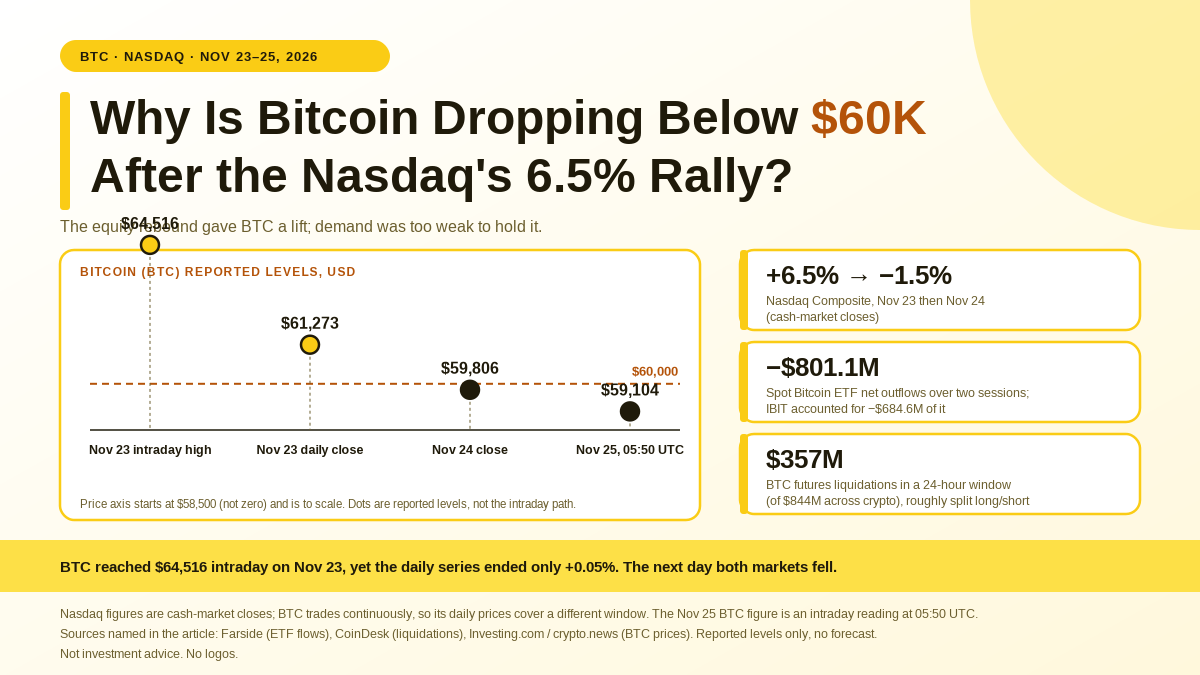
Why Is Bitcoin Dropping Below $60K After the Nasdaq’s 6.5% Rally?
Why is Bitcoin dropping below $60,000 after the Nasdaq rallied 6.5%? See what $801.1 million in ETF outflows, exchange flows, and liquidations reveal.

Report: AI Industry Leaders Divided Over Whether Humans Should Surrender Autonomous Decision-Making Power

Remy Cointreau Group's Stock Price Soars Amid Transformation Progress

Warren Buffett's Successor, Greg Abel, Has Quietly Purchased 3 Stocks Since the Start of the Fourth Quarter, Including Shares of a Legal Monopoly

Not Tesla. Not Nvidia. This "Magnificent Seven" Stock Could Be Overdue for a Big Rally.

Iliad Partners Announces Final Close of Its First Fund at $33.4 Million

Fidelity Lists AAVE, LINK and UNI: How Do Crypto Trading Fees Compare?
Jensen Huang's Situation May Be Even More Challenging Now
BlackRock Launches Tokenized Fund in Hong Kong! Reaches $100 Million, Supports HKD Stablecoin HKDAP for Subscription
Private Financing Market Mirrors IPO Market: Leading Companies Dominate
France: No mandatory declaration of crypto wallets exceeding €100,000
Banks Control Korean Won Stablecoin, Tech Companies Compete for Customers
15,400 people lost over $13 million after copying the wallet of a crypto specialist
The Tech Sell-Off Is Creating the Best Buying Window in 2 Years. Here's What I'm Buying.
Why the Big Short Seller is Buying Tencent Against the Trend?
From Securing Private Keys to Constraining Agents: New Frontiers of Crypto Security in the AI Era
Latest articles




Latest coin listings on WEEX


