
Who is Bo Hines, the main figure behind this week's White House crypto summit?

Original Title: The Little-Known College Football Player Quarterbacking Trump's Crypto Agenda
Original Author: Amrith Ramkumar, Wall Street Journal Reporter
Original Translation: Luffy, Foresight News

When Donald Trump tapped Bo Hines to take a senior role in his administration's cryptocurrency department, industry executives were caught off guard.
After the appointment was announced last December, several executives recalled scrambling to investigate Hines, finding that he was a former college football player who had also lost a bid for Congress in North Carolina, with little else in his background related to Bitcoin.
Today, Hines, the executive director of the President's Digital Assets Advisory Committee appointed by Trump, has become a liaison between the government, corporations, and Capitol Hill. The 29-year-old has emerged as the day-to-day operator of the government's plan to promote the cryptocurrency industry, working closely with prominent venture capitalist and AI and cryptocurrency affairs lead David Sacks.
Industry executives say Sacks has taken more of a role in setting high-level agendas. They also noted that Hines' understanding of key policy issues in the industry has impressed them. This Friday, Hines and the White House will host a cryptocurrency summit, inviting industry firms to participate.
In an interview, Hines said, "I'm like a quarterback, making sure everyone on the field is in the right place."
Hines is assisting the White House in shepherding legislation through Congress over the next five months that outlines how cryptocurrencies will be regulated. He is evaluating the feasibility of establishing a national cryptocurrency reserve and playing a role in overturning regulatory actions against leading cryptocurrency firms by the Biden administration.
Kara Calvert, the head of US policy at the cryptocurrency exchange Coinbase, has met with Hines and described Hines as taking seriously the deadlines laid out in Trump's January executive order on cryptocurrency. She said, "It's a thorny issue to untangle, and he has done well in that regard." The US Securities and Exchange Commission (SEC) recently rejected a lawsuit against Coinbase.
After pouring significant funding into Trump's presidential campaign and inauguration, and donating around $170 million last year to elect friendly lawmakers, the cryptocurrency industry has become a key player in Washington. Trump has shown support for the industry, even launching his own Memecoin.
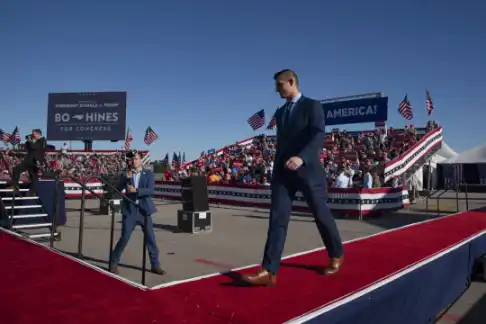
Formerly endorsed by Trump, Hines is running for a 2022 House vacancy in his home state of North Carolina
Prior to joining the government, Hines led an "anti-woke" media company. The company collaborated with a cryptocurrency project that issued a Trump-themed Memecoin, which saw significant value fluctuations last year.
What many in the industry didn't know when he was appointed is that Hines learned about the cryptocurrency industry while attending a bowl game sponsored by a Bitcoin company and has been investing in cryptocurrency for nearly a decade since. To avoid potential conflicts of interest while in government, he sold off his cryptocurrency holdings. He also studied cryptocurrency regulation in law school.
Dan Spuller, the Director of Industry Affairs at the Blockchain Association, said, "He is one of the very few who can straddle both the cryptocurrency space and Trump's 'Make America Great Again' ethos."
Critics argue that the desire to mainstream cryptocurrency may have drawbacks.
Minnesota Democratic Senator Tina Smith said, "If you're going to integrate cryptocurrency into the financial system, there needs to be a very firm understanding of the safeguards to limit potential harm." She has not met with Hines yet.
Hines will be at the heart of the debate over stablecoin regulatory legislation. Stablecoins are widely used cryptocurrencies usually pegged to government-issued currencies like the dollar.
It is expected that bills delineating the regulatory boundaries between the SEC and CFTC will spark a heated debate.
There are also diverging opinions among companies regarding a national digital asset reserve. If a national digital asset reserve leads to new government purchases, it is seen as a potential boon for the industry. Hines stated that the government would first need to account for the current cryptocurrency holdings.
According to sources familiar with the matter, in recent weeks, Hines has been contemplating replacing the Presidential Digital Asset Council, composed of industry executives, with a series of summits. Trump is expected to speak at a summit at the White House this Friday.
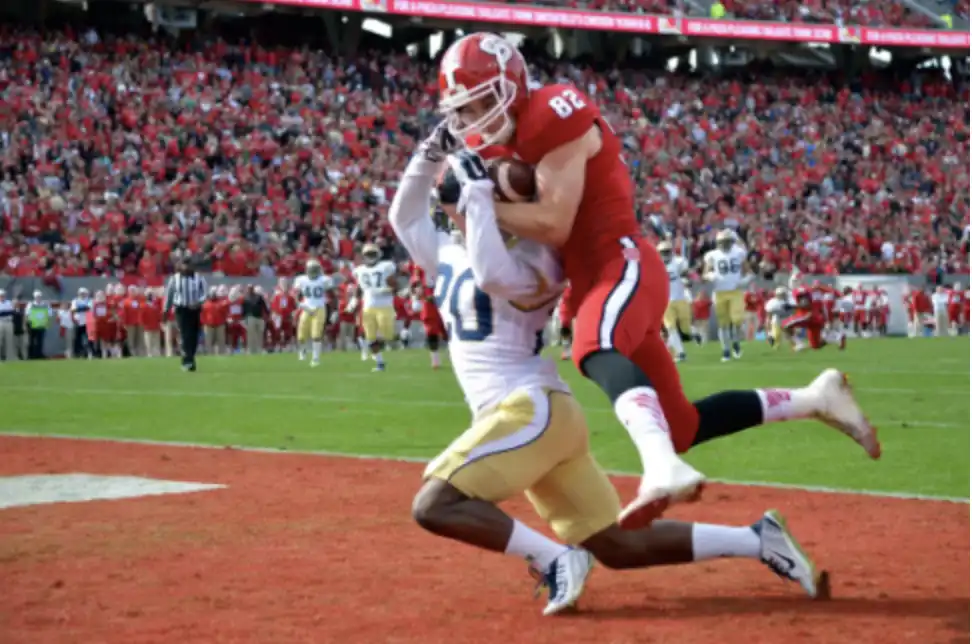
In 2014, wearing jersey number 82, Hines was a wide receiver at North Carolina State University
Prior to recently moving to Washington, much of Hines's life was spent in North Carolina. Football was a sport passed down in his family: his father briefly played for the Detroit Lions.
In 2014, a young Hines, as a freshman at North Carolina State University, emerged as a standout wide receiver, catching passes from Jacoby Brissett, who would later go on to play in the National Football League (NFL) in the United States. He later transferred to Yale University, where a shoulder injury ended his athletic career, leading him to enroll in Wake Forest University School of Law, studying issues such as how the CFTC regulates cryptocurrency.
According to Hines's former professor Raina Haque, Hines showed interest in the field but was not an avid Bitcoin supporter. She said: "He wasn’t the kind of zealot who saw cryptocurrency as a panacea for all the world’s problems."
In 2022, Hines ran for a vacant seat in the North Carolina House of Representatives in his hometown, echoing Trump's claims of the 2020 presidential election being stolen. Trump endorsed Hines, but he lost in a closely contested race. His campaign funding came from a trust fund and a political action committee established by a former FTX executive.
Hines faced criticism from Democrats for giving out Chinese-made hats to voters while advocating for an "America First" economic agenda.
Hines ran again for a House seat last year but was defeated in the primary.
During Hines's playing days, he participated in the 2014 Bitcoin St. Petersburg Bowl sponsored by the Bitcoin payment processor BitPay. The logo of the game featured an orange circle with a white "B" inside, a symbol commonly used to represent cryptocurrency.
Shortly after playing in that game, Hines made his first purchase of Bitcoin and then began investing in other crypto assets. He said, "Their marketing worked."
You may also like

Dialogue with OmenX Founder: Why does the prediction market need an evolution from "spot" to "derivatives"?

When the P2P illicit funds from ten years ago turned into 60,000 bitcoins

Morning News | CME Group launches Nasdaq Cryptocurrency Index futures; Asset management giant Janus Henderson strategically invests in Ethena

Why did Oracle deliver the strongest financial report in history, yet its stock price fell?

Bitcoin Layer 2 Network Botanix: Why Did We Choose to Dissolve?

Morning Report | OpenAI has submitted an S-1 registration statement draft to the U.S. SEC; Morpho completes $175 million financing

Galaxy Deep Research Report: How Hyperliquid's HIP-4 Upgrade Changes the Landscape of Prediction Markets?

Latest research from 13 top universities including Cornell University: The current state, challenges, and misconceptions of the fusion of Crypto and AI
Deconstructing Anthropic: The Best AI Company, Possibly Also a Type of Organizational Invention

Every exchange is a "Universal Exchange."

The counterattack of traditional finance: Alliance chains are quietly reviving
Pantera Capital Partner: How Tokenization is Restructuring the Private Equity and Early Investment Ecosystem?

Mastercard Launches Agent Pay for AI, Plans to Record AI Agent Payment Authorizations on Polygon
Mastercard launched Agent Pay for AI, a new payment protocol designed to help AI agents make small payments such as pay-per-use access to data and APIs. The system plans to record human-granted AI agent permissions on Polygon, focusing on verifiable authorization, identity, and payment controls.

Curve Deploys Llamalend v2 on Optimism With 250,000 OP Incentives
Curve launched Llamalend v2 on Optimism with 250,000 OP incentives from the Optimism Foundation. The upgrade expands Llamalend beyond its earlier crvUSD-focused model, adding broader collateral support, LlamaRisk market reviews, and the ability to use Curve LP tokens as collateral.

Raydium Old Liquidity Pool Reportedly Exploited, With $1.34 Million Moved to Ethereum and Tornado Cash
An old Raydium liquidity pool was reportedly exploited for around $1.34 million in USDC, RAY, and wSOL, with the stolen funds bridged to Ethereum and deposited into Tornado Cash. The incident highlights the tail risks of legacy DeFi pools, old contracts, and cross-chain fund laundering paths.
Kalshi Executive Challenges “SBF Backed AI Unicorns” Narrative, Says Leopold Aschenbrenner Was Key Figure
Kalshi executive John Wang questioned the “SBF backed AI unicorns” narrative, saying Leopold Aschenbrenner was the key figure behind major AI investment decisions.

New York Proposes Stricter Stablecoin Issuer Rules Aligned With Federal GENIUS Act
NYDFS proposed stricter stablecoin issuer rules aligned with the GENIUS Act, covering reserves, custody, redemption timelines, audits, and capital buffers.

CryptoQuant Says Bitcoin Profitable Supply Is Near 45% Pressure Zone as On-Chain Data Points to Market Repricing
CryptoQuant said Bitcoin’s profitable supply is nearing the 45% pressure zone, signaling rising market stress, unrealized losses, and a possible on-chain repricing phase.
Dialogue with OmenX Founder: Why does the prediction market need an evolution from "spot" to "derivatives"?
When the P2P illicit funds from ten years ago turned into 60,000 bitcoins
Morning News | CME Group launches Nasdaq Cryptocurrency Index futures; Asset management giant Janus Henderson strategically invests in Ethena
Why did Oracle deliver the strongest financial report in history, yet its stock price fell?
Bitcoin Layer 2 Network Botanix: Why Did We Choose to Dissolve?
Morning Report | OpenAI has submitted an S-1 registration statement draft to the U.S. SEC; Morpho completes $175 million financing

Popular coins
Latest Crypto News


