
Mirror's Rise and Fall: From Web3 Content Revolution Pioneer to "Decentralization Bubble" Case Study





Original Title: "The Rise and Fall of Mirror: From Web3 Content Revolution Pioneer to 'Decentralized Bubble' Case Study"
Original Author: Lawrence, Mars Finance
From Peak to Collapse: Mirror's Web3 Dream and Reality
Amid the Web3 frenzy, Mirror was once seen as the future of content creation. However, over time, this platform that once led the decentralized revolution is quickly sliding into silence.
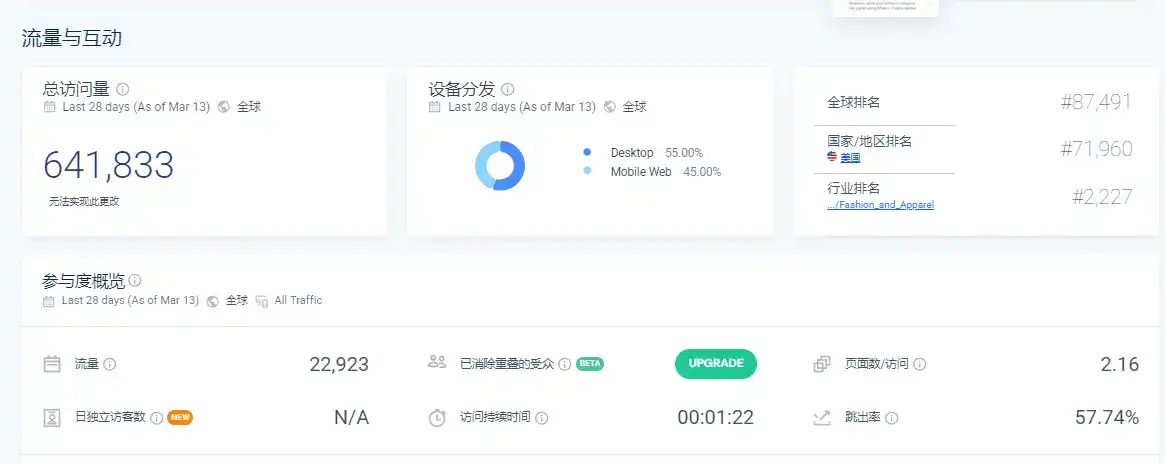
According to website traffic analysis platform SimilarWeb, Mirror's official website had a total of 642,000 visits in the past month, a 23.8% decrease from the previous month, and a staggering drop from its peak—Mirror has plummeted to 2183rd place in the blockchain industry website rankings.
All these changes conceal the shattering of decentralized dreams and the harsh collision with reality. From the spark of innovation to the burst of the bubble, behind Mirror's rise and fall, what kind of industry reflection is hidden?
Genesis: Ambitions to Reshape the Creator Economy (2020-2021)

As one of the earliest platforms to explore the "ownership economy" in the Web3 wave, Mirror's birth is inseparable from two major narratives in the crypto world: NFT assetization and DAO governance experiments.
Its founder Denis Nazarov (former a16z partner) launched a product prototype at the end of 2020, anchoring on a disruptive proposition—freeing content creation from platform monopolies, allowing creators to directly hold content ownership and revenue rights.
The initial feature design directly addressed traditional platform pain points:
· Content NFTization: Each article could be minted as an NFT, with creators retaining permanent copyright and earning a share through secondary market trades;
· Crowdfunding Tools: Supporting creators to launch on-chain crowdfunding, where supporters invest in ETH and receive project tokens, forming a "creation-funding-revenue sharing" loop (e.g., the crowdfunding of Emily Segal's novel raised 408,000 USD);
· Decentralized Storage: Achieving permanent content storage based on Arweave to mitigate platform censorship risks;
· Tokenomics Experiment: Allowing the issuance of ERC-20 tokens to build a fan-driven economic ecosystem.
These features quickly attracted crypto-native creators. At its peak in 2021, Mirror's monthly traffic exceeded tens of millions, ranking in the TOP 50 of blockchain application traffic, being seen as the "Web3 version of Medium."
The key to its success: mapping content value directly to on-chain assets and restructuring the interests of creators, investors, and propagators through a token mechanism.
Peak: DAO Toolkit and the Dream of a "Web3 Media Empire" (2021-2022)
During the bull market of 2021, Mirror experienced its shining moment. With the explosion of the DAO concept, the platform launched tools such as Splits (revenue sharing) and TokenRace (community voting), attempting to become a "DAO operating system." A typical example is the basketball community The Krause House, which crowdfunded 1000 ETH (approximately $2.8 million) through Mirror and used tokens to achieve governance distribution.
At this point, Mirror's positioning had shifted from a content platform to Web3 infrastructure:
· Technical Layer: Integrating components such as ENS domain and MetaMask wallet to lower the user entry barrier;
· Ecosystem Layer: Opening APIs to attract developers to build third-party tools (such as the article search engine Askmirror.xyz);
· Narrative Layer: Claiming to create a "roadshow platform for the value internet" to connect creators, investors, and the community.
During this phase, Mirror's average monthly traffic remained stable at over tens of millions, on-chain data showed that it had minted over 100,000 pieces of NFT content, and the total crowdfunded amount exceeded 5000 ETH. Denis Nazarov even put forward the vision that "every DAO needs a Mirror homepage."
Fracture: Strategic Swings and Product Shortcomings (2022-2023)
1. Feature Drift
Mirror has been oscillating between being a "Tool Platform" and a "Media Community":
In August 2022, it suddenly removed NFT and crowdfunding features, shifting focus to pure content publishing; in 2023, it reintroduced the "Subscribe to Mint" subscription-based NFT feature, but failed to address the creator's traffic distribution issue; core functions (such as data analytics and subscription systems) have long relied on third-party development, causing official stagnation.
2. Regulatory Pressure and Compliance Challenges
The increased scrutiny by the U.S. SEC on token issuance forced Mirror to abandon its most appealing "Crowdfunding-Token" model. Some projects (such as The Krause House) faced investigation for alleged securities violations, leading to a collapse in investor confidence.
3. User Growth Bottleneck
Compared to traditional platforms, Mirror has consistently failed to break through the crypto community:
· High Barrier to Entry: Users need to be familiar with wallet operations, gas fee payments, and other processes;
· Varied Content Quality: Numerous sponsored posts and speculative content flooded the platform;
· Fragmented User Experience: Article reading, NFT transactions, and community interactions are scattered across different interfaces.
By the end of 2023, Mirror's monthly traffic had plummeted to below 2 million, falling out of the top 200 blockchain applications.
Collapse: Acquisition, Transformation, and Industry Reflection (2024-2025)
In May 2024, Paragraph announced the acquisition of Mirror, marking the end of its era as an independent operation. The transaction details revealed:
Mirror's valuation had shrunk by 90% from its peak, with the parent company, Reflective Technologies Inc., selling at a low price citing "high technical debt and a blurred business model"; the core team shifted focus to developing the social app Kiosk, emphasizing "on-chain social + asset trading," but the product remained within the Farcaster framework; the original content ecosystem was migrated to Paragraph, causing many creators to leave due to reduced revenue sharing.
If previous strategic mistakes could be partly attributed to the market environment, then the "On-chain Outage Event" that occurred in the early hours of January 13, 2025, completely shredded the last vestiges of Mirror's dignity.
At 12:38 AM (GMT+8) on the same day, the platform, without issuing any prior announcement, forcibly started storing all newly published articles on a centralized server, halting on-chain content.
Despite the team arguing that "Arweave storage costs are too high and need to optimize user experience," on-chain browser data shows that in the following two months, the Mirror contract address only had 3 new interaction records, all of which were modifications of old articles.
This means that this platform, which once touted "data sovereignty," pressed the delete key in the most fundamental battleground of Web3 narratives — content immutability.
The community's response was nothing short of severe:
· Collective protests from creators: Leading crypto artist pplpleasr withdrew all work and publicly mocked, "Mirror's server lifespan may be shorter than my home Wi-Fi router";
· Data migration wave: Competitors like Paragraph, Lens Protocol, saw a 400% surge in new creators in a single week, with some users even manually engraving article hashes into the Bitcoin Ordinals protocol;
· On-chain evidence archiving: An anonymous developer @0xSisyphus compared Mirror server data with on-chain records and found that at least 12% of historical articles had been tampered with (including the deletion of sensitive regulatory content).
The absurdity of this farce lies in the fact that when users questioned "why no prior notice was given," Mirror customer service actually cited Section 4.7 of the "User Agreement" — "The platform has the right to unilaterally adjust storage policies."
In the early versions of this agreement, this clause originally stated that "all content is automatically permanently stored on-chain." Some users dug up a 2021 Denis Nazarov speech video, where he was seen holding high a banner that read "Storing on-chain is a human right" — today, this video is listed on an NFT marketplace for 0.0001 ETH, labeled as a "historical irony artwork."
Dissecting the Demise: When "decentralization" becomes a growth tool
Mirror's collapse was far from accidental. Looking back at its development trajectory, the "pseudo-decentralization" gene was planted as early as 2022:
1. Selective On-chain "Sleight of Hand"
Despite touting "on-chain storage," Mirror always held core data close:
· User Graph: Data such as fan subscriptions and reading records were never on-chain;
· Traffic Distribution Rules: The article recommendation algorithm has always been a closed-source black-box system;
· Revenue Split Logic: Platform fee adjustments do not require community voting and are directly decided by the San Francisco headquarters.
This "centralization of key data, with edge data on-chain" strategy is fundamentally in line with Web2 platforms' operation of "trading openness through APIs for regulatory compliance."
2. The "Exploitative Pivot" of the Economic Model
The "Subscribe to Mint" feature launched in 2023 exposed Mirror's underlying logic:
· Creator: Needs to pay a 5% platform fee + Gas fee to mint subscription NFTs;
· Reader: Needs to stake tokens to earn voting rights, influencing article recommendation rankings;
· Platform: By controlling token release pace, effectively reconstructed the Web2 closed loop of "traffic acquisition, algorithm manipulation, fee extraction."
This design was sharply criticized by crypto economist Tina Heidenberg: "It replicated YouTube's ad revenue-sharing system with blockchain technology but with lower efficiency and less transparency."
3. The "Suicidal Compromise" of Infrastructure
To pursue user growth, Mirror has lowered technical standards multiple times:
· In 2023, it scrapped mandatory ENS domain binding, allowing email registration (resulting in a surge of Sybil attacks);
· In 2024, it introduced an "off-chain signature" scheme, essentially entrusting private keys to platform servers;
· In 2025, it completely abandoned Arweave in favor of AWS's Singapore node for data storage.
As the team kept conceding on the tech stack, Mirror has long ceased to be the Holy Grail of the Web3 world and instead has become an AWS subdirectory flying the Jolly Roger flag.
Epilogue: Scribbled on the Night of Web3's "Berlin Wall" Collapse
In March 2025, when the last group of Mirror creators on the X platform posted their '#RIPMirror' eulogies, people finally realized: the Web3 revolution had never promised a gentle journey; it required a complete technological purge—killing off all those unwilling to cage their servers, the 'Impostor Prophets'.
As Bitcoin Core developer Jameson Lopp wrote in the eulogy: "Mirror's tombstone should bear the oath of all Web3 entrepreneurs: if you still seek the life-and-death power over data, openly return to Silicon Valley; do not profane the cathedral of the crypto faithful with 'decentralization'."
You may also like

Cryptocurrency market makers collectively seek change as it becomes increasingly difficult to make money

a16z Crypto Partner: Cash flow is the moat

Citibank releases "2030 Asset Tokenization Market Outlook": 6 major trends may create a $8.2 trillion market

The trillion-dollar valuation test: Are the three major super IPOs a celebration for tech stocks or a nightmare for the crypto market?

Morning Report | Digital Asset completes $355 million financing led by a16z Crypto; Meta completes operational separation from Manus

Morning News | CME Group launches Nasdaq Cryptocurrency Index futures; Asset management giant Janus Henderson strategically invests in Ethena

Bitcoin Layer 2 Network Botanix: Why Did We Choose to Dissolve?

Why did Oracle deliver the strongest financial report in history, yet its stock price fell?
When the P2P illicit funds from ten years ago turned into 60,000 bitcoins

Dialogue with OmenX Founder: Why does the prediction market need an evolution from "spot" to "derivatives"?
Galaxy in-depth report: Is Solana still worth paying attention to?

Young people in South Korea make a "final effort" in the epic bull market
The pricing controversy of Trade.xyz exposes the fatal weakness of Pre-IPO perpetual contracts
How much longer can Ethereum's last big buyer hold on?

World Cup 2026 Coming – WEEX Celebrates with $1M Prize Pool & Michael Owen Live

Morning Report | OpenAI has submitted an S-1 registration statement draft to the U.S. SEC; Morpho completes $175 million financing

Galaxy Deep Research Report: How Hyperliquid's HIP-4 Upgrade Changes the Landscape of Prediction Markets?

Latest research from 13 top universities including Cornell University: The current state, challenges, and misconceptions of the fusion of Crypto and AI
Cryptocurrency market makers collectively seek change as it becomes increasingly difficult to make money
a16z Crypto Partner: Cash flow is the moat
Citibank releases "2030 Asset Tokenization Market Outlook": 6 major trends may create a $8.2 trillion market
The trillion-dollar valuation test: Are the three major super IPOs a celebration for tech stocks or a nightmare for the crypto market?
Morning Report | Digital Asset completes $355 million financing led by a16z Crypto; Meta completes operational separation from Manus
Morning News | CME Group launches Nasdaq Cryptocurrency Index futures; Asset management giant Janus Henderson strategically invests in Ethena


