
- Buy Crypto
- Markets
 Futures
- Spot
- Copy Trade
- Earn
- More
Layoffs of 30%, But Spending $250 Million to Buy a Company - What Is Polygon Thinking?

Original Article Title: "Just Spent $250 Million to Acquire a Company, Then Laid Off 30% of Its Workforce - Polygon’s New Strategy"
Original Article Author: David, TechFlow from DeepTech
Today, news came out that Polygon laid off approximately 30% of its employees.
Although Polygon has not officially announced the layoffs, CEO Marc Boiron acknowledged them in an interview, stating that the total headcount would remain stable due to the inclusion of the newly acquired teams.
There have also been posts from laid-off employees on social media, indirectly confirming this fact.
However, in the same week, Polygon announced a $250 million acquisition of two companies. Is it not a bit strange to lay off employees while spending a large sum of money?
If it were merely a contraction, they would not simultaneously invest $250 million in an acquisition. If it were an expansion, they would not cut 30% of their workforce. Viewing these two events together, it seems more like a blood transfusion.
The laid-off employees belonged to the original business line, and the positions freed up were given to the teams acquired through the purchase.
The $250 Million Purchase Was for Licenses and Payment Channels
The two acquired companies are named Coinme and Sequence.
Coinme is an established company founded in 2014 that operates a fiat-to-crypto exchange channel and runs over 50,000 retail points in the US with cryptocurrency ATMs. Its most valuable asset is its licenses, holding money transmission licenses in 48 states. This is a rare acquisition in the US; companies like PayPal and Stripe took many years to acquire them.
Sequence provides wallet infrastructure and cross-chain routing. In simple terms, it allows users to seamlessly conduct cross-chain transfers without dealing with bridge protocols or gas exchange, enabling one-click cross-chain transfers. Its clients include Polygon, Immutable, and Arbitrum chains, and it has a distribution partnership with Google Cloud.
The two acquisitions totaled $250 million. Polygon has named this system the "Open Money Stack," positioning it as stablecoin payment middleware aimed at selling it to banks, payment companies, and remittance businesses, among other B2B clients.
My understanding of the logic is as follows:
Coinme provides a compliant fiat on/off ramp, Sequence offers user-friendly wallets and cross-chain capabilities, Polygon's own chain serves as the settlement layer. When these three pieces come together, it forms a comprehensive stablecoin payment infrastructure.
The question is, why is Polygon doing this?
The Path of L2, Polygon is Already Struggling
The situation in 2025 is very clear, Base has won.
On this L2, Coinbase's TVL has grown from $3.1 billion in early last year to $5.6 billion, capturing 50% of the entire L2 track. Arbitrum held onto 30% but saw little growth. Most of the other dozens of L2s had no users after the airdrop.
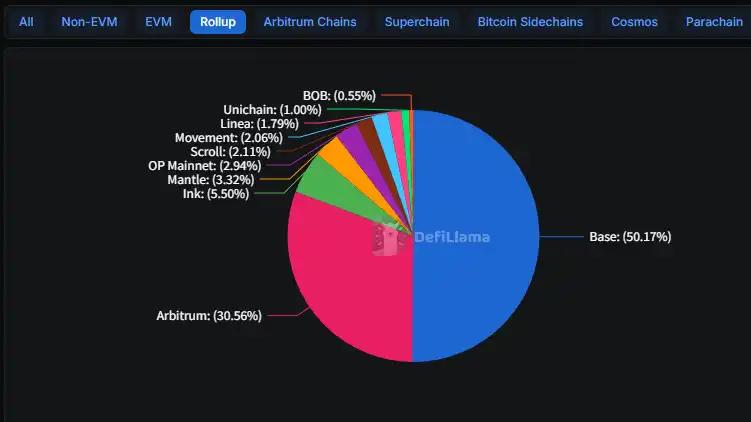
Why did Base win? Coinbase has hundreds of millions of registered users, so whenever a new product feature is launched, users naturally flock to it.
For example, the Morpho lending protocol's deposits on Base grew from $354 million in early last year to $2 billion now, mainly because it was integrated into Coinbase's App. Users can use it by simply opening the app, without needing to know anything about L2 or Morpho.
Polygon doesn't have this kind of entry point. In 2024, it also had a layoff, cutting 20%, which was during a bear market contraction when everyone was downsizing.
This time it's different; layoffs are happening even with funds in the bank, indicating a proactive choice to change direction.
Remember, in the past, Polygon's narrative was about enterprise adoption, such as accelerator programs with Disney, Starbucks NFT membership plans, Meta's Instagram minting, Reddit avatars, and so on.
Four years later, most of those partnerships have gone silent. Starbucks' Odyssey plan was also shut down last year.
Continuing to head-on compete with Base in the L2 realm, Polygon has almost no chance of winning. While the technological gap can be closed, the user entry point cannot. Instead of lingering on a battlefield where victory is unlikely, it's better to seek out new opportunities.
Stablecoin Payments Are a Good Direction, But It's Crowded
Stablecoin payments are indeed a growing market.
By 2025, the total market capitalization of stablecoins exceeded $300 billion, up 45% from the previous year. Use cases are also evolving, expanding from primarily arbitrage between trading platforms to scenarios such as cross-border payments, corporate finance, and payroll.
However, this market is already quite crowded.
Last year, Stripe spent $1.1 billion to acquire the stablecoin infrastructure company Bridge and recently obtained the issuance rights of the USDH stablecoin on Hyperliquid. PayPal's PYUSD already holds a 7% stablecoin market share on Solana.
Circle is promoting its Payments Network. Major banks like JPMorgan Chase, Wells Fargo, and Bank of America are forming alliances to issue their own stablecoins.
Polygon founder Sandeep Nailwal, in an interview with Fortune, mentioned that this acquisition has put Polygon and Stripe in a competitive relationship.
To be honest, that statement might be a bit exaggerated.
While Stripe spent $1.1 billion on acquisitions, Polygon spent $250 million. Stripe has millions of merchants, while Polygon's customers are mainly developers. Most importantly, Stripe has accumulated payment licenses and banking relationships over more than a decade.
In a head-to-head comparison, they are not on the same level.
However, Polygon may be betting on a different approach. While Stripe aims to integrate stablecoins into its closed loop, maintaining merchants on Stripe but switching the settlement layer to stablecoins for faster and cheaper transactions.
Polygon's goal is to provide open infrastructure, allowing any bank or payment company to build their services on it.
One is vertical integration, and the other is horizontal entry. These two models may not directly compete but are vying for the attention of the same set of customers.
Adopting New Strategies, the Future Is Uncertain
Lastly, it's not uncommon for the crypto industry to see layoffs in the past two years.
OpenSea cut 50% of its workforce, Yuga Labs, Chainalysis are downsizing. ConsenSys laid off 20% of its employees last year and is doing so again this year. Most of these are passive reductions – running out of funds, survival comes first.
Polygon is a bit different. With plenty of funds available for acquisitions, they chose to lay off 30% of their workforce.
A change in strategy with some risks.
The company Polygon acquired, Coinme, is primarily known for its crypto ATMs. They have deployed machines in over 50,000 retail locations across the USA, allowing users to buy coins with cash and exchange coins for cash.
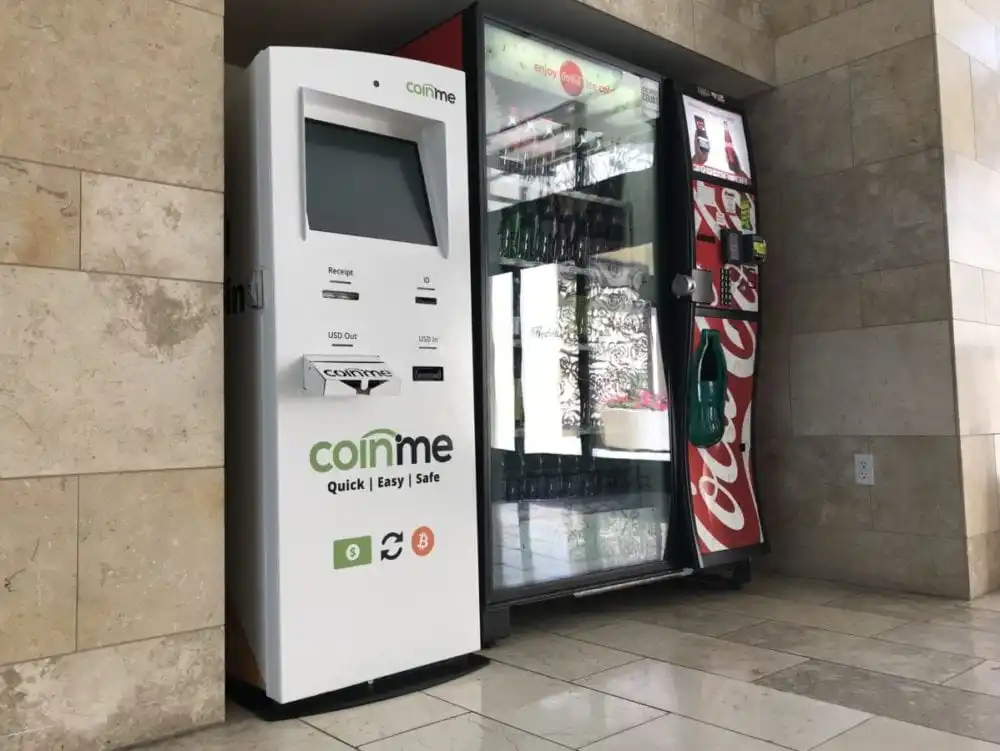
The trouble is, Coinme's business ran into issues last year.
The California regulatory agency fined Coinme $300,000 for allowing ATM users to withdraw more than the daily limit of $1,000. Washington State went even further by imposing a ban, which was only lifted in December last year.
Polygon's CEO had previously stated that Coinme's compliance was "beyond expectations." However, regulatory penalties are written in black and white, and nice words cannot change that fact.
When you map these events to the token, the narrative of the $POL token changes.
Previously, the more the chain was utilized, the more valuable POL became. After the acquisition, Coinme now charges a fee for every transaction, which constitutes real revenue, not just a token narrative. The company estimates this could generate over $100 million annually.
If this forecast holds true, Polygon could potentially transition from a "protocol" to a "company" with revenue, profit, and a valuation anchor, a rarity in the crypto industry.
However, the speed of convergence towards traditional finance is accelerating, narrowing the window for native crypto companies.
There's a saying in the industry: "Bear market for building, bull market for harvesting."
Polygon's current dilemma is that it is still in the building phase, while the harvesters of the bull market may have already moved on.
You may also like

Wall Street Shorts ETH: Vitalik is aware and has front-run, while Tom Lee remains oblivious

Social Capital CEO: How Equity Tokenization is Reshaping Capital Markets from US Stocks to SpaceX?

CoinGecko Report: Surge of 346% vs Dip of 20.8%, The Wild Rise of DEX

a16z: The Real Opportunity of Stablecoins Lies Not in Disruption but in Filling Gaps

Mining Exodus: Someone Holds $12.8 Billion AI Order

March 6 Market Key Intelligence, How Much Did You Miss?

a16z: The True Opportunity of Stablecoins is in Complementing, Not Disrupting

Predict LALIGA Matches, Shoot Daily & Win BTC, USDT and WXT on WEEX
The WEEX × LALIGA campaign brought together football excitement and crypto participation through a dynamic interactive experience. During the event, users predicted matches, completed trading tasks, and took daily shots to compete for rewards including BTC, USDT, WXT, and exclusive prizes.

Ray Dalio Dialogue: Why I'm Betting on Gold and Not Bitcoin

Who Took the Money in the AI Era? A Must-See Investment Checklist for HALO Asset Trading
Wall Street Bears Target Ethereum: Vitalik In the Know Takes Flight, Tom Lee Remains Bullish
Pump.fun Hacker Steals $2 Million, Receives 6-Year Prison Sentence, Opts for 'Self-Detonation'

6% Annual Percentage Yield as Musk Declares War on Traditional Banks
36 years, 4 wars, 1 script: How does capital price the world in conflict?

Mining Companies' Great Migration: Some Have Already Secured $12.8 Billion in AI Orders
What Is Vibe Coding? How AI Is Changing Web3 & Crypto Development
What is vibe coding? Learn how AI coding tools are lowering the barrier to Web3 development and enabling anyone to build crypto applications.
The parent company of the New York Stock Exchange strategically invests in OKX: The intentions behind the $25 billion valuation

WEEX P2P update: Country/region restrictions for ad posting
To improve ad security and matching accuracy, WEEX P2P now allows advertisers to restrict who can trade with their ads based on country or region. Advertisers can select preferred counterparty locations for a safer, smoother trading experience.
I. Overview
When publishing P2P ads, advertisers can now set the following:
Allow only counterparties from selected countries or regions to trade with your ads.
With this feature, you can:
Target specific user groups more precisely.Reduce cross-region trading risks.Improve order matching quality.
II. Applicable scenarios
The following are some common scenarios:
Restrict payment methods: Limit orders to users in your country using supported local banks or wallets.Risk control: Avoid trading with users from high-risk regions.Operational strategy: Tailor ads to specific markets.
III. How to get started
On the ad posting page, find "Trading requirements":
Select "Trade with users from selected countries or regions only".Then select the countries or regions to add to the allowlist.Use the search box to quickly find a country or region.Once your settings are complete, submit the ad to apply the restrictions.
When an advertiser enables the "Country/Region Restriction" feature, users who do not meet the criteria will be blocked when placing an order and will see the following prompt:
If you encounter this issue when placing an order as a regular user, try the following solutions.
Choose another ad: Select ads that do not restrict your country/region, or ads that allow users from your location.Show local ads only: Prioritize ads available in the same country as your identity verification.
IV. Benefits
Compared with ads without country/region restrictions, this feature provides the following improvements.
Aspect
Improvement
Trading security
Reduces abnormal orders and fraud risk
Conversion efficiency
Matches ads with more relevant users
Order completion rate
Reduces failures caused by incompatible payment methods
V. FAQ
Q1: Why are some users not able to place orders on my ad?
A1: Their country or region may not be included in your allowlist.
Q2: Can I select multiple countries or regions when setting the restriction?
A2: Yes, multiple selections are supported.
Q3: Can I edit my published ads?
A3: Yes. You can edit your ad in the "My Ads" list. Changes will take effect immediately after saving.


 App
App