
Bitcoin inflows to US set to turn positive in 2026, Chainalysis says

 Prefer us on Google


The United States has recorded net Bitcoin inflows for the first time since 2022, with transfers above $10 million bringing in 53,200 BTC during Chainalysis's 2026 reporting period.
Summary
- Large Bitcoin transfers drove net U.S. inflows, while transfers below $10,000 remained net outbound.
- The U.S. crypto economy totaled $2.78 trillion, down 2.2% from the previous reporting period.
- U.S. Bitcoin activity has gained global share since spot ETFs launched in January 2024.
- Dollar stablecoins have expanded overseas as U.S. institutions continued accumulating Bitcoin, according to the report.
Chainalysis reported in its Oct. 14 study, "North America: Inside the Growth of Agentic Commerce," that institutional buying drove the country's return to net Bitcoin inflows during the 12 months ending June 2026.
Across the transfer sizes tracked in the study, the report found that transactions below $10,000 consistently carried more Bitcoin out of the United States than into it. Larger transfers showed the opposite pattern, which the firm attributed to institutions buying while retail investors largely sold.
Institutional transfers drive Bitcoin inflows to the US
Within the largest transaction bracket, transfers exceeding $10 million accounted for 53,200 BTC in net arrivals, according to the study. The report placed the return to net imports alongside a steady increase in America's share of global Bitcoin activity since U.S. spot Bitcoin ETFs launched in January 2024.
For its comparison of national Bitcoin activity, the firm combined Bitcoin's share of service inflows, exchange trading and net cross-border receipts into one index. Its findings showed U.S. activity becoming more concentrated in Bitcoin while other markets relied more heavily on dollar stablecoins.
Despite the buying, the report measured a 2.2% decline in the U.S. crypto economy to $2.78 trillion. Chainalysis said the country nevertheless preserved most of the expansion achieved during the previous reporting period, when its crypto economy nearly doubled.
In the firm's assessment, ETFs, tokenized assets and stablecoins helped sustain that activity through the market downturn. The United States remained the largest national crypto economy covered by the research.
US Bitcoin ETFs draw fresh allocations after withdrawals
Recent fund-flow reports have documented renewed buying through U.S.-listed investment products, although daily allocations have varied.
As crypto.news reported on Sep. 4, U.S. spot Bitcoin ETFs attracted $730.9 million in inflows during the Sep. 3 session, their largest daily intake since Jan. 14, according to SoSoValue data.
BlackRock's IBIT received $454 million, followed by $138 million for ARK Invest and 21Shares' ARKB and roughly $74 million for Fidelity's FBTC, the report said. Combined net assets across the funds reached $103.34 billion, equivalent to 6.32% of Bitcoin's market capitalization at the time.
According to the same coverage, cumulative net inflows since the products' January 2024 launch reached $55.44 billion. The September buying followed $236 million in withdrawals on Sep. 1, including roughly $201 million from IBIT, before approximately $101 million returned across the group on Sep. 2.
Earlier coverage on Aug. 8 documented Morgan Stanley's Bitcoin ETF adding 232.5 BTC, worth approximately $15.05 million, based on Arkham data. The addition lifted its holdings to about 6,563 BTC while Bitcoin traded below $65,000.
According to that report, Arkham also tracked approximately $111 million entering BlackRock's Bitcoin ETF, $33 million entering Fidelity's product and $9 million entering Franklin Templeton's fund during an early-August session.
Morgan Stanley announced the launch of its Bitcoin Trust, trading under MSBT, on April 8. In its product disclosures, the bank said the fund holds Bitcoin but that owning its shares does not constitute direct ownership of the cryptocurrency.
Dollar stablecoins serve different needs outside America
Alongside institutional Bitcoin purchases, the Chainalysis report described growing overseas use of dollar stablecoins for savings, person-to-person transfers and cross-border business payments.
The firm attributed the difference partly to banking access: Americans can already hold dollars through domestic bank accounts, while stablecoins offer people elsewhere a way to hold dollar-denominated assets without a U.S. account.
According to the study, stablecoins represent a smaller proportion of American crypto activity than they do elsewhere, and the gap has increased across successive reporting periods. The report characterized American Bitcoin use as increasingly tied to demand for a scarce store of value.
BlackRock's head of digital assets research, Will Su, told the researchers that interest in Bitcoin "as a monetary alternative remains strong," citing rising government debt and spending.
For stablecoins, the report linked overseas adoption to economic activity benefiting American companies and the federal government. In its assessment, reserve holdings connect demand for digital dollars with demand for U.S. government debt, while the tokens support payments outside conventional banking channels.
-- Price
Fed proposals set reserve and bank application requirements
On the regulatory side, President Donald Trump signed the GENIUS Act in 2025, establishing a federal framework for payment stablecoins that includes reserve backing and monthly reserve disclosures.
In Sep. 24 coverage, the Federal Reserve's proposed stablecoin reserve rules set out how issuers under its supervision would back their tokens and how covered banks would seek approval to issue them through subsidiaries.
According to the Fed's announcement, the first proposal would require full backing with permitted assets, including short-term Treasury bills and certain other high-quality liquid assets. The draft would also establish capital requirements for credit and operational risks, risk-management standards and rules for supervised firms safeguarding stablecoin reserves.
Under the second proposal, covered banks would submit business plans, financial information and other application materials, the central bank said. Its draft also establishes procedures for appeals, hearings and final application decisions, with public comments due 60 days after publication in the Federal Register.
This content is provided for general informational purposes only and doesn't constitute financial, investment, legal, or tax advice. Any events, rewards, online promotions, or related information mentioned herein should not be considered a recommendation, solicitation, or invitation to purchase, sell, trade, or otherwise deal in any crypto assets. Crypto assets are highly volatile and may result in loss. The availability of WEEX services, products, and related events may vary by region. You are responsible for ensuring that your participation is in accordance with applicable local laws and regulations.
You may also like

iGaming Tokens Need Real Revenue, Not Just Hype
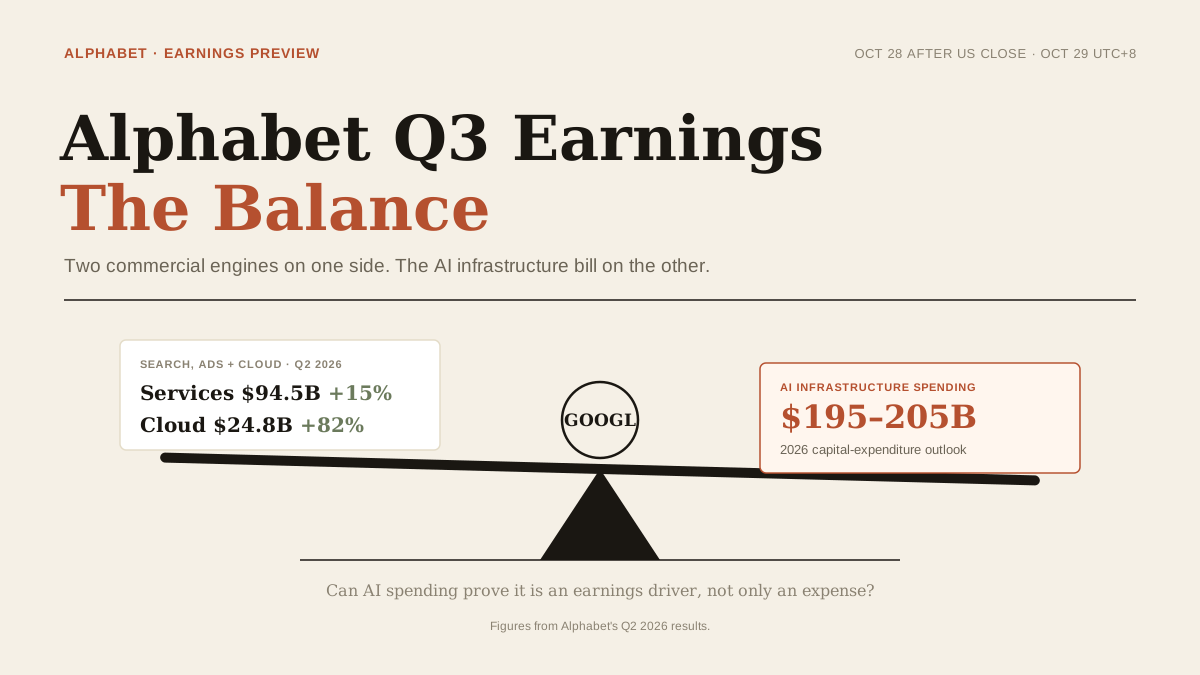
Google Stock Before Alphabet Earnings: Can AI Spending and Search Growth Support GOOGL?
Alphabet reports Q3 2026 results on October 28. See the Search, Google Cloud, AI spending, and guidance signals shaping GOOGL stock.

Fractional Reserve: Reserve Requirement Abolished. Where is the Value?

Anthropic's Revenue Rises to $16.8 Billion Ahead of IPO

‘Is Korea Facing a Second IMF Crisis? The Solution Lies in XRP?’... The Leap of the Crisis Theory by BeInCrypto

ICO, VC Tokens, and Alpha Models: Why They Can't Save the Current Crypto Market?

One Order Book for Dollars and Stablecoins. How It Works

Cyberattack on the ports of Marseille and La Rochelle? Hackers paid 1 dollar in crypto
![[Exclusive] Coinbase Transaction Data Shows 100 Million Trades Misrepresented... Data Analysis Firm Corrects Errors](/public-static/20_9098579959.png?format=avif)
[Exclusive] Coinbase Transaction Data Shows 100 Million Trades Misrepresented... Data Analysis Firm Corrects Errors

Wall Street Morning Report: U.S. Inflation Resurfaces, AI Credit Risks Spread, Chip Stocks Fall for Six Consecutive Days
Arthur Hayes: Focus on Established DeFi Projects with Cash Flow
Anthropic Reports $16.8 Billion Revenue in Q3, IPO Feasibility Strengthened

Hot CPI Lifts Hike Bets; Risk Assets Pull Back | WEEX TradFi Daily(October 15, 2026)
Major indexes closed lower on October 14, with the Nasdaq leading the decline. September unadjusted CPI rose to 3.7% year on year, above forecasts, and core CPI also beat expectations. Traders sharply raised this month’s hike probability to about 43.7% and fully priced two more hikes by the end of January. Chip stocks were sold again. Bitcoin broke below $83,000 and last traded near $81,700, while spot gold and silver fell. Crypto-related stocks were under pressure, but PYTH rose against the tape. October 15 brings PPI, retail sales and key
WEEX Exclusive:Hot CPI Lifts Hike Bets; Risk Assets Pull Back | WEEX TradFi Daily(October 15, 2026)

Sam Price Observes Changes in Bitcoin ETF Net Inflows

G20 warns that stablecoins may lose value even if fully backed
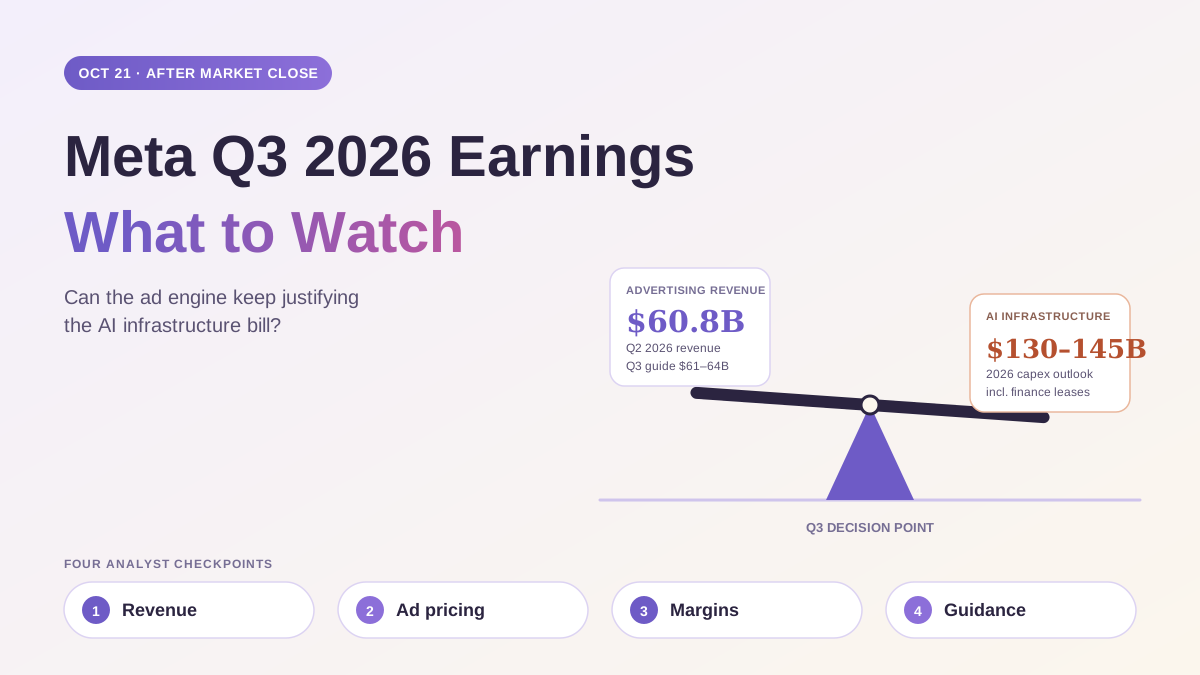
Meta Stock Earnings: What to Watch in Meta Platforms’ Q3 2026 Results
Meta reports Q3 2026 results on October 21. See the advertising, AI spending, margin, and guidance signals that could move META stock.

Starting a Business with Crypto Payments: What Changes in 2027

September CPI in the US: What Inflation Tells the Investor

Why Only 2% of $10 Billion in US Treasury Bonds Enter DeFi?

Ethereum ETF Funds Break Out of Outflow Series with Inflows of $24.8 Million

Arca: Four Investment Directions for Crypto Assets

When Will Bitcoin Surpass Its Previous High? Insights from ChatGPT, Claude, and Gemini

When Currency Becomes Programmable, the Next Stop for the Crypto Industry May Be to Rewrite Token Rules

The Hook Ecosystem Begins to Stir! Who Will Be the Next Dark Horse?
"CARF Introduced Before Virtual Asset Taxation... Need for Review of Implementation Basis"

Liquidity Structure of Domestic Cryptocurrency Exchanges and Conditions for Introducing LP – Bitplanet

Tencent Tests Personal Investment Analysis Assistant Rena, Supports WeChat Connection

Financial Stability Board Highlights Unclear Bankruptcy Laws for Stablecoin Failures

Why Most Public Chains Are Doomed to Fail, According to Real Vision Founder
iGaming Tokens Need Real Revenue, Not Just Hype
Google Stock Before Alphabet Earnings: Can AI Spending and Search Growth Support GOOGL?
Alphabet reports Q3 2026 results on October 28. See the Search, Google Cloud, AI spending, and guidance signals shaping GOOGL stock.
Fractional Reserve: Reserve Requirement Abolished. Where is the Value?
Anthropic's Revenue Rises to $16.8 Billion Ahead of IPO
‘Is Korea Facing a Second IMF Crisis? The Solution Lies in XRP?’... The Leap of the Crisis Theory by BeInCrypto
ICO, VC Tokens, and Alpha Models: Why They Can't Save the Current Crypto Market?


