
What Is an Agentic Activities Launchpad? Inside AX1 Console 2.0

 Prefer us on Google


Crypto has spent years perfecting the launchpad. First came token launchpads, where anyone could create and list a token in a few clicks. Then, in 2024, agent launchpads arrived on Base, most visibly Virtuals Protocol, turning AI agents into tradable tokens.
AX1, a startup ecosystem on Base, is betting on a third kind. It has launched AX1 Console 2.0, which it calls an agentic activities launchpad. The difference is in what gets launched: not an asset, but an agent with a job to do.
Defining the category
AX1 defines an agentic activities launchpad as a product where people launch AI agents into work instead of launching tokens. Each activity is a quest: the agent pays for a service, gets a result, and the payment settles publicly onchain.
The model rests on x402, an open payment standard introduced by Coinbase in 2025 and now overseen by a foundation under the Linux Foundation. x402 lets software pay for a web request in USDC as part of the request itself, with no account and no API key. For a launchpad built around agents, that matters twice: the agent can pay for its own work, and every payment leaves a record on Base.
How it works
Console 2.0 is built so that a user never sees the plumbing. The entry quest, Verdict, takes three steps:
- Pick a token by name or ticker.
- Console creates an agent, covers its first runs and starts the quest.
- The agent settles the run through x402, scans the token's onchain activity and trading metrics and returns a verdict card ready to share.
Verdict is built as entertainment rather than trading guidance. It gives a second opinion with personality, never a buy or sell call. Every run earns points on a weekly contest board, and at the end of each week the top players share a prize pool. Prizes are paid in SPCXc, Coinbase's tokenized SpaceX stock on Base.
Version 2.0 is mostly about removing friction. Earlier versions asked users to set up an agent before doing anything with it. In 2.0, the agent and its starting balance are created the moment the first run starts. Also new: a footprint checker for any Base wallet, and Console running inside the Base App.
Payments, not emissions
The economics are deliberately plain. Console does not reward users with newly minted tokens. Activity is paid for in USDC, run by run, so the price of a run does not move with the market. A run costs 2 cents. The first few are covered by a starter credit, so a new user sees a result before deciding to put in any money.
Since paid quests went live on September 7, 5,669 agent wallets have paid for runs, and Console's transaction volume has reached 605,876 x402 payments. Of those wallets, 1,424 went on paying once their starter credit was used up. On x402scan, the public explorer for x402 payments, Console has been among the top five sellers by transactions and paying agents over the last 30 days, which places it among the leading x402 apps on Base. It is also listed in the x402 Bazaar on Coinbase Developer Platform. Because every run settles on Base, these figures can be checked onchain rather than taken on trust.
-- Price
Why quests
An agent is only as useful as the task it is given. A quest packages the three things a task needs: a clear input, a price and a result someone wants to see. That packaging is what lets a person with no code and no wallet setup hand work to an agent in one tap, and it is the unit AX1 plans to scale. Verdict came first because it is the simplest version of that: one input, one payment, one result that fits on a card.
What comes next
Console's quest and campaign partners include sport.fun, Upshot, Clash of Coins and BlockRun, and AX1 plans to add quests from more partner apps on Base, so agents can take on jobs beyond Verdict. A partner quest turns an app's own product into a paid job for agents, priced per run and settled through x402 like Verdict. Head-to-head agent competitions are also on the roadmap. Alongside Console, AX1 runs AX1 Assay, a paid service in which people evaluate how agents behave onchain, built for companies whose agents already run in production.
Console 2.0 is live at console.ax1.vc.
About AX1
AX1 is a startup ecosystem on Base built for the agent economy. AX1 Console is where agents work, AX1 Assay is how their work gets proven, and partner apps bring the jobs.
This content is provided for general informational purposes only and doesn't constitute financial, investment, legal, or tax advice. Any events, rewards, online promotions, or related information mentioned herein should not be considered a recommendation, solicitation, or invitation to purchase, sell, trade, or otherwise deal in any crypto assets. Crypto assets are highly volatile and may result in loss. The availability of WEEX services, products, and related events may vary by region. You are responsible for ensuring that your participation is in accordance with applicable local laws and regulations.
You may also like
Why 22 Trillion-Dollar Giants Refuse to be 'Tokenized'?

Rayls Bridges Traditional Finance and Decentralized Finance
Is 24/7 Trading a Necessity? Analyzing the Real Trading Rhythm of RWA Perpetual Contracts

Cyberattack on GMO in Japan: Trading Accounts Compromised, GMO Coin Claims to be Unaffected
Elon Musk's Grand Scheme to Undermine New Cloud Providers

Google Earnings on Oct 28: Will the Fed Decision Move GOOGL Stock?
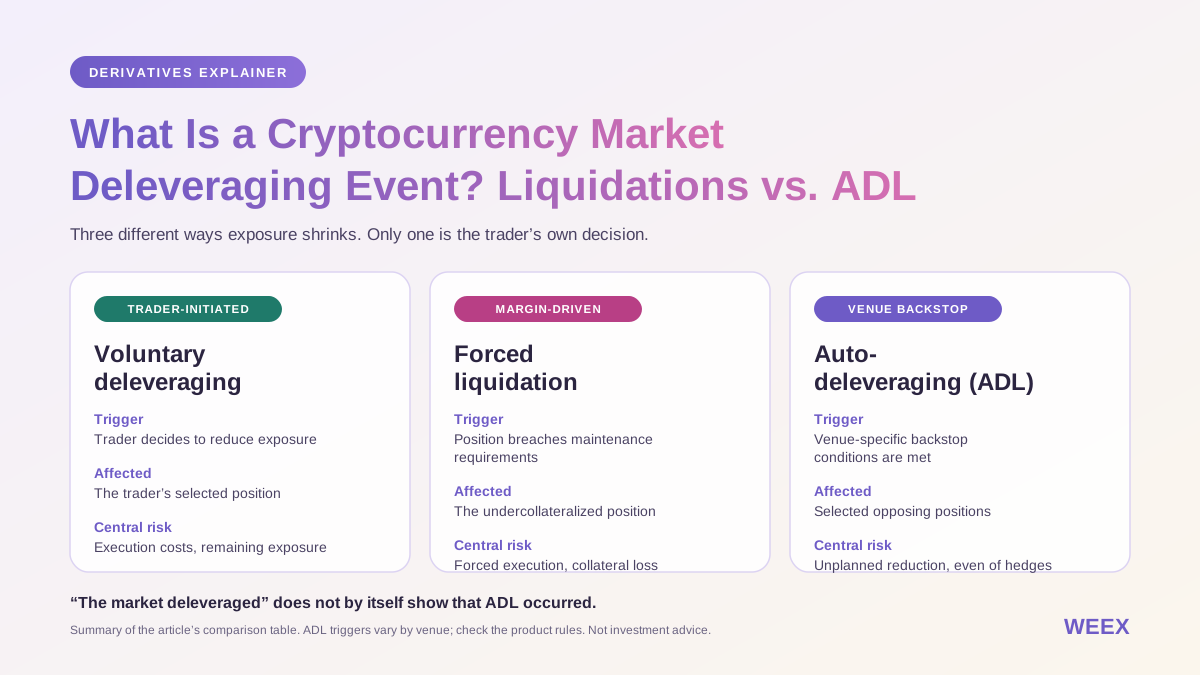
What Is a Cryptocurrency Market Deleveraging Event? Liquidations vs. ADL
Understand a cryptocurrency market deleveraging event: liquidation vs. ADL, misleading open-interest declines, hedge risks, and checks before trading.
The Week Ahead: 4 Key Moments for the Crypto Market

Do Prediction Markets Actually Bring Utility? – Tiger Research
Who Holds Tokenized Stocks? A Large Number of Retail Investors with Highly Concentrated Assets
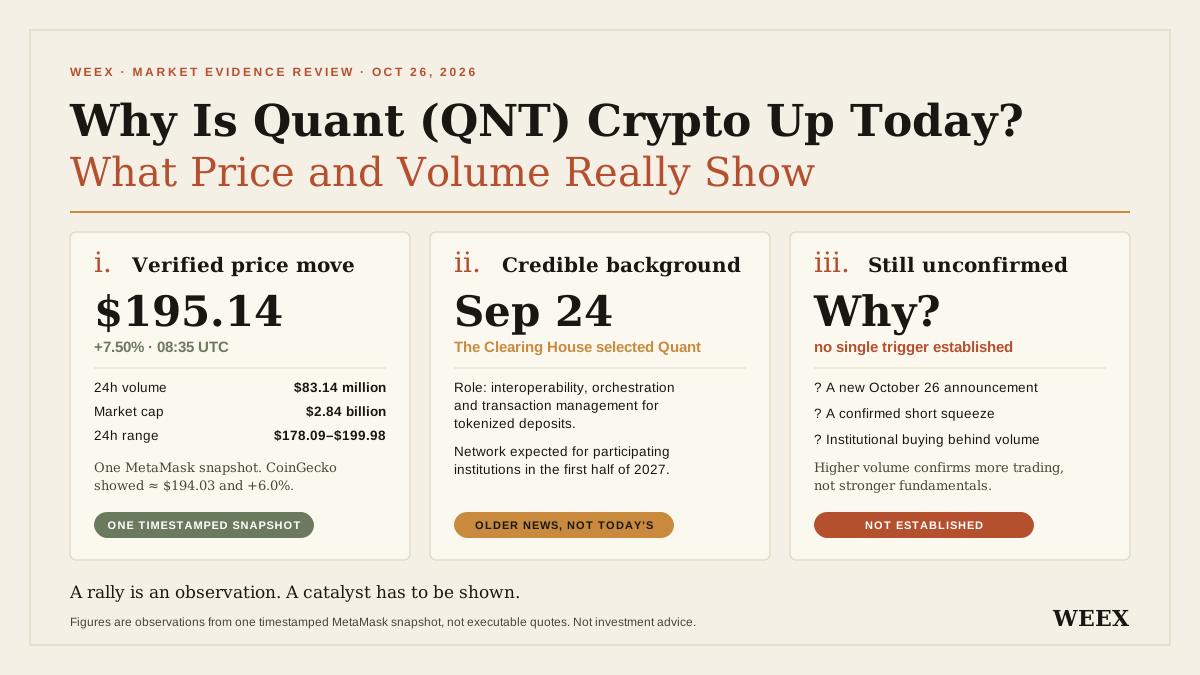
Why Is Quant (QNT) Crypto Up Today? What Price and Volume Really Show
Why is Quant (QNT) up today? Review price and volume evidence, the banking partnership timeline, token-demand assumptions, and risks before trading.
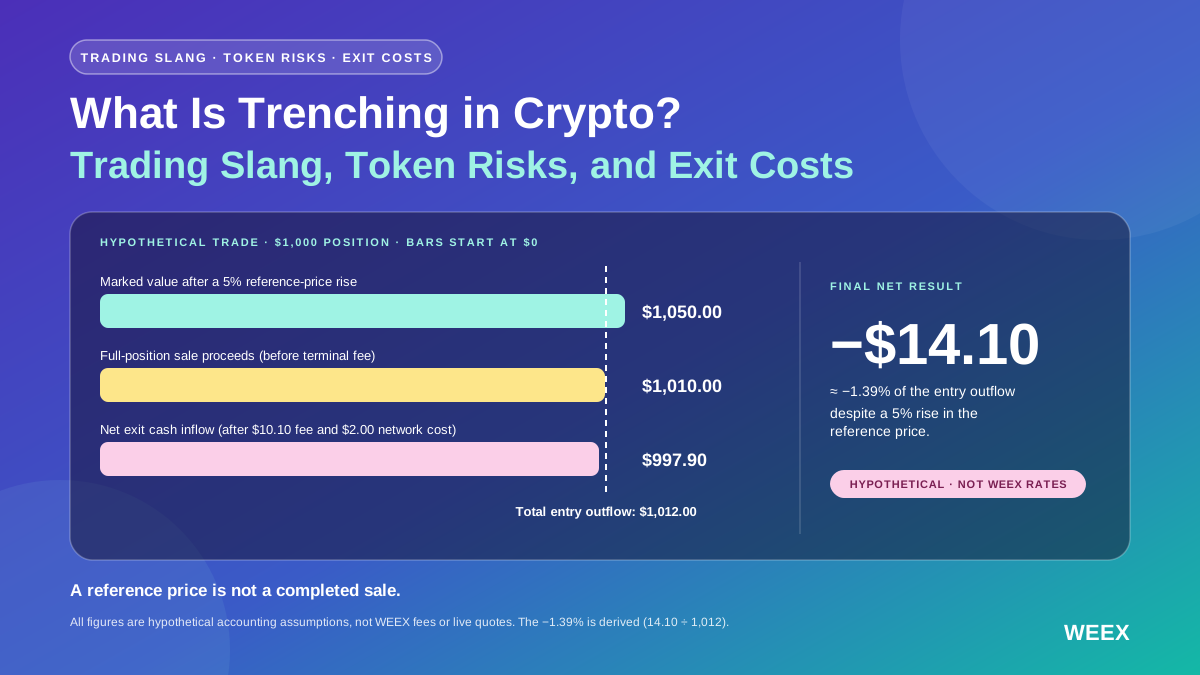
What Is Trenching in Crypto? Trading Slang, Token Risks, and Exit Costs
What is trenching in crypto? Learn the slang, token checks, liquidity risks, and how a rising token can still produce a loss after trading costs.

Flash Loans Secure Two Governance Seats: What Does the X100 Theft Teach the Industry?
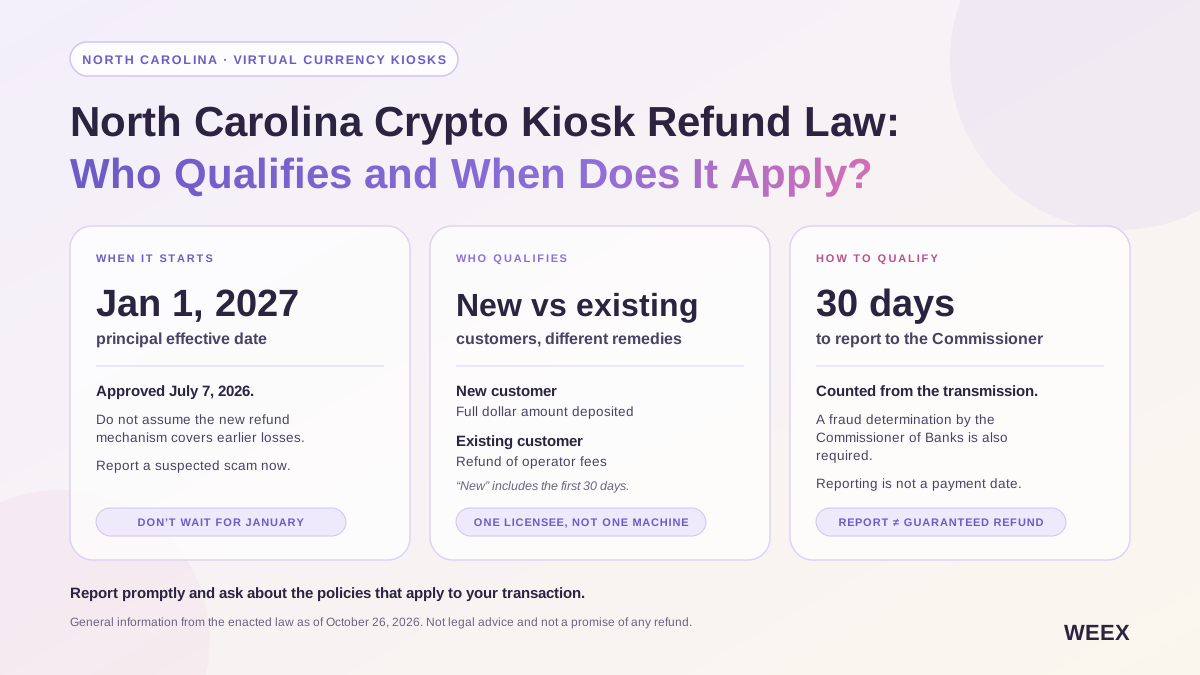
North Carolina Crypto Kiosk Refund Law: Who Qualifies and When Does It Apply?
Understand North Carolina’s crypto kiosk refund law: the January 2027 start date, who qualifies, reporting deadlines, and documents victims should keep.

AI Reduces Vulnerability Discovery Costs, Crypto Industry Divided in Response
Ethereum: Glamsterdam postponed after risks detected on 13 contracts

Who is Making Money from Digital Dollars? Profit Sharing Among Stablecoin Issuers, Distributors, and Payment Providers
Pump.fun: Why Displayed Gains Can Mislead Copy-Trading Enthusiasts
Diverging Sentiment in Altcoins: How Whales Operate Amid Market Panic

ECB says digital euro will give Europe control over its payment systems

IOSG: After KBW and TOKEN2049, with the crypto tide receding, who is still building?

Monero community backs 45 XMR proposal for core development

Risks Accumulate in the Global Economy: Double Threat from Trump, Debt Alarm in Artificial Intelligence

SEC's Crypto New Regulation Public Comment Period Ends: How Far Are We from 'Compliant ICO'?

HSBC Launches Hong Kong Dollar Stablecoin RedCoin on PayMe, Expanding to Over 3.3 Million Users and 100,000 Merchants

[Bitcoin $0 Controversy②] "$0 is an Exaggeration"... Reasons Wall Street Disagrees
Canada proposes direct stablecoin cash-outs for small holders with a 1% fee cap
[ETH Letter] Meritz Securities Reviews Tokenization of Korean Securities Based on OP Stack

Memecoin LIBRA: No charges for Javier Milei, Argentine justice sees no fraud

Fed Decision, GDP and PCE Set the Tone | WEEX Weekly Market Preview (10.26-10.30)
Why 22 Trillion-Dollar Giants Refuse to be 'Tokenized'?
Rayls Bridges Traditional Finance and Decentralized Finance
Is 24/7 Trading a Necessity? Analyzing the Real Trading Rhythm of RWA Perpetual Contracts
Cyberattack on GMO in Japan: Trading Accounts Compromised, GMO Coin Claims to be Unaffected
Elon Musk's Grand Scheme to Undermine New Cloud Providers
Google Earnings on Oct 28: Will the Fed Decision Move GOOGL Stock?


