
Morgan Stanley Warns of Multiple Risks in U.S. AI Infrastructure Investment, Predicts 32 GW Power Shortage by 2028

 Prefer us on Google


Morgan Stanley points out that the construction of AI infrastructure in the United States faces three core risks: "people, power, and politics," which could impact investment plans worth up to $1.6 trillion. Local governments tightening approvals, a reversal in supply and demand leading to a drop in both quantity and price, and power shortages are the main factors. Politically, the location of data centers, grid connection applications, electricity pricing mechanisms, and tax incentives are influenced by state and local governments. Especially with midterm elections approaching, restrictions on data center construction may affect sentiment in the AI industry. The report mentions that the cancellation of tax incentives has become a bipartisan issue, and regulatory decisions by utility commissions may have long-term impacts on project implementation. Regarding supply and demand, there is currently a shortage of AI computing power, with companies pre-purchasing and accepting premiums. However, once supply catches up with demand or the growth rate of demand slows, upstream products such as chips and memory may face simultaneous declines in price and shipment volume, putting pressure on profit margins. Power is currently the most direct constraint. Morgan Stanley's model shows that even considering power supply options such as nuclear energy, gas turbines, and fuel cells, the U.S. may still face a net power gap of 32 GW by 2028, with the gap expected to widen to about 72 GW by 2029. Delays in power delivery may result in GPUs procured by cloud vendors not being put to use in time, leading to equipment hoarding and inventory backlog. Although Morgan Stanley maintains a constructive view on AI infrastructure, believing that power shortages are more likely to cause project delays, it warns that if political resistance, power bottlenecks, and reversals in supply and demand overlap, it could trigger obstacles in chip procurement and a decline in upstream profit margins, potentially reversing the entire AI capital expenditure cycle.
-- Price
This content is provided for general informational purposes only and doesn't constitute financial, investment, legal, or tax advice. Any events, rewards, online promotions, or related information mentioned herein should not be considered a recommendation, solicitation, or invitation to purchase, sell, trade, or otherwise deal in any crypto assets. Crypto assets are highly volatile and may result in loss. The availability of WEEX services, products, and related events may vary by region. You are responsible for ensuring that your participation is in accordance with applicable local laws and regulations.
You may also like
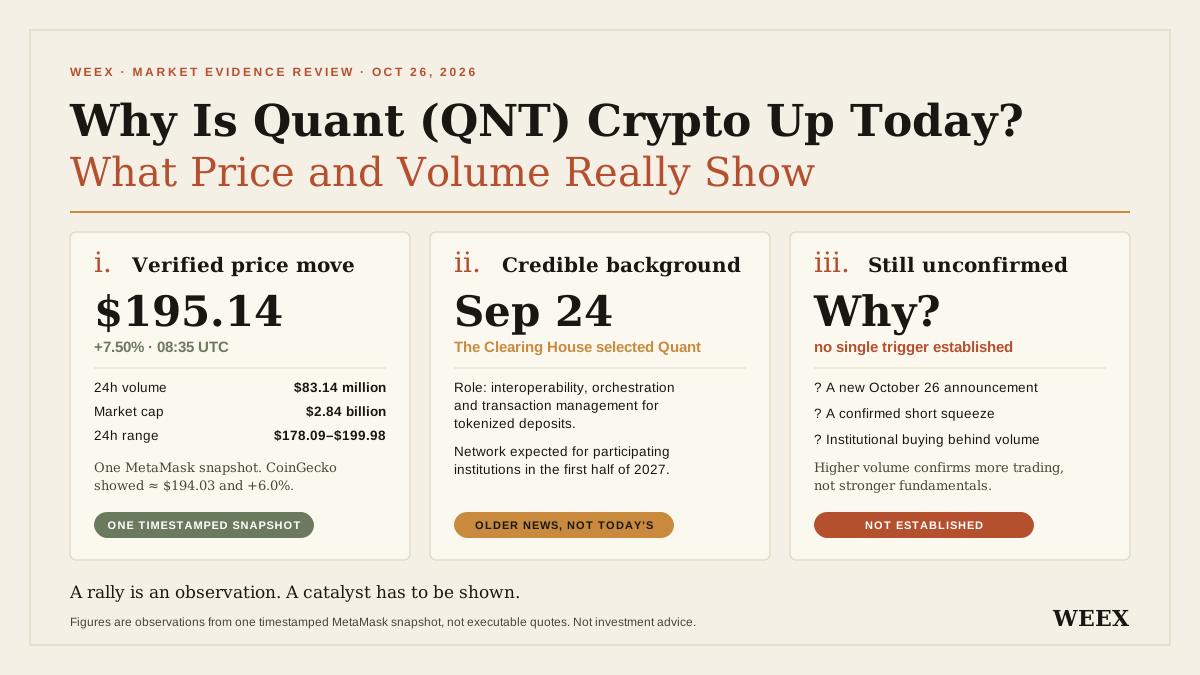
Why Is Quant (QNT) Crypto Up Today? What Price and Volume Really Show
Why is Quant (QNT) up today? Review price and volume evidence, the banking partnership timeline, token-demand assumptions, and risks before trading.
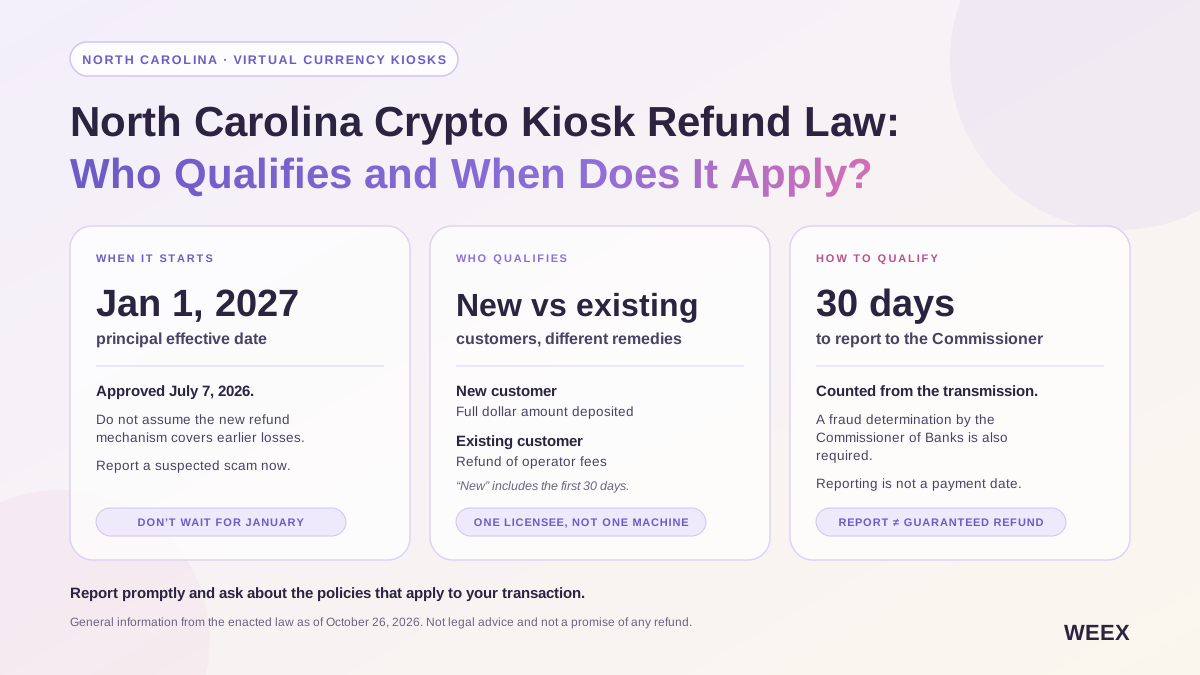
North Carolina Crypto Kiosk Refund Law: Who Qualifies and When Does It Apply?
Understand North Carolina’s crypto kiosk refund law: the January 2027 start date, who qualifies, reporting deadlines, and documents victims should keep.

AI Reduces Vulnerability Discovery Costs, Crypto Industry Divided in Response
Ethereum: Glamsterdam postponed after risks detected on 13 contracts

Who is Making Money from Digital Dollars? Profit Sharing Among Stablecoin Issuers, Distributors, and Payment Providers
[ETH Letter] Meritz Securities Reviews Tokenization of Korean Securities Based on OP Stack
Ethereum Releases CALLSTATUS Instruction EIP Draft

Paradigm Releases Audited Built-in JIT Compiled New EVM evm2
Weekly: $68,000 Theft from Ukrainian in Trust Wallet, Circle's Lawsuit Against Trump Over $2 Billion in UAE, and Historic Solana Update

Delay of the Glamsterdam Update on Ethereum Postpones Activation on Hoodi

Arbitrum Launches Developer Guild, Offchain Labs Becomes First Member
Hyperliquid L2 Elysium to Deploy Node at TheHUB in Tokyo

Heatbit's $899 Water Heater Element Mines Bitcoin While It Heats Your Tank

Ethereum Delays Test of Glamsterdam Update
Cryptocurrency Exchange Acknowledges Error After Reports of Millions in Losses

Ethereum Hoodi Testnet Glamsterdam Hard Fork Delayed
A Midnight privacy-vault demo needs outside signers to release Ethereum tokens
Robinhood Chain Surpasses Ethereum in Revenue: $51 Million vs $41 Million in Q3

CoinDCX Deposit Address Used for 10 Months, $15.8 Million User Deposits Untracked

Earning Millions Monthly: How Crypto Frontends Make So Much Money?
Why earning XRP yield through this wallet could actually cost you money
Kaspa finalizes 3 standards for native tokens and covenant apps
Zebec Network reports $100,000 buyback of 40.5M ZBCN in Q3

ARK Invest Q3 DeFi Report: Stock Tokenization Drives On-Chain Trading to 9%

Decibel launches Aptos Encrypted Mempool to protect traders from MEV
ZeroDev Founder Analyzes EIP-8288 to Enhance Ethereum's Scalability

Arkansas Appeals Court Asked to Reinstate Cryptocurrency Mining Restrictions for Foreign Investors

Samsung Wallet to Integrate USDC: What Should Phone Manufacturers Consider?
Hyperliquid Seeks Perpetual Contracts on AI Computing Power, Requests CFTC Approval

Stablecoins Have Solved On-Chain Settlement, But How Do They Enter Merchant Checkout?
Why Is Quant (QNT) Crypto Up Today? What Price and Volume Really Show
Why is Quant (QNT) up today? Review price and volume evidence, the banking partnership timeline, token-demand assumptions, and risks before trading.
North Carolina Crypto Kiosk Refund Law: Who Qualifies and When Does It Apply?
Understand North Carolina’s crypto kiosk refund law: the January 2027 start date, who qualifies, reporting deadlines, and documents victims should keep.
AI Reduces Vulnerability Discovery Costs, Crypto Industry Divided in Response
Ethereum: Glamsterdam postponed after risks detected on 13 contracts
Who is Making Money from Digital Dollars? Profit Sharing Among Stablecoin Issuers, Distributors, and Payment Providers
[ETH Letter] Meritz Securities Reviews Tokenization of Korean Securities Based on OP Stack





