
Bitcoin Hashrate Reclaims One Zettahash As Mining Competition Rebounds

 Prefer us on Google


TL;DR: BlocksBridge reported Bitcoin's seven-day hashrate above one zettahash in the week to October 22. Mining competition has recovered despite companies shifting some infrastructure toward AI.
A mining company can switch strategy without making Bitcoin mining any easier for the businesses that remain. New network data puts that distinction in focus.
In its October 22 Miner Weekly report, BlocksBridge Consulting said the network's seven-day average hashrate had recovered above one zettahash per second, its highest level since March 3. One zettahash is equivalent to 1,000 exahashes per second.
The report also recorded a 5.92% increase in mining difficulty on October 16. Together, the figures show that announcements about individual operators leaving mining cannot be treated as a direct measure of network-wide competition.
A Mining Exit Does Not Necessarily Remove The Machines
BlocksBridge's analysis separates a site's future use from the fate of the equipment installed there. A facility can shift toward AI infrastructure while Bitcoin mining machines are sold or relocated, allowing them to contribute computing power elsewhere.
That distinction does not establish where every additional unit of hashrate came from. It does explain why corporate announcements and network data can point in different directions without contradicting each other.
For an operator that keeps mining, the relevant competitive field is the worldwide network. A rival's strategic exit only reduces that field if the associated computing capacity actually disappears and is not offset by activity elsewhere.
The same caution applies to expansion plans. Announced capacity, installed machines and equipment actively submitting work are different stages. Only the last contributes to observed network performance.
Hashrate, Difficulty And Revenue Measure Different Things
A hashrate figure is an estimate of computational work, not a direct meter reading from every miner. Blockchain.com's chart methodology explains that estimates use block production and difficulty; short periods can fluctuate because finding blocks involves randomness. A seven-day average helps smooth that noise.
That is why the time window matters. The reported one-zettahash milestone refers to a seven-day average through the October 22 report, not a guaranteed reading at every moment since then or a separate 30-day measure.
Mining difficulty is the protocol's adjustment to the work required to find a block. The Bitcoin developer documentation describes a recalculation every 2,016 blocks, targeting roughly two weeks for that interval. Faster block production generally leads to a harder target for the next period.
Revenue is another question. More network computing power does not automatically mean more income for each machine. With other conditions unchanged, an operator supplying the same amount of work faces a smaller relative share when competing capacity expands.
Profitability also depends on the value of block rewards and fees, power costs and equipment efficiency. A rise in Bitcoin hashrate therefore cannot, by itself, establish whether a miner's margins improved.
The rebound is evidence of renewed network competition over the reported period. Its commercial significance rests on who can supply that work economically, rather than on whether a prominent company has changed its strategy.
Written by the News Desk and edited by Samuel Rae.
-- Price
This content is provided for general informational purposes only and doesn't constitute financial, investment, legal, or tax advice. Any events, rewards, online promotions, or related information mentioned herein should not be considered a recommendation, solicitation, or invitation to purchase, sell, trade, or otherwise deal in any crypto assets. Crypto assets are highly volatile and may result in loss. The availability of WEEX services, products, and related events may vary by region. You are responsible for ensuring that your participation is in accordance with applicable local laws and regulations.
You may also like

Leon Wankum Predicts Bitcoin Will Outgrow Real Estate Market

Blockstream Executive Peter Bain: Bitcoin Holding $81K Signals Bull Run

Bitcoin-to-Nasdaq Ratio Turns Bullish After 235 Sessions

PHP Exploit Takes Down Government and Hospital Websites

Galaxy Believes Bitcoin Bear Market Ended in June, Recommends Buying and Holding

Empery Invests $65 Million to Acquire 25% Stake in AI Data Center

Bitcoin's next Fed test comes with a hidden problem in America's inflation data
The crypto market loses altitude, patience becomes a habit – Steady Lads

Bitcoin's flat trend vs. S&P 500 signals risk warning, says Bloomberg analyst

Cyberattack on GMO in Japan: Trading Accounts Compromised, GMO Coin Claims to be Unaffected

Mark Cuban compares Bitcoin to meme stocks
Electrum patches Bitcoin vulnerability allowing payment redirection

The Week Ahead: 4 Key Moments for the Crypto Market

Security Researcher Exploits PHP2Shell Vulnerability to Breach Bounty Website, Earns Approximately $2000 in Bitcoin Rewards
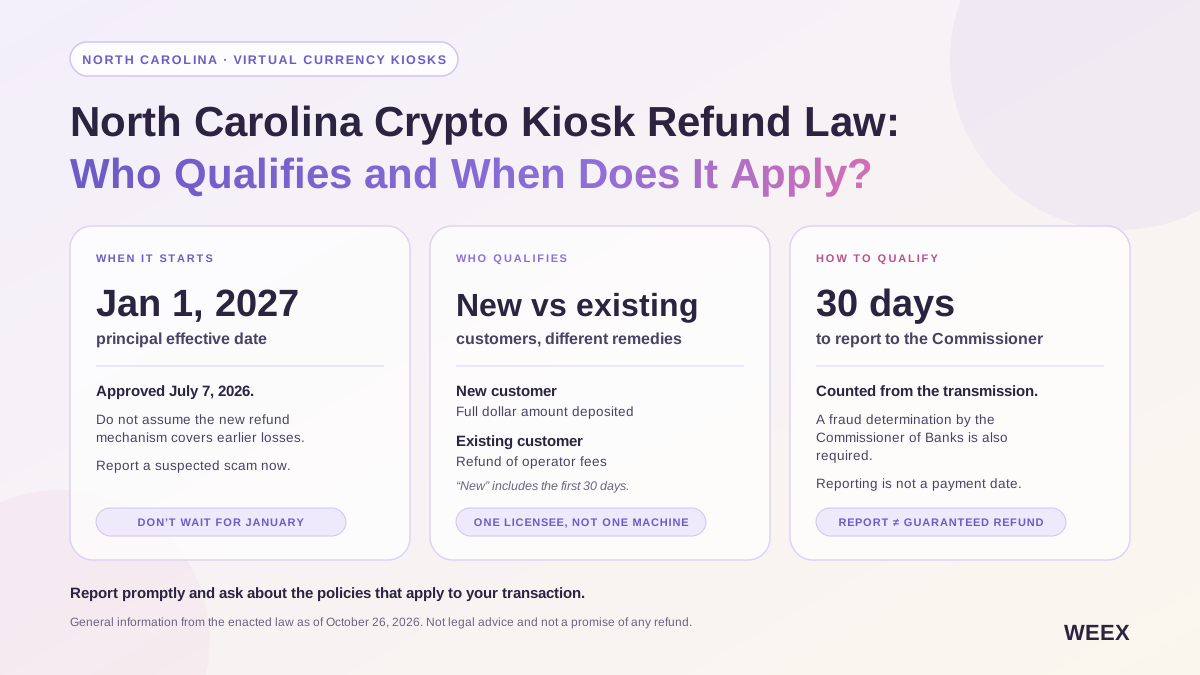
North Carolina Crypto Kiosk Refund Law: Who Qualifies and When Does It Apply?
Understand North Carolina’s crypto kiosk refund law: the January 2027 start date, who qualifies, reporting deadlines, and documents victims should keep.
US Startup Successfully Develops Artificial Gold, Highlighting Bitcoin Scarcity

Sam Price Claims Bitcoin Has Been Declared Dead Multiple Times

Mr&强 Analyzes Bitcoin Support and Resistance Areas

Franklin Templeton Launches Two Dividend Reinvestment Bitcoin ETFs

Interest on U.S. corporate bonds with CCC rating rises to 17.99 percent

LND Releases v0.21.5-beta.rc1 with Fee Estimate Limits

FOUNDATION Faces Spam Attack from Spoofed Domain Names
Bitcoin Core Changes Rules for Disclosing Security Vulnerabilities

New York Man Sentenced to 51 Months in Prison for Telecom Fraud and Money Laundering

[Bitcoin $0 Controversy②] "$0 is an Exaggeration"... Reasons Wall Street Disagrees

WEEX Exclusive:Gold Breaks Below $4,000, Bitcoin Pulls Back Below $80,000 | WEEX TradFi Daily(October 26, 2026)

Gold Breaks Below $4,000, Bitcoin Pulls Back Below $80,000 | WEEX TradFi Daily(October 26, 2026)
At the October 23 close, major indexes were mixed, with the Dow weaker. Brent crude rose to about $116.7, a near six-month high, and energy led; gold briefly fell below $4,000 as Bitcoin pulled back toward $80,000. Cybersecurity stocks strengthened last week, with CrowdStrike up nearly 12%. Markets are watching whether Bitcoin’s correction is nearing its end, along with earnings from Verizon, Cadence, Celestica and Amkor today.

The Superintendency of the Securities Market of Panama Excludes Cryptocurrencies from Its Oversight

Michael Saylor: Strategy's Core Business is Bitcoin-Based Digital Credit Products

Bitcoin and gold among worst-performing assets in 2023
Leon Wankum Predicts Bitcoin Will Outgrow Real Estate Market
Blockstream Executive Peter Bain: Bitcoin Holding $81K Signals Bull Run
Bitcoin-to-Nasdaq Ratio Turns Bullish After 235 Sessions
PHP Exploit Takes Down Government and Hospital Websites
Galaxy Believes Bitcoin Bear Market Ended in June, Recommends Buying and Holding
Empery Invests $65 Million to Acquire 25% Stake in AI Data Center
Contents
Latest articles




Latest coin listings on WEEX


