
How Transparent Is a Crypto Exchange? Checking Proof of Reserves and Protection Funds On WEEX Trust Center

 Prefer us on Google


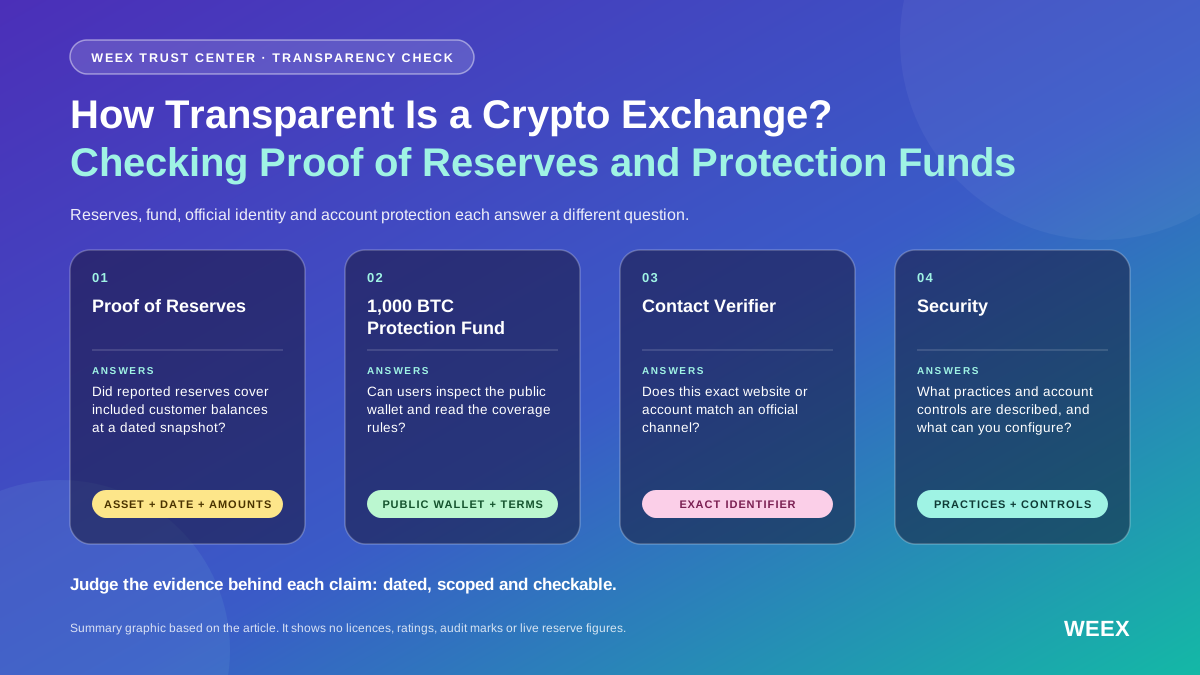
A transparent crypto exchange gives users more than a statement that their assets are protected. It publishes evidence they can inspect: reserves compared with customer holdings, the date and scope of that comparison, public wallet information for any protection fund, and clear rules for what the fund covers. It should also make official contacts and security information easy to find. The WEEX Trust Center brings these checks together so users can move from a claim to its supporting page or verification tool.
Our assessment is that transparency is most useful when every claim has a matching test. A large wallet balance does not tell you what an exchange owes customers; a reserve ratio does not tell you what an emergency fund covers; and neither one confirms that a message came from official support. The right approach is to ask a small set of precise questions, then use the appropriate evidence for each answer.
Quick Read
| Claim You Want to Assess | Evidence to Look For | Question It Answers |
|---|---|---|
| Customer assets are backed | Asset-specific reserves and user holdings at a dated snapshot | Did reported reserves cover the included customer balances at that time? |
| A protection fund exists | An official fund page and public wallet information | Can users inspect the stated fund and its activity? |
| The fund can help after an incident | Published eligibility, exclusions, and claim instructions | Would a particular type of incident fall within the stated terms? |
| A contact is official | A first-party contact verification tool | Does the exact website or account match an official channel? |
| The platform provides security guidance | Published practices, policies, and account controls | What measures are described, and what can the user configure? |
What Does Crypto Exchange Transparency Mean for Users?
For a user, crypto exchange transparency means being able to find the information needed to examine specific claims about the platform. It is an ongoing disclosure practice, not a single badge or one percentage. The strongest information is dated, has a defined scope, and provides a way to check the underlying claim.
Imagine you are deciding whether to keep an asset on an exchange. You may want to know whether the exchange reports holdings against what it owes customers. You may also ask whether it has a separate fund for certain incidents, whether the wallet behind that fund is public, and how to identify legitimate support. These questions are connected, but their answers come from different records.
That is why a transparency review should move through three levels:
- Find the claim. What exactly does the exchange say: an asset-specific reserve ratio, a stated fund size, or a verified contact channel?
- Inspect the evidence. Is there a timestamp, balance comparison, public wallet link, documented method, or lookup tool?
- Understand the scope. Which assets, users, dates, incidents, or identifiers does the evidence cover?
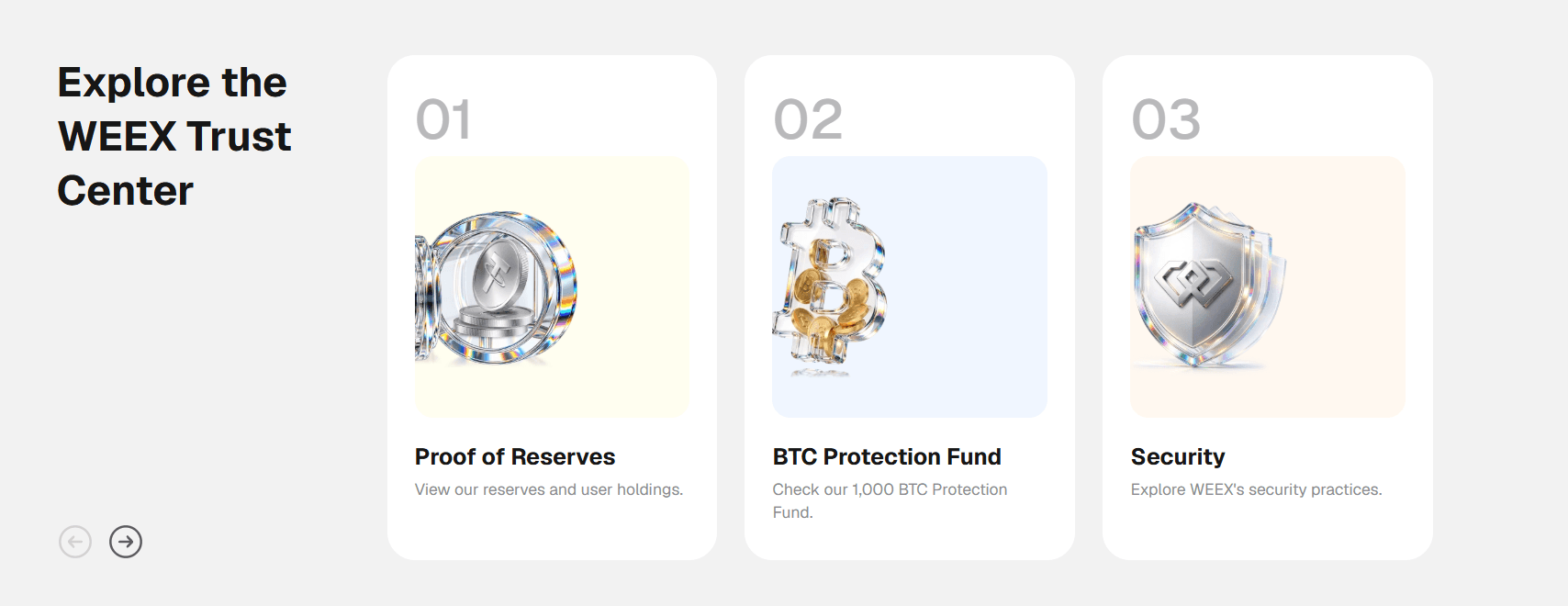
WEEX’s Trust Center serves as a practical starting point for this method. It groups Proof of Reserves, the 1,000 BTC Protection Fund, security information, a Contact Verifier, and FAQs on one page. Users can then follow links to the detailed Proof of Reserves and Protection Fund pages when a summary is not enough.
How Do You Evaluate an Exchange’s Proof of Reserves?
Proof of Reserves (PoR) is useful when it compares reported platform assets with reported customer holdings for a defined asset and time. A public wallet balance alone shows assets at an address; it cannot tell you whether those assets are sufficient relative to what the exchange owes its users.
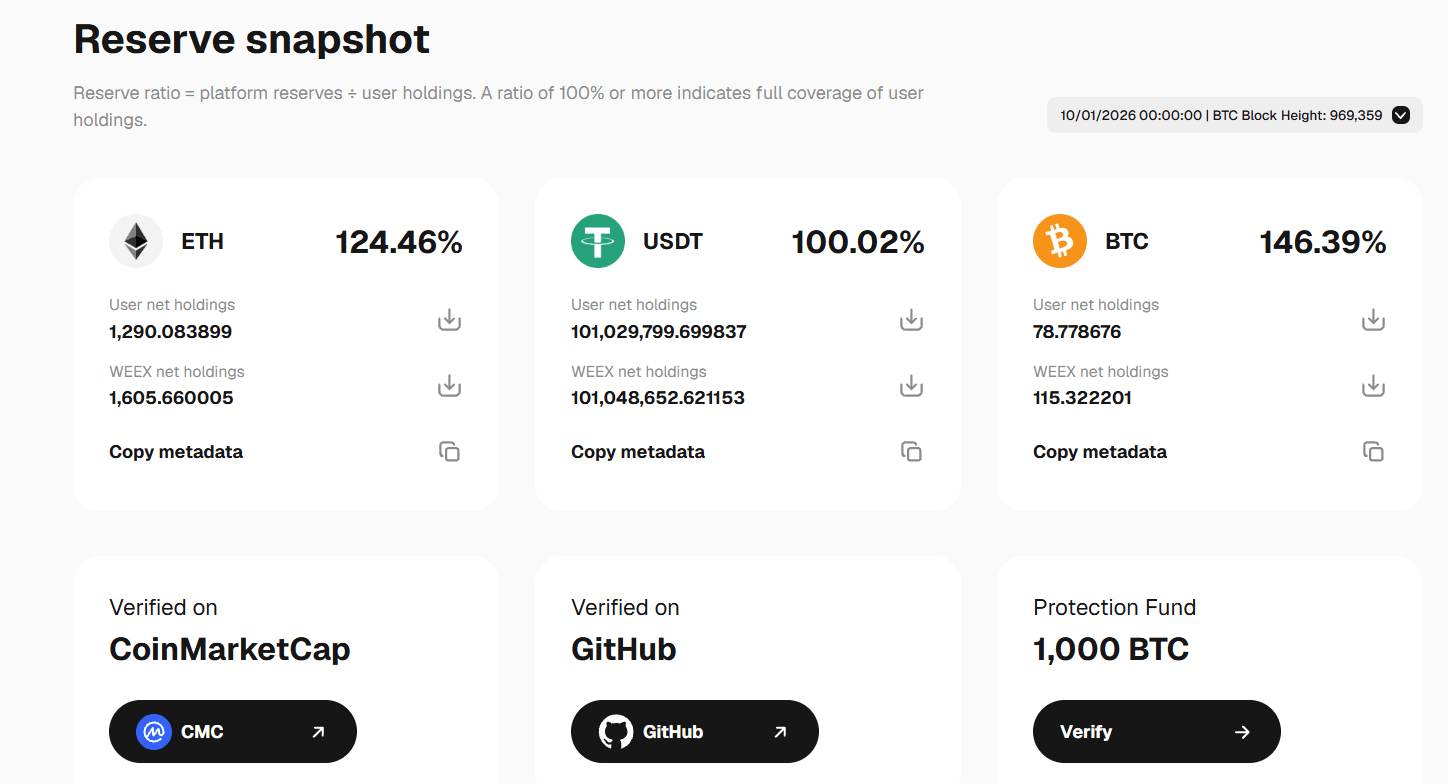
Start by looking for the calculation. WEEX states its reserve ratio as:
Reserve ratio = platform reserves ÷ user holdings
A reported ratio of 100% means the platform reserve equals the included user holdings for that asset at the snapshot. Above 100% means the reported reserve exceeds those holdings. The calculation is meaningful only alongside its asset, underlying amounts, and timestamp.
For a basic example, suppose an exchange reports 110 units of a particular asset in platform reserves and 100 units of user holdings at the same snapshot. The ratio is 110%. That illustration tells you how to read a ratio; it is not a current WEEX figure. If the figures came from different dates or described different asset sets, dividing them would not produce a useful coverage measure.
When reading any exchange’s PoR page, work through these questions in order:
| Check | What to Look For | Why It Matters |
|---|---|---|
| Asset coverage | Which assets are included in the disclosure? | Coverage for one asset cannot be assumed for every asset on the platform. |
| Reserve amount | How much of each included asset is reported as held? | This is the numerator of a reserve ratio. |
| User holdings | How much of that asset is included in customer balances? | Without the corresponding amount owed, a wallet balance cannot establish coverage. |
| Snapshot time | When were both sides measured? | A dated comparison describes a particular moment. |
| Method and scope | How are balances checked, and which accounts or assets are included? | The strength of a ratio depends on what was measured. |
| User verification | Is there a documented way to check inclusion of your balance? | It allows a user to examine part of the reported customer-balance calculation. |
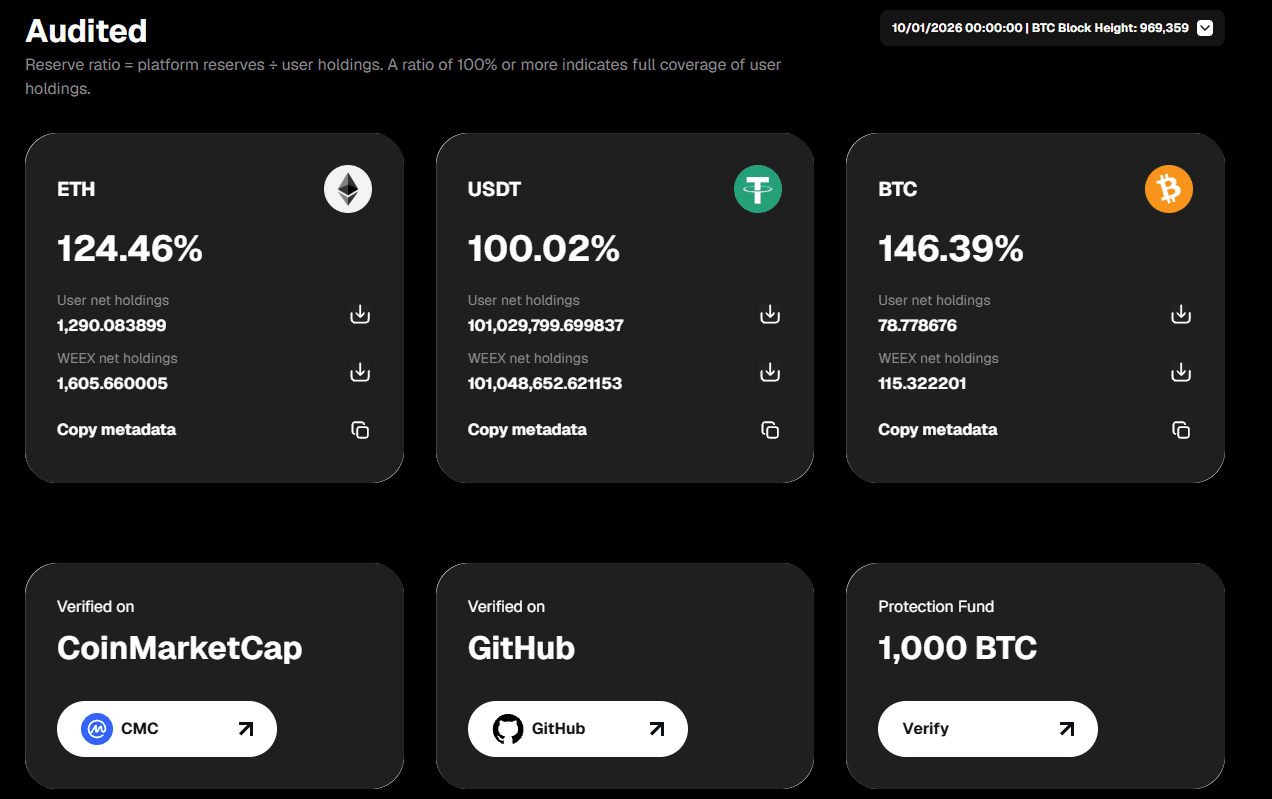
On the WEEX Trust Center, begin with Reserve snapshot. Read its definition of the ratio and locate the snapshot date and blockchain reference when the data has loaded. Then open WEEX Proof of Reserves for the audit scope and available verification resources. If the interface displays loading placeholders, wait for the data rather than treating “--” as a reported result.
CoinGecko’s PoR research guide likewise describes reserves and customer liabilities as the two parts of a meaningful comparison. The useful lesson for readers is straightforward: check both sides of the ratio for the same asset and snapshot, then examine the stated scope.
Why Does the Snapshot Date Matter?
A reserve report answers a question about a particular observation time. Assets, customer balances, and wallet activity can change afterward. The snapshot date therefore belongs beside the ratio whenever an article, graphic, or social post quotes it.
This does not make the snapshot unhelpful. A clear dated snapshot gives users a reference they can compare with a later disclosure. It also prevents a past figure from being presented as today’s measurement. If an article and the live PoR page show different numbers, compare their dates before drawing a conclusion.
The PCAOB Office of the Investor Advocate’s 2023 advisory on PoR reports explains that such reports depend on the procedures and point in time covered; they are not equivalent to a full financial-statement audit. That is a reason to read an exchange’s PoR for what it measures, alongside other disclosures, instead of asking one report to answer every question about operations or future conditions.
For an editorial team, this creates a simple publication rule: whenever you cite a WEEX reserve percentage, retain the asset, numerator, denominator, and snapshot date. If those fields are not available at publication, link to the live WEEX Proof of Reserves page without inserting an unsupported “current” percentage.
-- Price
What Does a Protection Fund Add to Exchange Transparency?
A protection fund addresses a different question from PoR. Proof of Reserves compares reported assets with included customer holdings at a snapshot. A protection fund is a separately described resource intended for particular circumstances under its own terms. An exchange becomes more transparent about such a fund when users can inspect both its public holdings and its coverage rules.
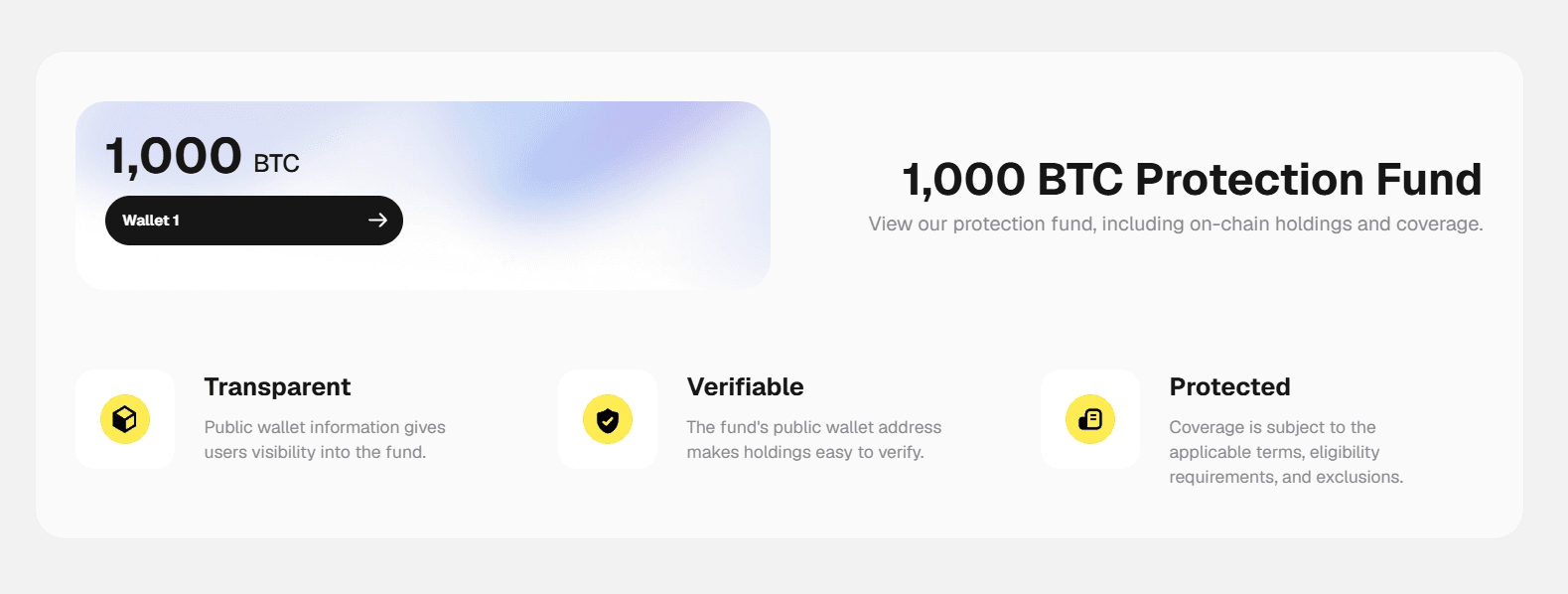
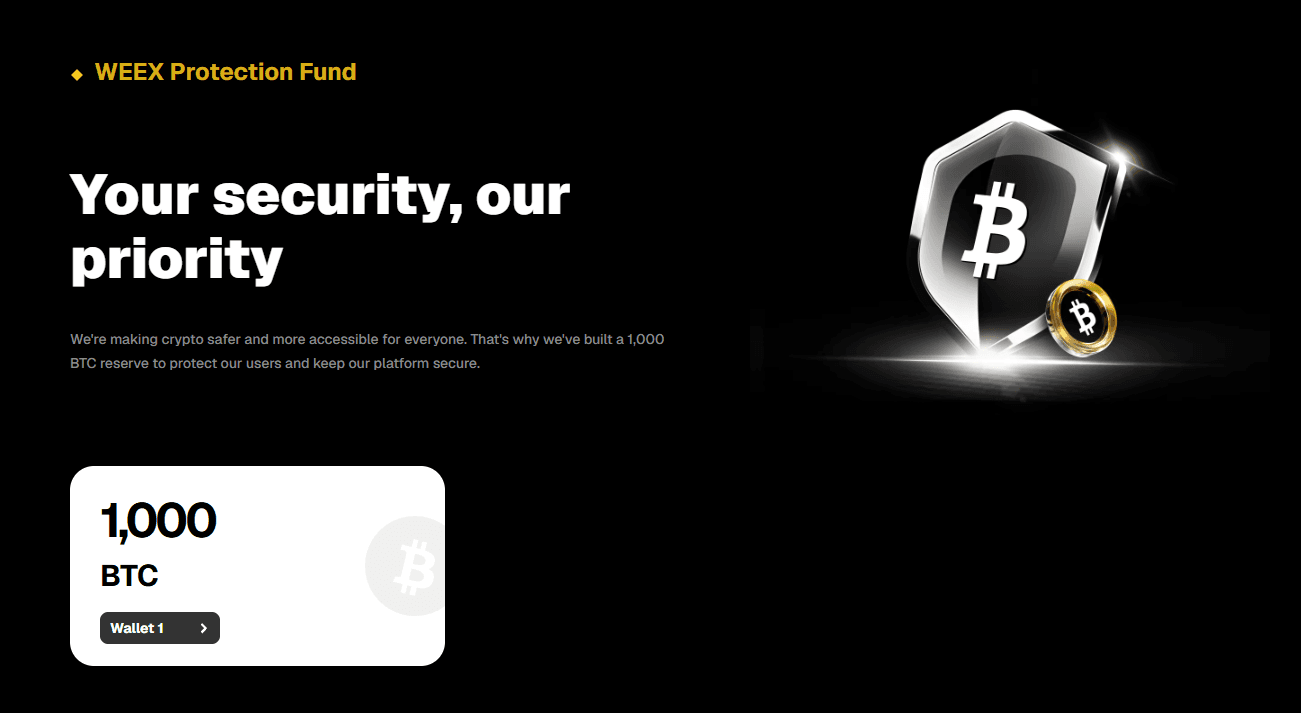
WEEX states that it maintains a 1,000 BTC Protection Fund. The WEEX Trust Center links to public wallet information, allowing users to open a blockchain explorer and inspect the linked address. The dedicated Protection Fund page explains the fund’s purpose and answers eligibility and claim questions.
Evaluate any protection fund with two separate checks. First, follow its official wallet link and record the balance and observation time shown in the explorer. Second, read the rules that determine when a user can request help. A visible wallet supports the claim that assets can be inspected on-chain; it does not turn every account loss into an eligible claim.
WEEX’s published FAQ says the fund is intended for losses occurring through no fault of the user. It excludes trading losses, fraud or abuse, and situations where a user was tricked into or mistakenly authorized a transaction. For a potentially eligible incident, it directs users to contact support@weex.com within 30 days. Read the current fund terms for the applicable wording before assessing a specific case.
This distinction is especially useful for beginners. The fund and Proof of Reserves are complementary disclosures: one lets you inspect a stated pool and its terms; the other compares reported platform reserves with included customer balances. Neither should be substituted for the other in a headline or infographic.
How Can You Compare a Fund’s Claim With Its On-Chain Evidence?
The starting point should be the exchange’s officially published wallet link. An address copied from a post, screenshot, or search snippet may be outdated or unrelated. At WEEX, use the Trust Center’s fund section or the Protection Fund page to reach the wallet information.
On the blockchain explorer, identify the address, balance, and recent transaction history shown at the time of your visit. Then return to the official page to confirm what WEEX claims the wallet represents. If you document the check, save the time alongside the result. The balance shown by an explorer after you visit may differ from a screenshot made earlier.
The extra step is to ask what the on-chain evidence does and does not establish. It lets you inspect activity associated with the published address. It does not decide a claim under the fund’s terms or demonstrate the outcome of a future incident. For that, you need the fund FAQ and, where relevant, the official support process.
This method works as a general crypto protection fund checklist. Prefer a named fund with an official address and written terms. Where an exchange provides those, users have more to inspect than a promotional figure alone.
Why Is Official Contact Verification Part of Transparency?
Users often think of transparency only in terms of balances. Yet an exchange also needs a way for users to distinguish its actual communication channels from lookalikes. Otherwise, a person may read authentic reserve information and still act on a fake login page or support message.
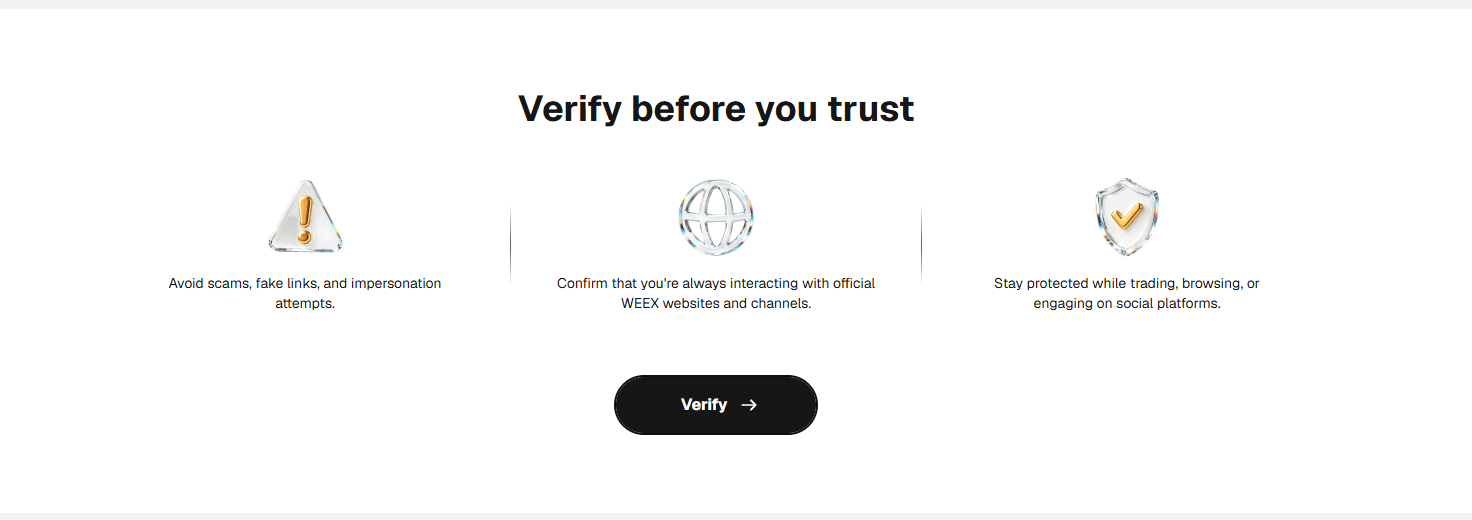
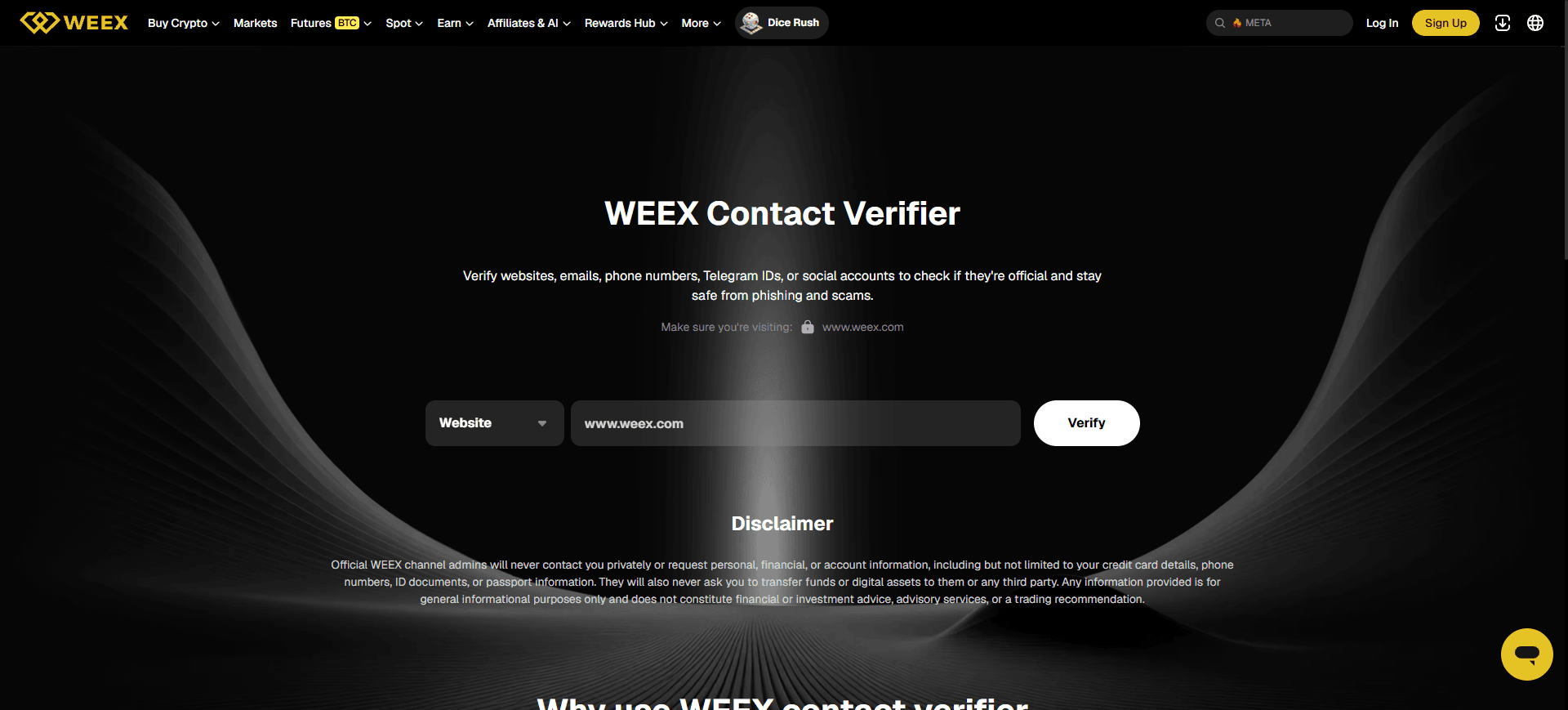
The WEEX Trust Center includes a Contact verifier entry. Its linked WEEX Contact Verifier accepts websites, email addresses, phone numbers, Telegram IDs, and social accounts. A user can check the exact identifier received before visiting a link or replying to a message.
Use the tool from a browser session you opened independently. Copy the precise domain or handle from the suspicious message, select its type, and check the result. Do not rely on a logo, a familiar display name, or a link to a “verifier” supplied inside the message itself. The WEEX guide to checking contacts provides examples of when this step matters.
WEEX’s verifier page also states that official channel administrators will not privately request personal, financial, or account information or ask users to transfer assets to them or a third party. The first-party verifier gives users a specific way to test identity rather than asking them to judge a message by appearance.
Can Security Policies Substitute for Reserve or Fund Evidence?
Security descriptions answer questions about practices and controls. They should be read alongside financial and on-chain disclosures, not in place of them. An exchange may describe wallet management, privacy safeguards, and account protection, but those descriptions do not calculate a reserve ratio or define a fund claim.
The Security section of the WEEX Trust Center summarizes its wallet and custody framework, data and privacy handling, and user guidance. For the user’s own account, WEEX security settings present available controls such as additional authentication and an anti-phishing code. The account security guide explains how to use them.
This is also where precise wording matters. A policy link confirms that a policy is published; it does not, by itself, establish a particular license or independent audit. Describe what the current page actually shows and link to the source document for details. That approach makes a platform’s security communication more useful and keeps claims verifiable.
How Do You Run a Five-Minute Exchange Transparency Check?
You can apply the same sequence to any exchange, then use WEEX’s public pages as a concrete example. The purpose is to leave with a short record of what you checked, rather than a vague impression.
- Open the official transparency hub. For WEEX, start with the WEEX Trust Center. Verify that you are on the correct domain.
- Inspect the reserve disclosure. Choose the asset you care about and note its platform reserves, included user holdings, reserve ratio, and snapshot time. Follow the link to the PoR methodology and audit scope.
- Inspect the stated fund. Open the official fund wallet link, note the explorer’s balance and your check time, then read the fund’s eligibility and exclusions.
- Test an unfamiliar contact. If an account or domain has approached you, check that exact identifier through the official Contact Verifier.
- Review security and policy information. Look for the published practices and account controls relevant to the way you use the platform. Keep any unanswered question specific enough to investigate further.
A compact record might read: “Checked the USDT row in the dated reserve snapshot; opened the fund wallet link at a recorded time; read the fund FAQ; verified the support domain.” That record is more actionable than writing “the exchange is transparent” without explaining the evidence.
The sequence deliberately separates balances, incident support, identity, and operational information. It also helps a reader return when a new snapshot appears, rather than relying indefinitely on the result of one visit.
What Can an Exchange Transparency Check Tell You?
A well-documented check can tell you whether the exchange publishes an asset-by-asset comparison, whether the figures have a date and stated scope, whether a fund has an inspectable address and written terms, and whether an official identity checker exists. Those are concrete observations.
It cannot turn every type of risk into one number. A PoR snapshot describes its covered holdings and customer balances at a specified time. A fund wallet shows activity at a public address but does not decide eligibility for an individual incident. A contact verifier confirms an identifier against official records but does not predict market prices or trading outcomes.
That is why the evidence should be presented in the same categories in which users can check it. The WEEX Trust Center is useful as a single entry point precisely because the reader can move from a summary to the appropriate detailed source, instead of being asked to treat all trust information as one undifferentiated promise.
WEEX Editorial View: Judge the Evidence Behind Each Claim
The most practical standard for exchange transparency is traceability: can a user move from a claim to a dated comparison, a public address, a written rule, or a first-party verification result? WEEX’s Trust Center gives users those routes for reserves, its 1,000 BTC Protection Fund, and official contacts. A careful review uses each route for its intended question, records when changing data was checked, and revisits it when new information is published. That makes transparency a repeatable user action rather than a one-time label.
FAQ
1. What Is the Difference Between Proof of Reserves and a Protection Fund?
Proof of Reserves compares reported platform reserves with included user holdings at a stated snapshot. A protection fund is a separately described resource for incidents covered by its rules. On WEEX, you can reach both through the Trust Center, but you should read their evidence and terms separately.
2. Is a 100% Reserve Ratio Enough to Evaluate an Exchange?
It tells you that reported platform reserves equal reported user holdings for the included asset at the stated snapshot, under the page’s definition. Also check the asset scope, underlying amounts, date, and verification method. A reserve ratio does not answer every question about security practices or future conditions.
3. Can I Check the WEEX Protection Fund Without an Account?
The Trust Center provides a public route to the fund’s wallet information, and the Protection Fund page publishes its FAQ. You can read those public resources without using an account-specific balance verification process.
4. Does a Public Fund Wallet Mean Every User Loss Is Covered?
No. The published balance and the rules answer different questions. WEEX’s fund FAQ defines eligibility and exclusions, including an exclusion for trading losses. Check those terms for the incident in question.
5. How Often Should I Recheck Exchange Transparency Information?
Recheck reserve data when a new snapshot is published, and record the timestamp whenever you quote a figure. Recheck an on-chain wallet when you need its current balance. Use the contact verifier whenever an unexpected website, message, or account claims to represent WEEX.
Sources
- WEEX Trust Center, Proof of Reserves, and Protection Fund, accessed October 26, 2026. Changing figures should be read from the live pages with their displayed observation times.
- WEEX Contact Verifier, accessed October 26, 2026.
- PCAOB Office of the Investor Advocate, Investor Advisory on Proof of Reserve Reports, March 8, 2023.
- CoinGecko, “Proof of Reserves: How to Check an Exchange’s Reserves Health”, accessed October 26, 2026.
This content is provided for general informational purposes only and doesn't constitute financial, investment, legal, or tax advice. Any events, rewards, online promotions, or related information mentioned herein should not be considered a recommendation, solicitation, or invitation to purchase, sell, trade, or otherwise deal in any crypto assets. Crypto assets are highly volatile and may result in loss. The availability of WEEX services, products, and related events may vary by region. You are responsible for ensuring that your participation is in accordance with applicable local laws and regulations.
You may also like
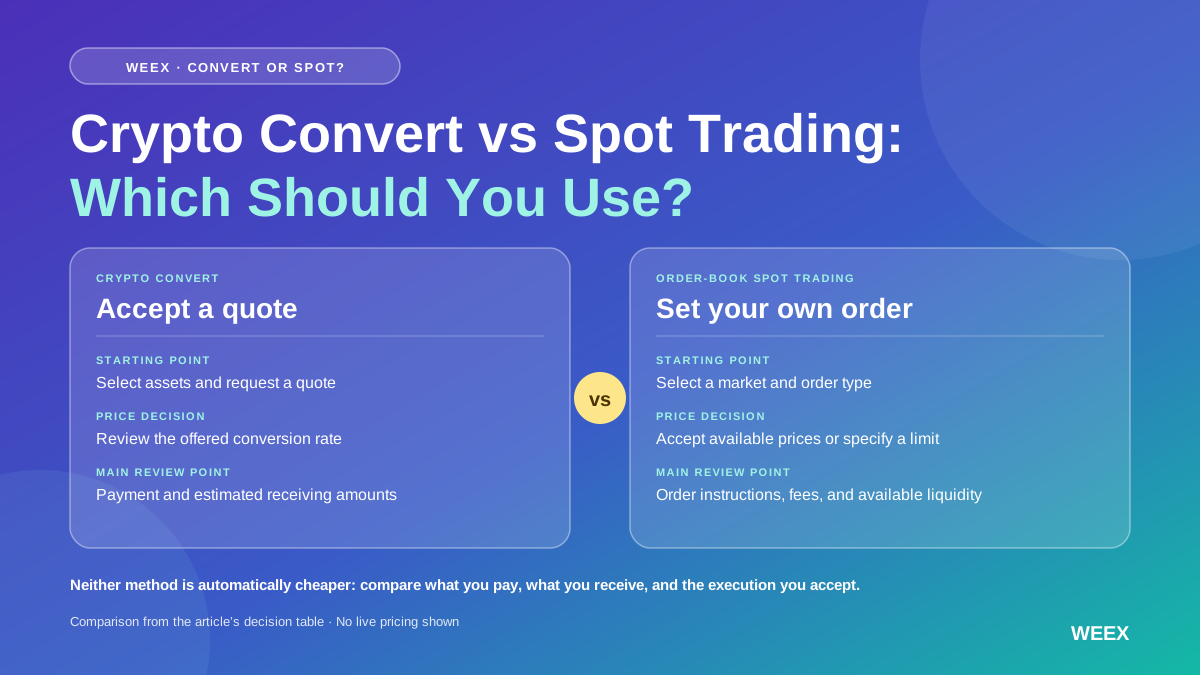
Crypto Convert vs Spot Trading: Which Should You Use On WEEX?
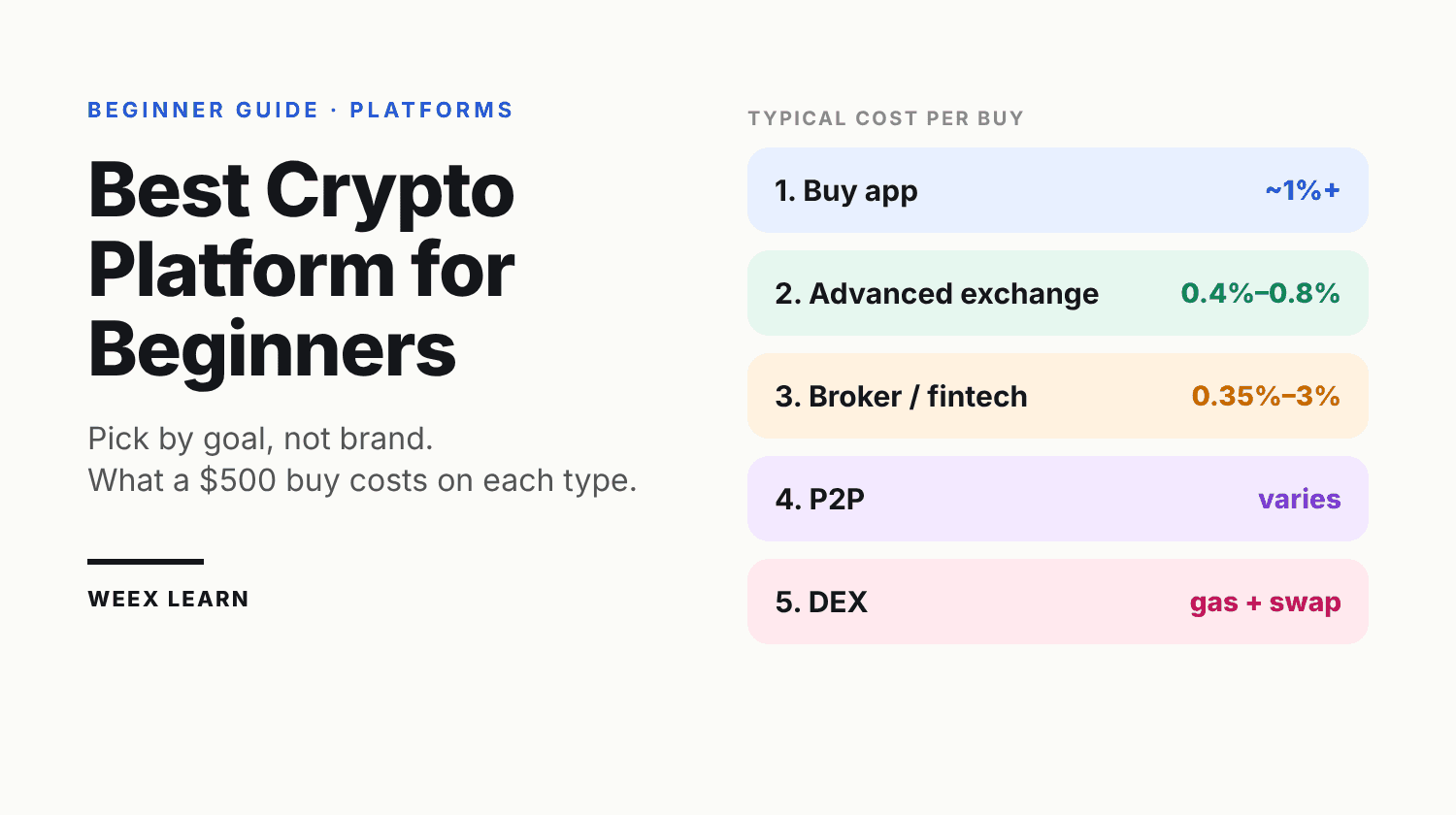
What Is Crypto Convert and How Does It Work? Try Crypto Convert On WEEX Now!
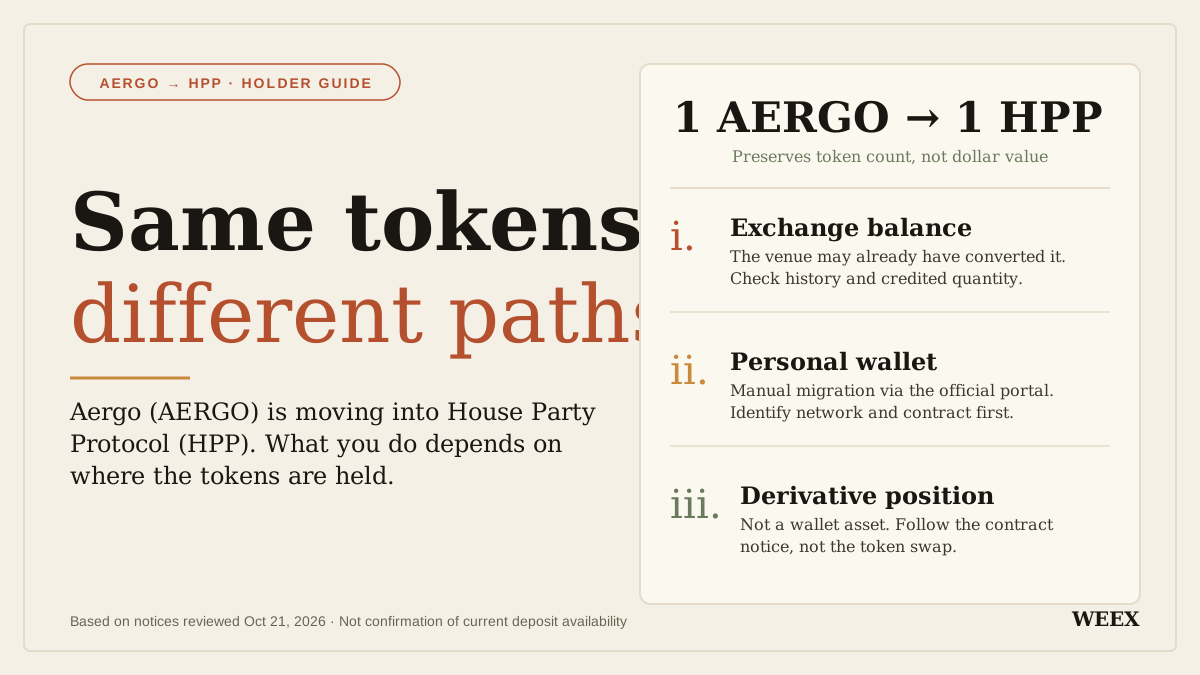
What Happened to Aergo (AERGO) Crypto? Token Migration and What Holders Should Do
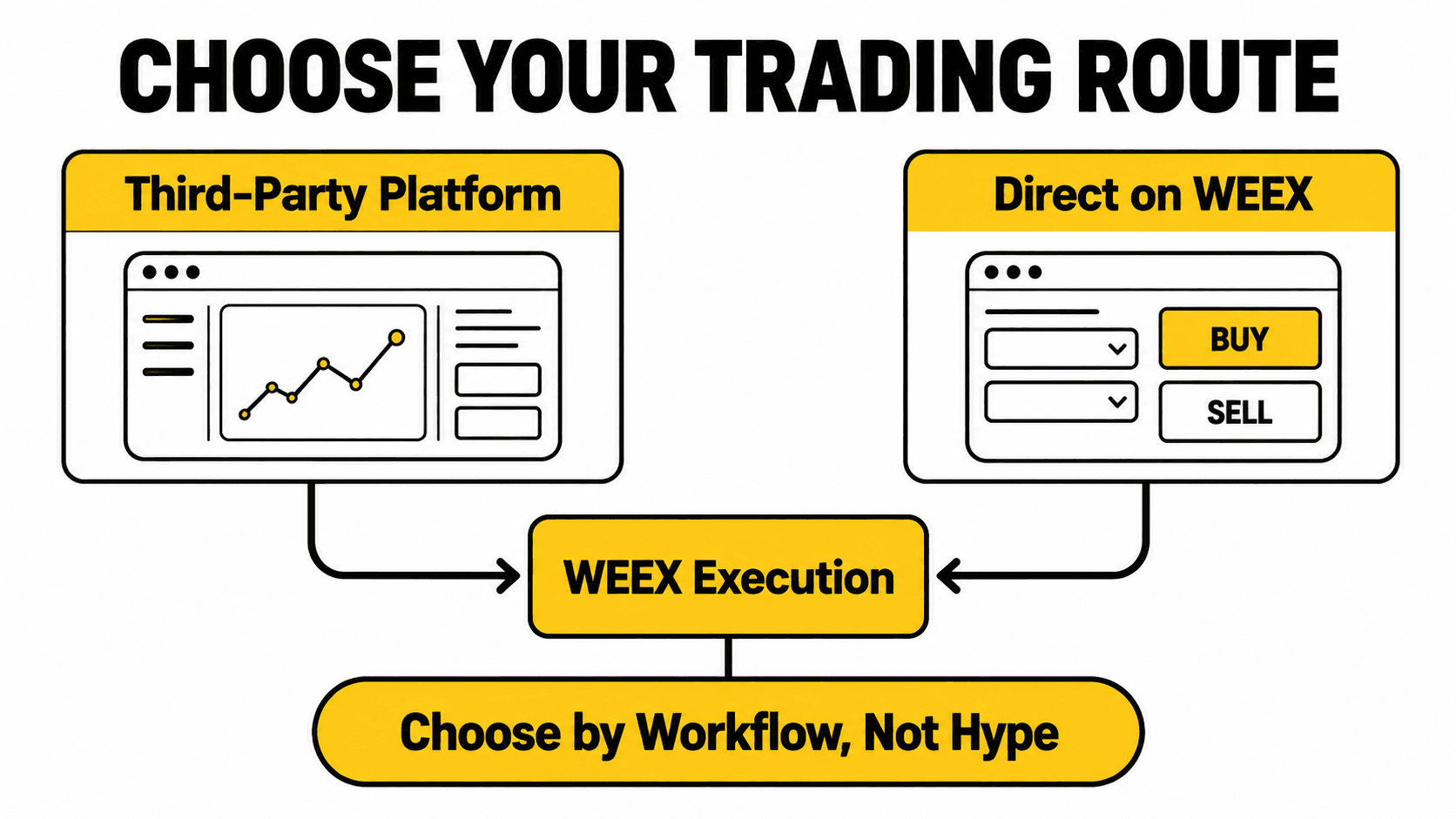
Third-Party Trading Platforms vs Direct WEEX Trading: Fees, Liquidity, Security, and Control
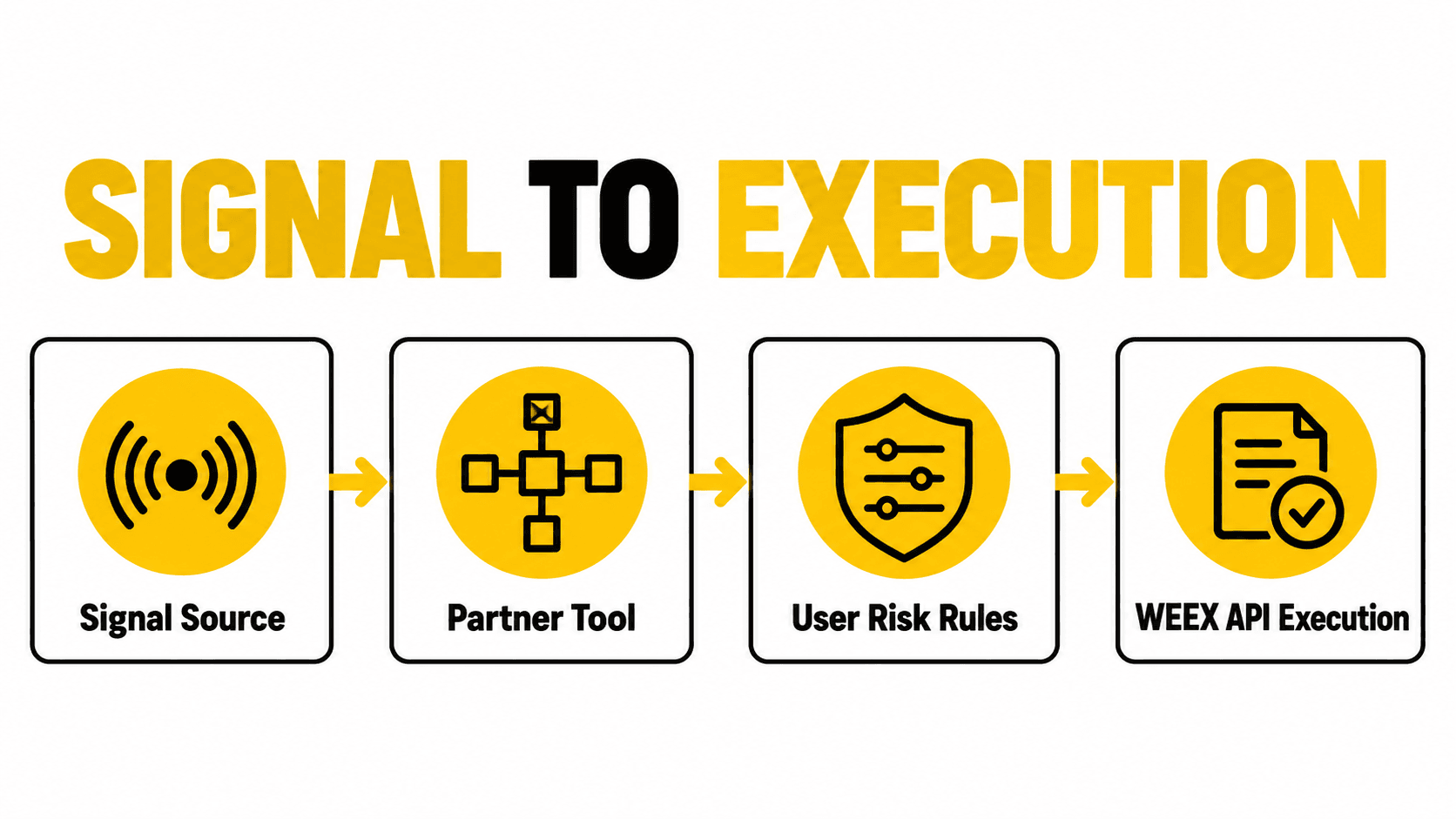
How Copy Trading, Signal, and Telegram Trading Tools Can Build With WEEX Broker

What Is WEEX Fast Connect? How OAuth Connects Third-Party Trading Platforms
WEEX API Documentation: How to Get Started With the WEEX Trading API
What Is WEEX API? Features, Trading Tools and How It Works
What Is WEEX Exchange? Crypto Trading, API and Platform Overview
WEEX TOKEN2049 Day 1 Live Preview: Booth, MBTI and AI Demo
Exchange and BRL-Service Closures in Brazil: October 2026 Deadlines and Balances
WEEX Passkey Now Secures Withdrawals: The 4 Actions It Covers
Solana Alpenglow Mainnet Date: Why Sept 28 Wasn't Launch Day
WEEX Quantitative Trading: How API Strategies Run in Practice

How Does WEEX KYC Verification Work? A Taiwan User Guide

JPEX Case Retrial: What Taiwan Crypto Users Should Check
Grok 4.7 Release Claims: A Taiwan User Verification Guide
Is WEEX Legal in Taiwan? FSC VASP Rules and the Public Register
How to Test a Trading Strategy on WEEX Demo Before Going Live
WEEX Demo Trading: 50,000 USDT Practice Account, Rules and Limits
Easypaisa P2P Payments: How to Choose a Merchant and Confirm a USDT Order

BitMart Is Closing: Shutdown Timeline and How to Withdraw Before August 26, 2026
Fake WEEX Support: How Impersonation Scams Drain Real Accounts
Your Crypto Exchange Is Shutting Down: How to Move Your Funds and Choose the Next Exchange


Crypto Convert vs Spot Trading: Which Should You Use On WEEX?
What Is Crypto Convert and How Does It Work? Try Crypto Convert On WEEX Now!
What Happened to Aergo (AERGO) Crypto? Token Migration and What Holders Should Do
Third-Party Trading Platforms vs Direct WEEX Trading: Fees, Liquidity, Security, and Control
How Copy Trading, Signal, and Telegram Trading Tools Can Build With WEEX Broker
What Is WEEX Fast Connect? How OAuth Connects Third-Party Trading Platforms


