Paradigm: How do we recruit BD?




Original author: Nick Martitsch, Head of Market Development Paradigm
Original translation: TechFlow
In the crypto space, the job market for early growth leaders is extremely competitive.
Due to the lack of defensive barriers in open source software, distribution has become a key competitive factor for decentralized protocols and their platforms. Hiring the right BD leader at the right time can significantly influence the direction of a project.
As a member of Paradigm's market development team, I work with Head of Talent Dan McCarthy to help founders recruit top growth leaders in the industry. Here are some of our tips for founders on hiring their first BD leader.
1. Don't change the founder-led sales model too early.
2. Transform early flexible strategies into scalable solutions.
3. Require candidates to have a high degree of autonomy and a deep understanding of crypto technology.
4. Focus on tactical execution.
5. Evaluate performance through auxiliary indicators.
1. Don't change the founder-led sales model too early
Founders are often the best salespeople for their own products. It is important to maintain a founder-led sales strategy while attracting the first customers and developing the MVP. The main reasons are:
· You are more likely to close the first deal.For startups that have not yet launched a product, buyers mainly value the founder's ability to realize his vision rather than the current status of the product. Founders can best communicate technical details, product vision, and overall enthusiasm to convince customers to be the first to try unproven solutions.
· This helps optimize the product. In the early stages of a company, sales and product development should proceed in parallel. Founders should maintain a close feedback loop with early customers to refine the product roadmap. Bringing in new employees at this time may cause unnecessary friction and communication barriers.
Usually, you can consider hiring your first BD leader when you have confirmed the needs of the initial user base and are ready to launch the product to the wider market. If your project requires a broad external ecosystem to be established before release, this process can be advanced; but generally speaking, it is best to do it after you have a group of loyal customers.
2. Transform the initial flexible strategy into a scalable solution
The BD leader should transform the "flexible strategy" used by the founder to acquire the first customer into a scalable, replicable sales model to attract more customers. Here are some sales processes that this position should be responsible for in the early stage:
· Choose a CRM system that can scale with the company's growth (such as Excel, Salesforce, Copper, etc.) and populate it with data from the entire target market.
· Qualify inbound leads, send external information to new customers, and involve founders to help close the most important deals.
· Conduct weekly sales pipeline meetings to keep leadership informed of market penetration and bottlenecks in the sales process.
· Create sales materials such as customer case studies, product updates, onboarding guides, etc., and test which sales points can effectively drive conversions of potential customers.
· Serve as an internal representative of customer opinions in the decision-making process of the product roadmap, and guide the product team to develop key features and capabilities.
In short, it is critical to find a BD leader who can both build sales infrastructure and manage the entire sales process. It is not enough to do just one of them.
3. Require candidates to have a high degree of autonomy and a deep understanding of crypto technology
We have found that the best first BD leaders are often former startup founders or early employees who built a department from scratch in their previous company. They understand that the responsibility lies with them and take a high sense of responsibility for achieving the company's goals.
In addition to basic communication and organizational skills, a crypto technology background should also be a core consideration for recruitment. Here are some soft skills that can help determine if your Head of BD can persist through multiple market cycles:
· Adaptability –Early stage sales in crypto is different than large corporate sales roles in mature industries. In crypto, market conditions and narratives are constantly changing, and growth leaders need to be able to flex and develop new sales strategies as what works in a bull market may not work in a bear market and vice versa.
· Tenacity –Due to the cyclical nature of the industry, candidates need to be intensely driven by the mission of the crypto industry and not easily discouraged by delayed results. Successful business development strategies are often found after multiple failures, learning, and iterations. Candidates motivated only by short-term financial gain will be eliminated during market downturns.
While it’s hard to find a candidate that perfectly fits all the requirements, having a highly autonomous BD leader with a crypto background will set you up for success.
4. Focus on Tactical Execution
Most crypto startups focus too much on strategy and ignore tactics when it comes to growth. I looked at several apps’ decisions about their technology choices and found that speed of response is often the deciding factor, such as response to inbound inquiries, timely follow-up after calls, or the ability to solve complex technical problems.
The cumulative effect of good tactics is key to creating long-term success, so it’s important to prioritize candidates who can execute an orderly process to ensure that leads are not ignored. Here are some interview questions that can be used to assess a candidate’s effectiveness in actual sales:
· How would you categorize inbound inquiries as low, medium, and high priority? How does the sales process differ in each case?
· What questions do you ask during an initial call to determine if a prospect is a good fit for us?
· Do you think it’s appropriate to walk through a presentation while on the phone with a prospect? How do you typically lead sales calls?
· How quickly do you follow up with prospects after an initial sales call? What messages do you typically send them?
· If a prospect loses interest, what strategies do you try to get them back on track?
· If a prospect moves into the implementation phase, how do you adjust your communication approach, style, and frequency with them?
BD leaders still need to help develop the company’s distribution strategy, but it won’t work if they can’t execute on the day-to-day details.
5. Evaluate Performance Through Secondary Metrics
In an emerging industry like crypto, many external factors can impact achieving traditional growth goals, such as revenue, TVL, number of customers, or transaction volume. These growth goals are the result of the business development process, and while it is important to track these goals, it is equally important to measure the quality of the process of achieving them.
Founders should set clear goals for business development based on market signals obtained from early sales. They should also develop a set of secondary metrics to evaluate performance in response to unforeseen market changes, regulatory changes, or other macro events.
The following is an example of a founder setting a goal for a business development position:
· Core Goal:Achieve $5 million in annual recurring revenue by the end of the year
Primary Metrics:
· Number of new paying customers
· Average contract value per customer
Secondary Metrics:
· Number of deals entering the evaluation stage
· Number of new leads added to the sales pipeline
· Number of initial calls completed with prospects
· Number of external messages sent to prospects
With this framework, you will be able to mitigate some of the external influences in the crypto industry and ensure that your business development process remains efficient and effective.
You may also like

Champion's Final Bow: FC Barcelona vs Real Betis – Celebrate the Title with a Home Finale

Best Oil Trading Platform for Crypto Users in 2026
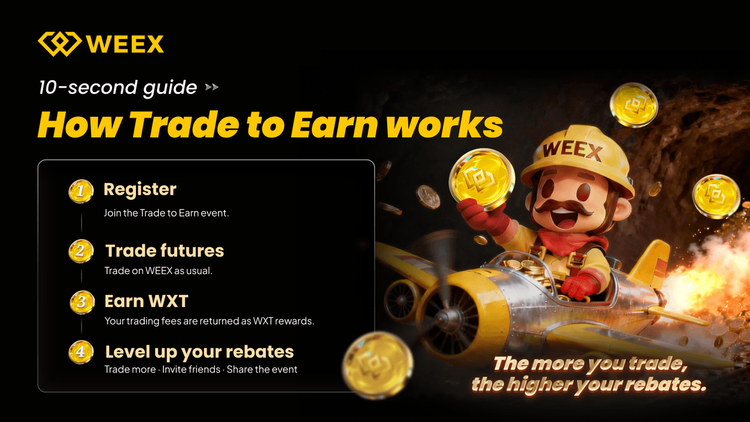
5 Futures Trading Strategies Smart Traders Use to Cut Crypto Fees and Boost Futures Returns
What Is TradFi? How Crypto Traders Can Now Access Crude Oil, Gold, and Global Markets

How WEEX Bridges Crypto and Football: A Deep Look at the LALIGA Partnership Inside the WEEX App
WEEX is not just a LALIGA sponsor. It’s a true partner. From iPhone Dynamic Island to LALIGA-themed app icons and smart posters, see how WEEX brings football passion into every trade — and builds a real bridge between crypto and sports.

FC Barcelona vs Real Madrid Preview: El Clásico – Can Barça Clinch the Title at Spotify Camp Nou?
FC Barcelona vs Real Madrid El Clásico match preview for May 11, 2026. Barça need just 1 point to win LALIGA. Can Madrid delay the trophy? Full preview inside.

At the Stripe conference, I saw the future of the AI economy

Miners welcome a new life

Seven Important Judgments by Claude Code's Founder at the Sequoia Conference

The payment moment of AI agents: Who will become the Stripe of the machine economy?

Morning Report | MoonPay acquires Solana's execution layer DFlow; Strategy releases Q1 financial report; Manta Network announces the termination of Manta staking program

Rented Tracks: What is this wave of stablecoin FX hot money really paying for?

Dialogue Velocity Eric: What is the stablecoin track that the CFO really wants?

Strategy should have said that selling coins is not ruled out

How MegaETH Achieved a TVL of 700m Within a Week of TGE? Analyzing the Packaging Strategy

Futures Trading Hours: Trade Cryptocurrency 24/7 and Earn Back Up to 45% in Trading Fees
Learn futures trading hours and the best time to trade crypto futures. Discover 24/7 market insights, peak trading sessions, and how to earn back up to 45% in fees.
Why is a16z Crypto raising another $2.2 billion to heavily invest in Web3?
Polymarket Underlying Algorithm Explained
Champion's Final Bow: FC Barcelona vs Real Betis – Celebrate the Title with a Home Finale
Best Oil Trading Platform for Crypto Users in 2026
5 Futures Trading Strategies Smart Traders Use to Cut Crypto Fees and Boost Futures Returns
What Is TradFi? How Crypto Traders Can Now Access Crude Oil, Gold, and Global Markets
How WEEX Bridges Crypto and Football: A Deep Look at the LALIGA Partnership Inside the WEEX App
WEEX is not just a LALIGA sponsor. It’s a true partner. From iPhone Dynamic Island to LALIGA-themed app icons and smart posters, see how WEEX brings football passion into every trade — and builds a real bridge between crypto and sports.
FC Barcelona vs Real Madrid Preview: El Clásico – Can Barça Clinch the Title at Spotify Camp Nou?
FC Barcelona vs Real Madrid El Clásico match preview for May 11, 2026. Barça need just 1 point to win LALIGA. Can Madrid delay the trophy? Full preview inside.

Contents
Popular coins
Latest Crypto News