
- Buy Crypto
- Markets
 Futures
- Spot
- Copy Trade
- Earn
- More
On-chain Data Academy (Part 5): How Many People Are Actually Making Money? A Five-Minute Overview of the Objective Sentiment Indicator PSIP

Original Article Title: "On-Chain Data Classroom (Part 5): How Many People Are Actually Making Money? A Five-Minute Guide to the Objective Sentiment Indicator PSIP!"
Original Article Author: Mr. Berg, On-Chain Data Analyst
This article is the 5th part of the On-Chain Data Classroom series, with a total of 10 parts. It will take you step by step through understanding on-chain data analysis. Interested readers are welcome to follow this series.
Related Reading: "On-Chain Data Classroom (Part 4): Visualized BTC Chip Price Distribution Chart"
TL;DR
- This article will introduce the on-chain indicator PSIP
- PSIP = Percentage of Supply in Profit, among circulating $BTC
- It can serve as a guide to market sentiment, with applications in recognizing market tops and bottoms
What is PSIP?
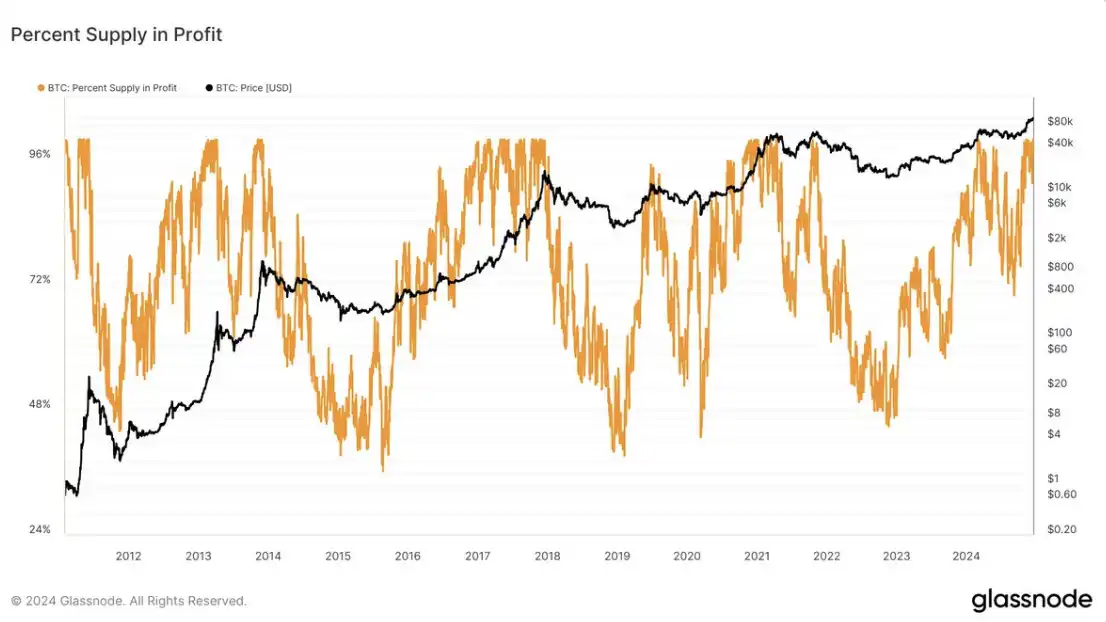
PSIP, short for Percent Supply in Profit, is defined as "the percentage of circulating $BTC that is in a state of profit."
Calculation method:
It distinguishes profit and loss chips by "comparing each $BTC's last transfer price with the current price."
When the current price is higher than a certain $BTC's last transfer price, this $BTC is considered a profit chip.
What if Most Chips Are in a Loss...?
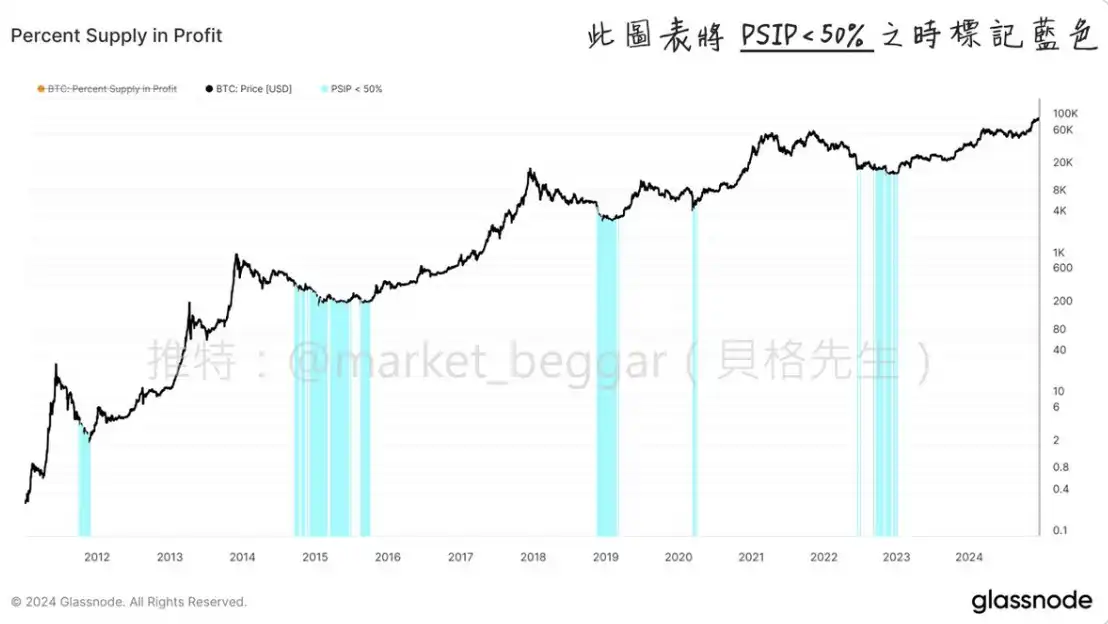
An important application scenario of PSIP is market bottoms. When most chips are in a loss, it is usually a good time to buy the dip.
The logic is straightforward:
Under similar conditions, the more profitable holders, the greater the selling pressure from profit-taking in the market, and vice versa.
As shown in the chart below, historical points where $BTC had PSIP <50% are marked, indicating very precise opportunities to buy the dip
What if the Majority of Chips are in Profit?
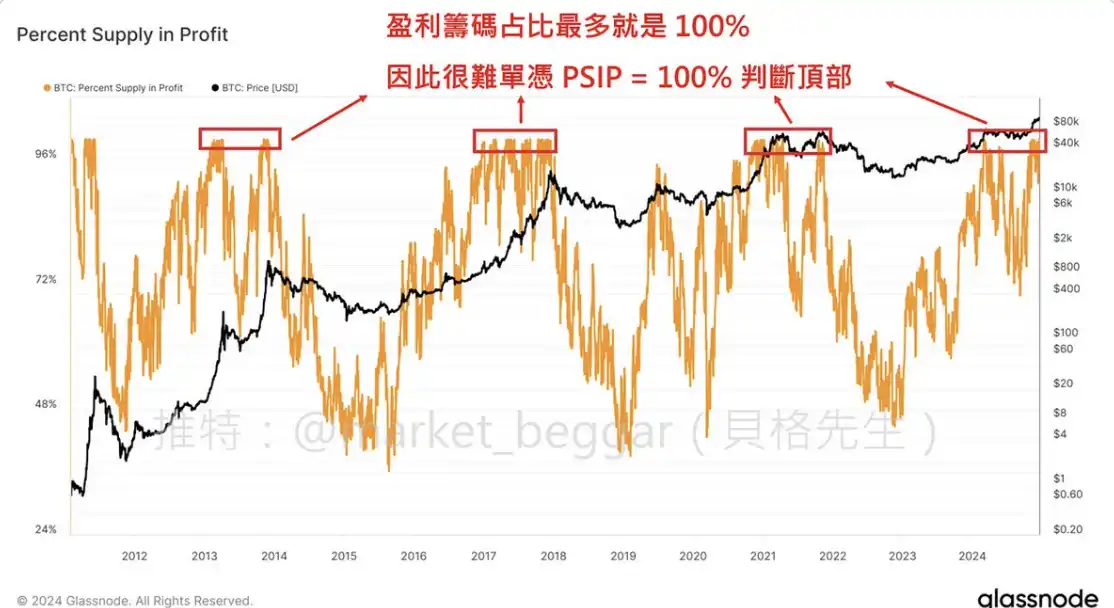
As shown in the chart below, the percentage of chips in profit reaches a maximum value of 100%. Therefore, it is difficult to determine a top based solely on high PSIP.
Here is an interesting logic to share: “Observe the Correlation Change between PSIP and Price”
This idea is derived from the following analysis: The Market Pulse – Week 36, 2022
Conclusion
The above is all the content of On-Chain Data School (Part Five). For readers interested in further studying on-chain data analysis, remember to keep track of this series of articles!
If you want to see more analysis and teaching content on on-chain data, feel free to follow my Twitter account (X)!
I hope this article has been helpful to you. Thank you for reading.
You may also like

Trading Never Sleeps: On-Chain, Crude Oil, and Leverage

On-chain Yield Panorama: The Evolution from Interest-bearing Stablecoins to Crypto Credit Products

RootData announced the integration with OpenClaw, and these gameplay features have gone viral

Key Market Intelligence on March 9th, how much did you miss out on?

a16z: After AI Superpowers, Where to Next for Humanity?

Why Does Oil Go Up When Bitcoin Goes Down?

Decoding 112,000 Polymarket Addresses: The Top 1% Making Money Are Doing These Five Things

AAVE founder issues a warning: DeFi must never become the exit liquidity for Wall Street private credit

How To Create A Frequency So Strong It Makes Reality Obey You
The first-ever WEEX AI Hackathon has concluded, with 10 winners emerging from over 200 global teams. Beyond its $1.8 million prize pool, the event marked a milestone—proving that the future of AI trading belongs to accessible, AI-powered innovation.

The cryptocurrency industry has waited for five and a half years, and what they got is half a ticket

The trend of Ethena reveals what information about the cryptocurrency market

I've been in the crypto industry for five and a half years, and all I got was half a ticket.

Crude Oil Surges 25%, Hyperliquid Unfolds On-Chain Showdown

$20 Billion Valuation, Is Kalshi Engaging in an Arms Race with Polymarket?

Will Not Messing with OpenClaw Lead to Obsolescence in the AI Era? | Lobster Fuss Summit

Anticipating the Market's New Challenge to Political Elections

The Shadow Business Empire of Iran's New Supreme Leader: Oil, Real Estate, and Financial Intrigue



 App
App