
- Buy Crypto
- Markets
 Futures
- Spot
- Copy Trade
- Earn
- More
New SEC Submissions Discuss Self-Custody and DeFi Regulation

Key Takeaways
- Recent submissions to the SEC tackle the regulation of self-custody rights and decentralized finance (DeFi) markets.
- The Louisiana submission highlights the importance of preserving strong regulatory measures to prevent financial crimes.
- The Blockchain Association seeks SEC clarity on dealer rules concerning tokenized equity markets.
- There is ongoing negotiation over the CLARITY bill, which aims to address market structure concerns around stablecoins and DeFi liquidity.
WEEX Crypto News, 2026-01-22 07:42:53
As the cryptocurrency landscape continues to evolve at a rapid pace, regulatory authorities like the U.S. Securities and Exchange Commission (SEC) are under increasing pressure to adapt their frameworks to address new challenges. In recent developments, the SEC’s Crypto Task Force received two significant submissions focused on enhancing the regulation of self-custody rights and decentralized finance (DeFi). These submissions, which highlight pressing issues in the crypto space, come at a time when major industry players such as Coinbase’s CEO, Brian Armstrong, advocate for a balanced regulatory approach through legislative measures.
The Importance of Self-Custody in Crypto Regulation
One of the two submissions to the SEC comes from a source identified as “DK Willard,” which centers around the rights of Louisiana retail crypto users. This submission underscores the importance of state law HB 488, which affirms the right of residents to self-custody their digital assets. In an era where the security and protection of digital assets are of paramount importance, self-custody emerges as a crucial right that aids users in maintaining control over their assets without relying on third-party custody solutions.
The Louisiana submission advocates for upcoming federal crypto market structure legislation to include robust registration, transparency, and stringent anti-fraud and anti-manipulation provisions. These measures are vital to ensure that crypto markets operate fairly and securely, protecting consumers from potential financial crimes. However, it also warns against exemptions in certain federal proposals that might allow developers and platforms to bypass essential investor protection duties, potentially leading to increased risks for users.
Addressing Regulatory Challenges in DeFi
Decentralized finance or DeFi has emerged as a transformative force within the crypto sector, offering a range of decentralized financial services. Yet, its rapid growth has not come without challenges, particularly in the realm of regulation. The second submission to the SEC, from the Blockchain Association Trading Firm Working Group, highlights the need for regulatory clarity concerning dealer rules for tokenized equity markets within the DeFi space. This is particularly relevant for companies that engage in proprietary trading of tokenized equities and DeFi assets solely for their own account, devoid of customer solicitation, custody, or agency execution roles.
There is an essential distinction to be made between these firms and traditional brokers or dealers, as the current broker-dealer rules, which were primarily designed for conventional markets, may not account for the nuances of trading within DeFi. Such distinctions are critical in fostering an environment where innovation within DeFi can flourish without being stifled by regulatory misalignment.
The CLARITY Blockchain Act: A Legislative Balancing Act
The submissions to the SEC are set against the backdrop of ongoing negotiations over the CLARITY Blockchain Act, a proposed federal crypto market structure bill aimed at addressing longstanding issues within the crypto ecosystem. The CLARITY bill represents a crucial step toward providing a comprehensive regulatory framework that addresses the complex interplay between stablecoin yields, DeFi liquidity, and investor protections.
Senior White House crypto adviser Patrick Witt has urged industry stakeholders to consider compromises necessary to pass this bill while the current administration, led by Republicans, remains in control of Congress. The necessity for a balanced approach is emphasized, as the legislative text seeks to balance the diverse concerns of different stakeholders across the crypto industry.
Coinbase CEO Brian Armstrong, speaking at the World Economic Forum in Davos, acknowledged the progress made on the CLARITY bill and emphasized the collaborative efforts required to achieve a regulatory framework that benefits all, with particular attention to the interests of the American public. Armstrong’s remarks highlight the understanding within the industry that effective regulation requires input and cooperation from multiple stakeholders, including lawmakers, regulators, and the private sector.
The Path Forward: Navigating Regulatory Complexity
The submissions to the SEC and the ongoing discussions surrounding the CLARITY bill underscore the complex regulatory landscape that the crypto industry must navigate. As blockchain technology and cryptocurrencies continue to redefine traditional financial systems, regulators face the daunting task of crafting rules that both protect investors and encourage innovation.
One of the key challenges facing regulators is striking the right balance between safeguarding investors and allowing for the growth and evolution of new financial products and services offered by DeFi and other crypto platforms. The submissions emphasize the need to adapt existing regulations to accommodate the unique characteristics of digital assets while ensuring that fundamental investor protections remain intact.
Industry Perspectives and Stakeholder Engagement
The engagement of various stakeholders in the regulatory process is crucial for developing effective policies. The submissions from Louisiana and the Blockchain Association represent attempts to actively participate in and influence the development of regulations that could significantly impact the crypto industry.
Engagement with industry experts, legal analysts, and policymakers provides valuable insights into the potential economic and social implications of proposed regulatory measures. By fostering open dialogue and collaboration between the public and private sectors, there is potential to develop a regulatory environment that supports both consumer protection and innovation.
Conclusion: Building a Foundation for Responsible Innovation
As the cryptocurrency industry continues its dynamic evolution, regulatory clarity plays an essential role in ensuring that the market operates responsibly and transparently. The submissions to the SEC and the ongoing work on the CLARITY bill exemplify the ongoing efforts to create a sustainable regulatory framework that supports innovation while protecting consumers.
This balancing act will be crucial for the future growth and success of the crypto industry. Stakeholders, including regulators, industry leaders, and policymakers, must work together to establish clear guidelines that enable the market to thrive while addressing concerns around security, fraud prevention, and investor protection.
FAQs
What is self-custody, and why is it important in crypto regulation?
Self-custody refers to the practice of holding and managing one’s digital assets independently without relying on third-party custodians. It is vital in crypto regulation as it allows users to maintain control over their assets, enhancing security and reducing reliance on potentially vulnerable custodial solutions.
How might existing broker-dealer rules need to change for DeFi markets?
Existing broker-dealer rules were tailored for traditional markets and may not adequately address the nuances of trading in decentralized finance (DeFi) markets. There may be a need to adapt these rules to account for smart-contract settlements and the operational differences inherent in DeFi transactions.
What are the key components of the CLARITY bill?
The CLARITY bill aims to establish a comprehensive regulatory framework for the cryptocurrency market, addressing issues such as stablecoin yields, DeFi liquidity, and investor protections. It seeks to provide regulatory clarity while promoting innovation and safeguarding consumer interests.
How can industry stakeholders influence regulatory changes in the crypto market?
Industry stakeholders can influence regulatory changes by actively participating in consultations, providing feedback on proposed regulations, and collaborating with policymakers to address concerns. Engagement with regulators and advocacy groups can help shape the development of effective and balanced policies.
Why is it essential to balance innovation and regulation in the crypto space?
Balancing innovation and regulation is crucial to fostering an environment that supports technological advancements while ensuring that investors are adequately protected. Effective regulation helps prevent fraudulent activities and market manipulation, contributing to a stable and trustworthy crypto ecosystem.
You may also like

Ray Dalio Dialogue: Why I'm Betting on Gold and Not Bitcoin

Who Took the Money in the AI Era? A Must-See Investment Checklist for HALO Asset Trading
Wall Street Bears Target Ethereum: Vitalik In the Know Takes Flight, Tom Lee Remains Bullish

Pump.fun Hacker Steals $2 Million, Receives 6-Year Prison Sentence, Opts for 'Self-Detonation'

6% Annual Percentage Yield as Musk Declares War on Traditional Banks

36 years, 4 wars, 1 script: How does capital price the world in conflict?

Mining Companies' Great Migration: Some Have Already Secured $12.8 Billion in AI Orders
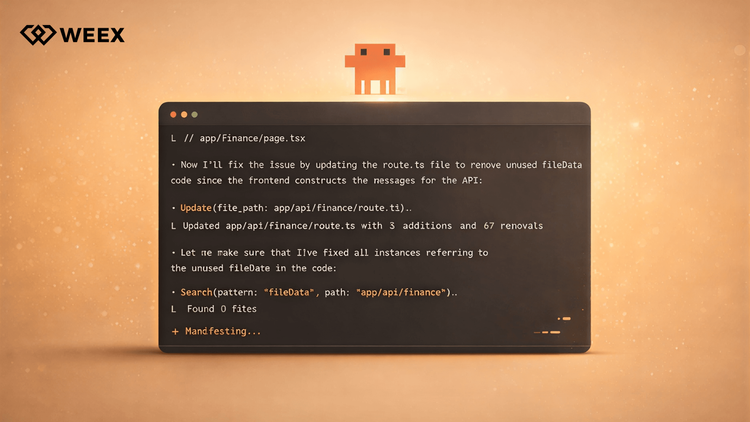
What Is Vibe Coding? How AI Is Changing Web3 & Crypto Development
What is vibe coding? Learn how AI coding tools are lowering the barrier to Web3 development and enabling anyone to build crypto applications.
The parent company of the New York Stock Exchange strategically invests in OKX: The intentions behind the $25 billion valuation

WEEX P2P update: Country/region restrictions for ad posting
To improve ad security and matching accuracy, WEEX P2P now allows advertisers to restrict who can trade with their ads based on country or region. Advertisers can select preferred counterparty locations for a safer, smoother trading experience.
I. Overview
When publishing P2P ads, advertisers can now set the following:
Allow only counterparties from selected countries or regions to trade with your ads.
With this feature, you can:
Target specific user groups more precisely.Reduce cross-region trading risks.Improve order matching quality.
II. Applicable scenarios
The following are some common scenarios:
Restrict payment methods: Limit orders to users in your country using supported local banks or wallets.Risk control: Avoid trading with users from high-risk regions.Operational strategy: Tailor ads to specific markets.
III. How to get started
On the ad posting page, find "Trading requirements":
Select "Trade with users from selected countries or regions only".Then select the countries or regions to add to the allowlist.Use the search box to quickly find a country or region.Once your settings are complete, submit the ad to apply the restrictions.
When an advertiser enables the "Country/Region Restriction" feature, users who do not meet the criteria will be blocked when placing an order and will see the following prompt:
If you encounter this issue when placing an order as a regular user, try the following solutions.
Choose another ad: Select ads that do not restrict your country/region, or ads that allow users from your location.Show local ads only: Prioritize ads available in the same country as your identity verification.
IV. Benefits
Compared with ads without country/region restrictions, this feature provides the following improvements.
Aspect
Improvement
Trading security
Reduces abnormal orders and fraud risk
Conversion efficiency
Matches ads with more relevant users
Order completion rate
Reduces failures caused by incompatible payment methods
V. FAQ
Q1: Why are some users not able to place orders on my ad?
A1: Their country or region may not be included in your allowlist.
Q2: Can I select multiple countries or regions when setting the restriction?
A2: Yes, multiple selections are supported.
Q3: Can I edit my published ads?
A3: Yes. You can edit your ad in the "My Ads" list. Changes will take effect immediately after saving.

What are the key highlights of this year's Ethereum's most important upgrade, the Glamsterdam upgrade?

March 6 Key Market Update You Can't Miss! | Alpha Morning Report

Sell Nvidia, Buy Power Plant: 27-Year-Old AI Investor Earns $5 Billion in One Year
The $24 Million Heist Behind It: The Most Dangerous Vulnerability in the Crypto World is Actually Human

Justin Sun Lawsuit Dismissed, BlackRock Bullish on Tokenization, What Is the English-Speaking Community Paying Attention To?

Morning News | NYSE parent company invests in OKX; Morgan Stanley provides $500 million loan to Core Scientific; Western Union partners with Crossmint to launch stablecoin USDPT

These former crypto builders have transitioned to the hottest AI projects globally



 App
App