
- Buy Crypto
- Markets
 Futures
- Spot
- Copy Trade
- Earn
- More
New $BROCCOLI Half-Hour Instant Transaction 50M, Retrospect of the "Broccoligate" Donation Battle

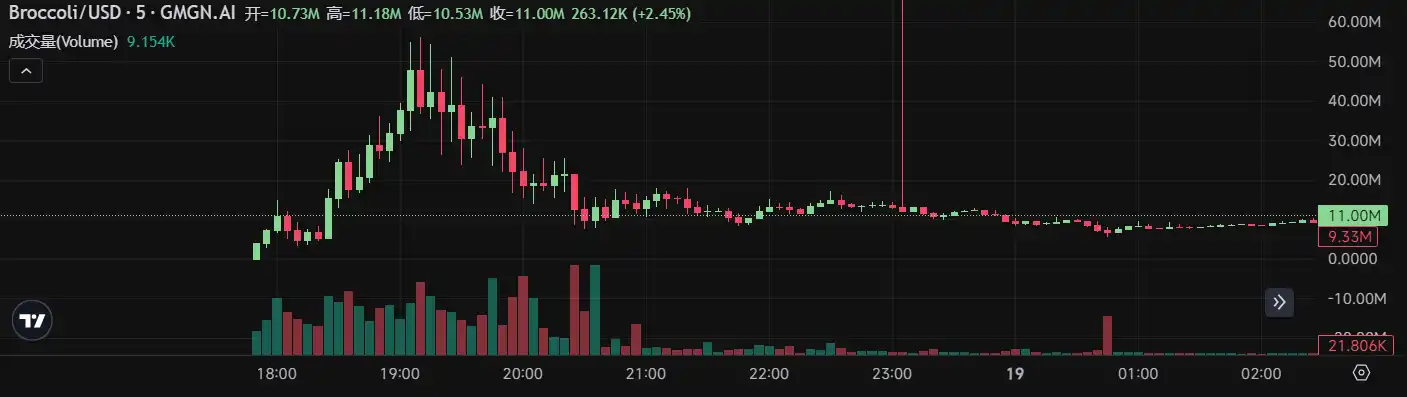
On the afternoon of February 18, the somewhat dormant "CZ's Dog" narrative suddenly became active. Around 6 PM, a new $BROCCOLI token was released, experiencing a rapid surge in a short period of time, quickly reaching a $50M market cap within an hour and a half, and currently stabilizing at around $10M. The fireworks of this token are not only related to the Renaissance but also closely tied to the recent $LIBRA and "charity relief."
Event Background: CZ's "Broccoli Night" and Meme Coin Frenzy
After CZ announced his pet dog named "Broccoli" on February 13, numerous similarly named meme coin projects swiftly emerged on the BNB Chain, with a combined market cap surpassing $4 billion at one point. This naming trend is not only due to its similarity in pronunciation to "Blockchain" but also because of the community's fervent worship of CZ's personal influence, creating a speculative spectacle known as the "Broccoli Night." However, behind this frenzy lurked whale manipulation, community division, and a trust crisis.
Charity Activities and CZ's Involvement: From the Argentina President Coin Issuance Incident to the "Love Airdrop"
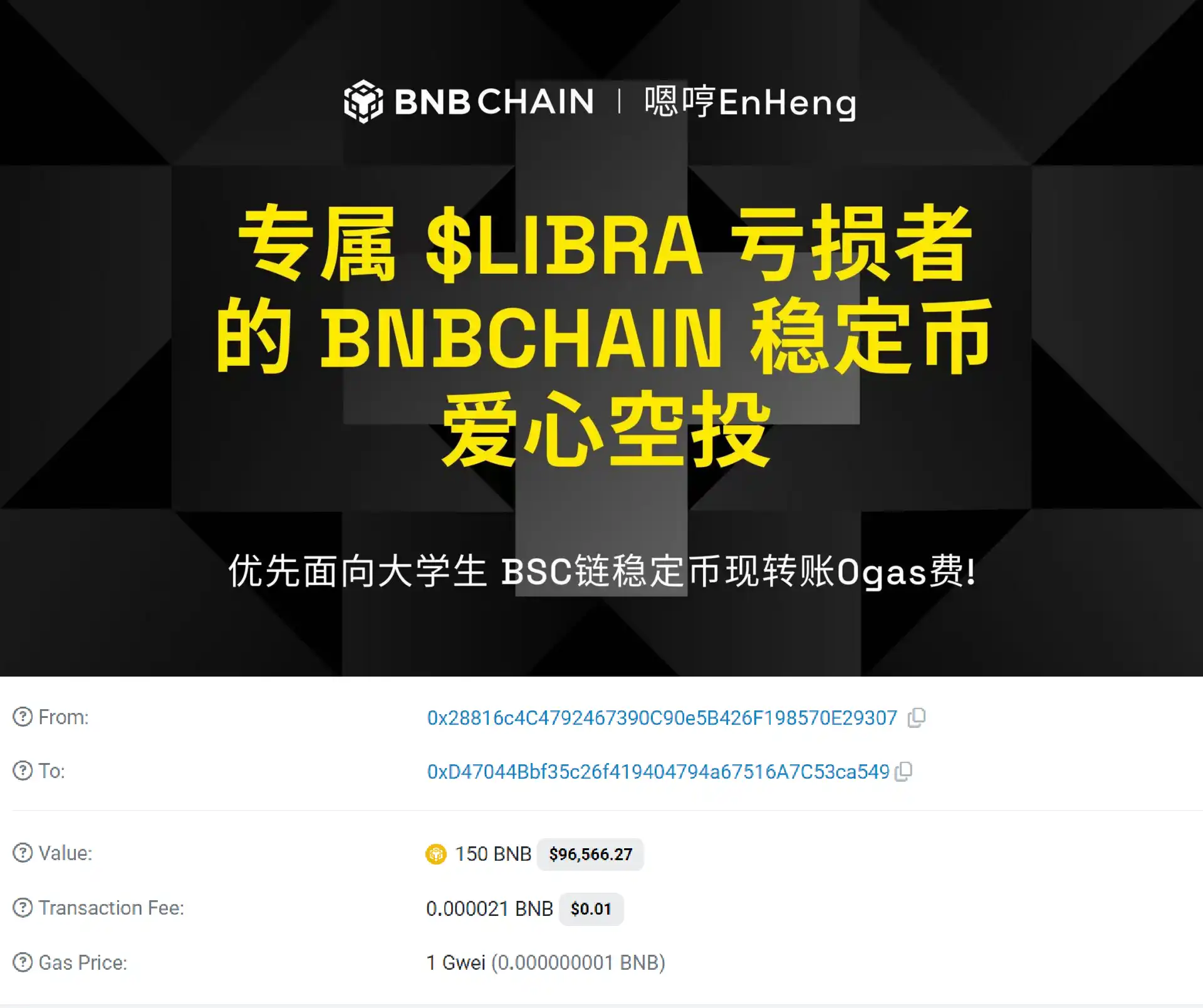
The root of the matter can be traced back to the Argentina President Milei coin issuance incident, where many crypto investors suffered significant losses. Subsequently, a college student KOL spontaneously initiated a $50,000 charity dinner aid plan on the BNB Chain to compensate all victims (priority given to college students). CZ then expressed support for this project and publicly transferred 150 BNB (approximately $100,000) to the charity address of the KOL, collaborating to launch the "exclusive BNBCHAIN stablecoin love airdrop for $LIBRA loss sufferers." However, this act of goodwill inadvertently became the "trigger" for whale manipulation—CZ's disclosed donation address was viewed by speculators as an "official endorsement signal," sparking a new round of meme coin hype.
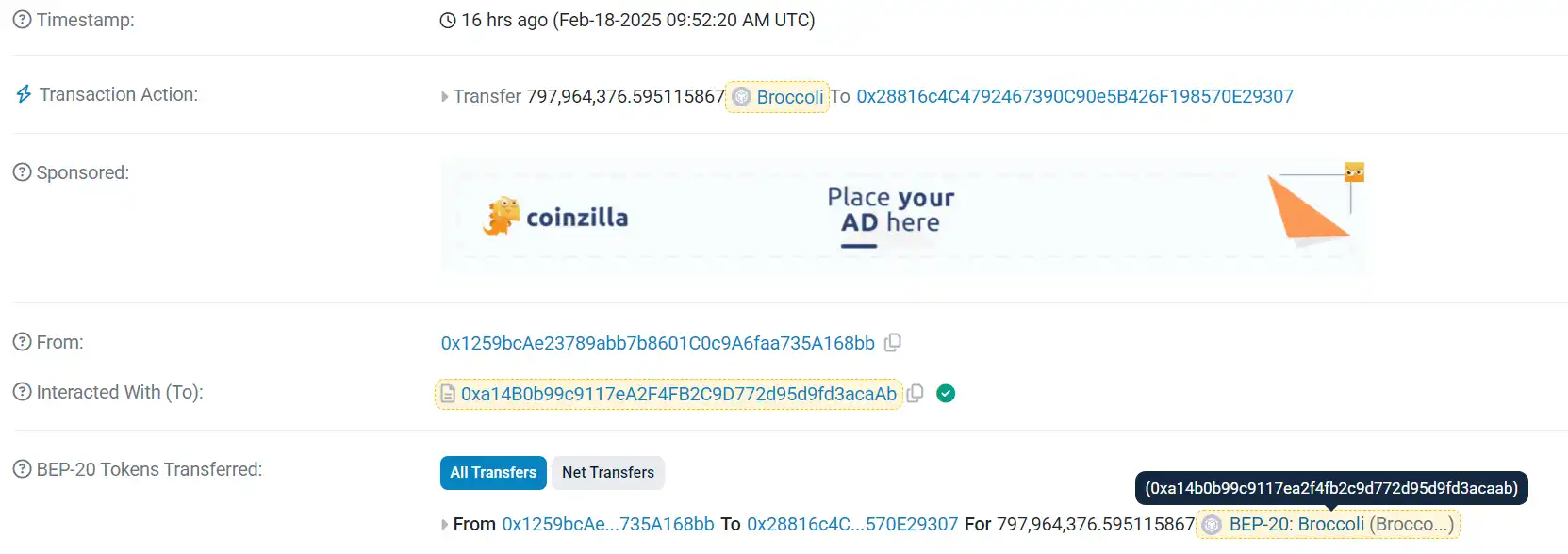
After CZ's donation address was made public, according to Ai Auntie's monitoring, an investor who profited $460,000 on Broccoli (0x6d5...714) created a new token, Broccoli (0xa14...aab), and transferred 150 BNB and the tokens to CZ's donation address. The specific actions include creating a new token 13 minutes after CZ announced the donation address, transferring 80% of the token supply (approximately 7.97 billion tokens) to CZ's address two minutes later, while also liquidating all remaining tokens ending in 714, and transferring the 150 BNB profits back to CZ's address. The new token's actual market cap is around $7 million, representing 20% of the displayed market cap. Currently, the investor holds 10.62 million tokens as the developer address and is the largest holder of the token.
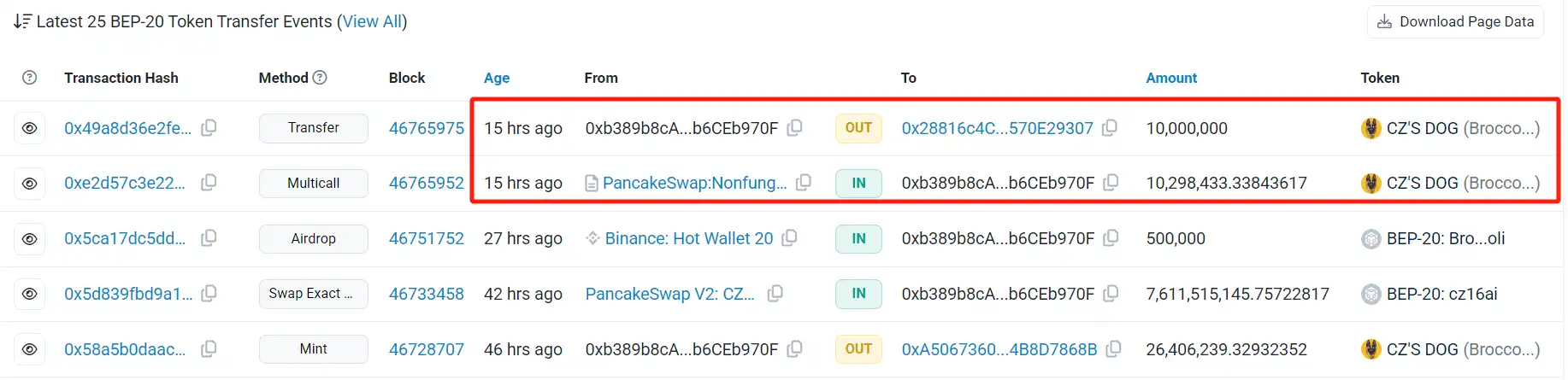
After the new token with the ending aab dev's rug pull on the 714 old token, the whale of the 714 community also started to fight back. That night at 19:50 (UTC+8), 10 million 714 tokens were sent to CZ's address, causing the 714 token's market value to surge from $96 million to $126 million briefly. However, the market value later fell back and is currently stable at around $70 million. This action is both a community protest against the new token and an exposure of the nature of "market manipulation" in the Meme coin ecosystem, relying on whale games.
In the morning of the 19th, CZ tweeted that the address he donated to received more BNB than he donated, along with more various tokens. He stated that he would not keep a single cent and most likely donate to those who suffered losses in TST or some Broccolis. He emphasized, "This is not an endorsement of any token, do not overinterpret this."
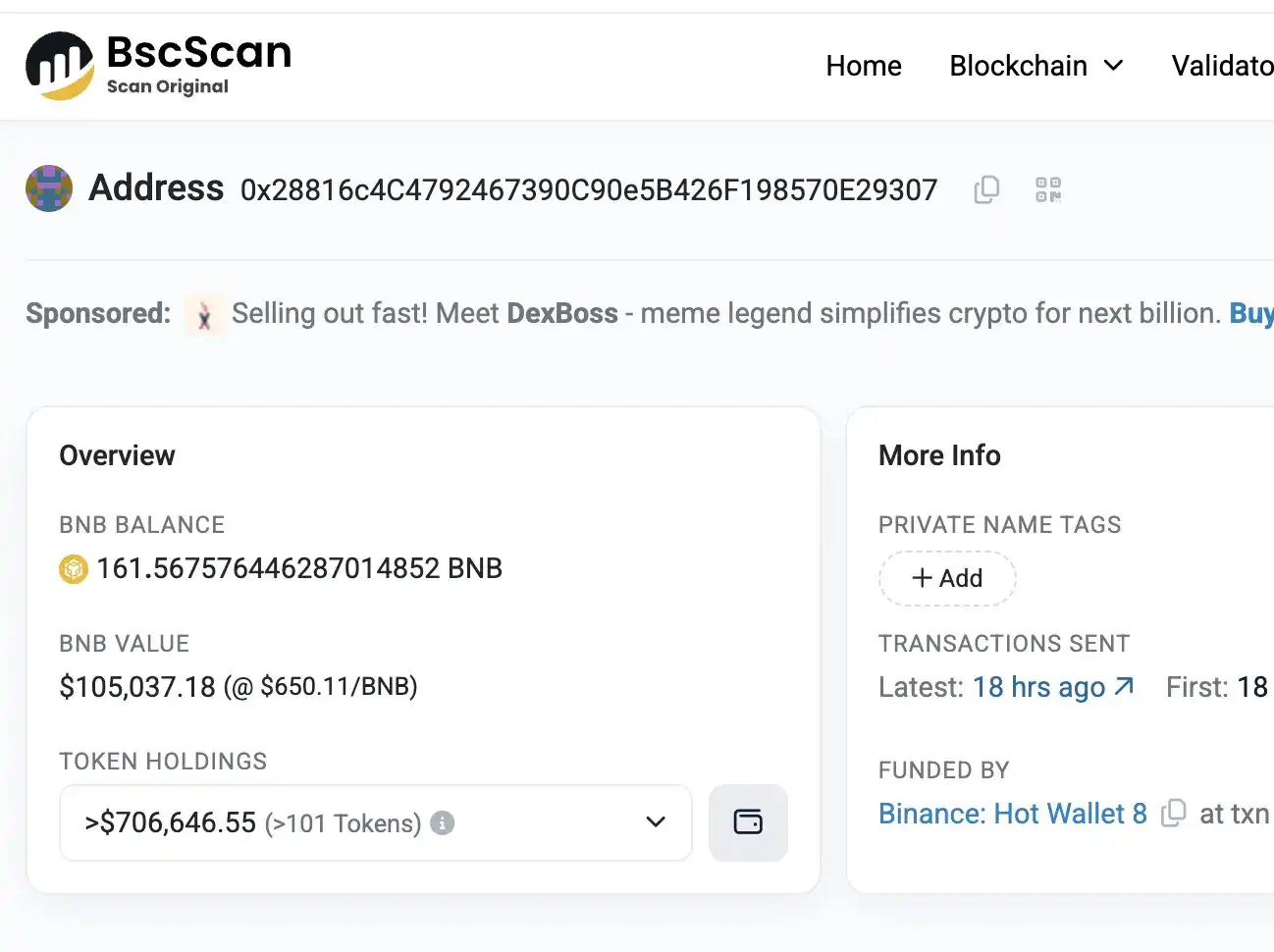
CZ, although has repeatedly emphasized "has not issued any Meme coins," after the "Broccoli War," CZ once mentioned in a post that during the process of diverting to the BNB Chain, due to a lack of understanding of the meme issuance process and community operations, it brought many negative impacts to many retail investors. He expressed deep apologies for this and promised to improve BNB Chain's performance and establish a Meme coin incentive policy. However, his social media activities and the public donation address objectively provided speculative material for traders. There are over a hundred tokens with the same name "Broccoli" on the BNB Chain. The Binance Web3 wallet even had a dedicated "CZ's Dog" section highlighting the top four projects by market value (now closed on the first day). This also underscores the platform's tacit approval of traffic dividends.
Additionally, in this event, whales exploited information asymmetry, liquidity control, and community sentiment to reap retail investors. The so-called "decentralized community consensus" has turned into a capital game, highlighting the essence of the Meme coin's "witchcraft arena."
The "Broccoli War" is not only a microcosm of Meme coin speculation but also reveals the vulnerability of the cryptocurrency market in frenzy—when charity becomes a speculation hotspot, when community consensus turns into whale chips, the industry urgently needs to build a healthier ecosystem foundation from technical, governance, and regulatory perspectives. "When you try to make money quickly, you often lose. When you donate money, you will get more in return." This is CZ's sentiment in response to the donation event tweet. CZ's remarks and the upgrade commitment of the BNB Chain may be the starting point, but true change still needs time to validate.
You may also like
WEEX P2P update: Country/region restrictions for ad posting
To improve ad security and matching accuracy, WEEX P2P now allows advertisers to restrict who can trade with their ads based on country or region. Advertisers can select preferred counterparty locations for a safer, smoother trading experience.
I. Overview
When publishing P2P ads, advertisers can now set the following:
Allow only counterparties from selected countries or regions to trade with your ads.
With this feature, you can:
Target specific user groups more precisely.Reduce cross-region trading risks.Improve order matching quality.
II. Applicable scenarios
The following are some common scenarios:
Restrict payment methods: Limit orders to users in your country using supported local banks or wallets.Risk control: Avoid trading with users from high-risk regions.Operational strategy: Tailor ads to specific markets.
III. How to get started
On the ad posting page, find "Trading requirements":
Select "Trade with users from selected countries or regions only".Then select the countries or regions to add to the allowlist.Use the search box to quickly find a country or region.Once your settings are complete, submit the ad to apply the restrictions.
When an advertiser enables the "Country/Region Restriction" feature, users who do not meet the criteria will be blocked when placing an order and will see the following prompt:
If you encounter this issue when placing an order as a regular user, try the following solutions.
Choose another ad: Select ads that do not restrict your country/region, or ads that allow users from your location.Show local ads only: Prioritize ads available in the same country as your identity verification.
IV. Benefits
Compared with ads without country/region restrictions, this feature provides the following improvements.
Aspect
Improvement
Trading security
Reduces abnormal orders and fraud risk
Conversion efficiency
Matches ads with more relevant users
Order completion rate
Reduces failures caused by incompatible payment methods
V. FAQ
Q1: Why are some users not able to place orders on my ad?
A1: Their country or region may not be included in your allowlist.
Q2: Can I select multiple countries or regions when setting the restriction?
A2: Yes, multiple selections are supported.
Q3: Can I edit my published ads?
A3: Yes. You can edit your ad in the "My Ads" list. Changes will take effect immediately after saving.

What are the key highlights of this year's Ethereum's most important upgrade, the Glamsterdam upgrade?

March 6 Key Market Update You Can't Miss! | Alpha Morning Report

Sell Nvidia, Buy Power Plant: 27-Year-Old AI Investor Earns $5 Billion in One Year
The $24 Million Heist Behind It: The Most Dangerous Vulnerability in the Crypto World is Actually Human

Justin Sun Lawsuit Dismissed, BlackRock Bullish on Tokenization, What Is the English-Speaking Community Paying Attention To?

Morning News | NYSE parent company invests in OKX; Morgan Stanley provides $500 million loan to Core Scientific; Western Union partners with Crossmint to launch stablecoin USDPT

These former crypto builders have transitioned to the hottest AI projects globally

Ethereum Overhaul 2026 Blueprint, this time to abandon "gradualism"
What Is OpenClaw? How AI Agents Could Change Crypto Exchange Trading
OpenClaw is a rapidly growing open-source AI agent that can autonomously execute tasks and interact with software, including connecting to crypto exchanges through APIs to analyze markets and automate trading strategies. While this creates new opportunities for smarter trading, it also introduces security and operational risks. Through this article, WEEX aims to help users better understand the potential and risks of AI trading agents so they can explore new technologies while trading more safely and responsibly.
Ethereum 2029 Strawmap Guide: Ultra-Fast Consensus, Native Privacy, and the "Acceleration Variables" Brought by AI

Altcoin ETF Surge: SOL and XRP Inflows Total $23 Million as Institutions Diversify
Key Takeaways Institutional interest in altcoin ETFs is expanding, with SOL and XRP showing significant inflows on March…
Vitalik Drops Ethereum Endgame Bombshell: ETH USD to $3,000?
Key Takeaways Vitalik Buterin introduces the “Sanctuary Tech” manifesto to address Ethereum’s non-financial limitations. A current lack of…
Exclusive: Yuliya Barabash Predicts the Most Regulated Could Be the Biggest Crypto Winners
Key Takeaways The aftermath of FTX and Celsius collapses has ushered a new regulatory era, reshaping the crypto…

iPhone Crypto Wallets Under Threat from State-Grade Malware
Key Takeaways: The Coruna exploit kit exploits 23 iOS vulnerabilities, threatening iPhone users’ crypto wallets. Initially state-level surveillance,…

Bitcoin Nears Two-Year ‘Make-or-Break’ Resistance: Future Implications
Key Takeaways Bitcoin’s price is approaching key resistance levels around $73,000, observed for the first time since early…
Bitcoin Price Prediction: Analyst Says $220,000 BTC Is Coming — But Only After This Happens
Key Takeaways: Bitcoin may experience a significant drop before the next major rally begins, potentially revisiting the $50,000…

Solana Price Outlook: All Eyes Focused on $95 — Could This Trigger New SOL Highs?
Key Takeaways Solana’s price is approaching a pivotal $95 mark, which may indicate potential support or resistance for…
WEEX P2P update: Country/region restrictions for ad posting
To improve ad security and matching accuracy, WEEX P2P now allows advertisers to restrict who can trade with their ads based on country or region. Advertisers can select preferred counterparty locations for a safer, smoother trading experience.
I. Overview
When publishing P2P ads, advertisers can now set the following:
Allow only counterparties from selected countries or regions to trade with your ads.
With this feature, you can:
Target specific user groups more precisely.Reduce cross-region trading risks.Improve order matching quality.
II. Applicable scenarios
The following are some common scenarios:
Restrict payment methods: Limit orders to users in your country using supported local banks or wallets.Risk control: Avoid trading with users from high-risk regions.Operational strategy: Tailor ads to specific markets.
III. How to get started
On the ad posting page, find "Trading requirements":
Select "Trade with users from selected countries or regions only".Then select the countries or regions to add to the allowlist.Use the search box to quickly find a country or region.Once your settings are complete, submit the ad to apply the restrictions.
When an advertiser enables the "Country/Region Restriction" feature, users who do not meet the criteria will be blocked when placing an order and will see the following prompt:
If you encounter this issue when placing an order as a regular user, try the following solutions.
Choose another ad: Select ads that do not restrict your country/region, or ads that allow users from your location.Show local ads only: Prioritize ads available in the same country as your identity verification.
IV. Benefits
Compared with ads without country/region restrictions, this feature provides the following improvements.
Aspect
Improvement
Trading security
Reduces abnormal orders and fraud risk
Conversion efficiency
Matches ads with more relevant users
Order completion rate
Reduces failures caused by incompatible payment methods
V. FAQ
Q1: Why are some users not able to place orders on my ad?
A1: Their country or region may not be included in your allowlist.
Q2: Can I select multiple countries or regions when setting the restriction?
A2: Yes, multiple selections are supported.
Q3: Can I edit my published ads?
A3: Yes. You can edit your ad in the "My Ads" list. Changes will take effect immediately after saving.


 App
App