
From Overnight Riches to Rebirth from Zero: A "Crypto Elder's" Speculative Reflection




Original Article Title: Reflections on My First Bull and Bear Cycle: Lessons Learned
Original Article Author: @hmalviya9, Founder of @dyorcryptoapp
Original Article Translation: zhouzhou, BlockBeats
Editor's Note: This article is the author's reflection on his cryptocurrency investment experience, sharing three major lessons learned from greed, emotional investing, and lifestyle traps. He suffered heavy losses in the 2018 bear market due to blindly chasing altcoin investments, and then lost everything through futures trading. In March 2020, the Bitcoin flash crash led him to completely exit the crypto space and switch to film production. Ultimately, he realized that greed, emotional investing, and rapidly improving his lifestyle were the root causes of his failures.
Below is the original content (slightly rephrased for better readability):
Reflections on My First Bull and Bear Cycle: Lessons Learned — Before entering the cryptocurrency space, I had been running a startup company. Digital Gorkha was my third entrepreneurial project, which I started in 2016. We developed a simple visitor management and security app for physical spaces and also raised some funds—but from the wrong investors, giving away more equity than we should have.
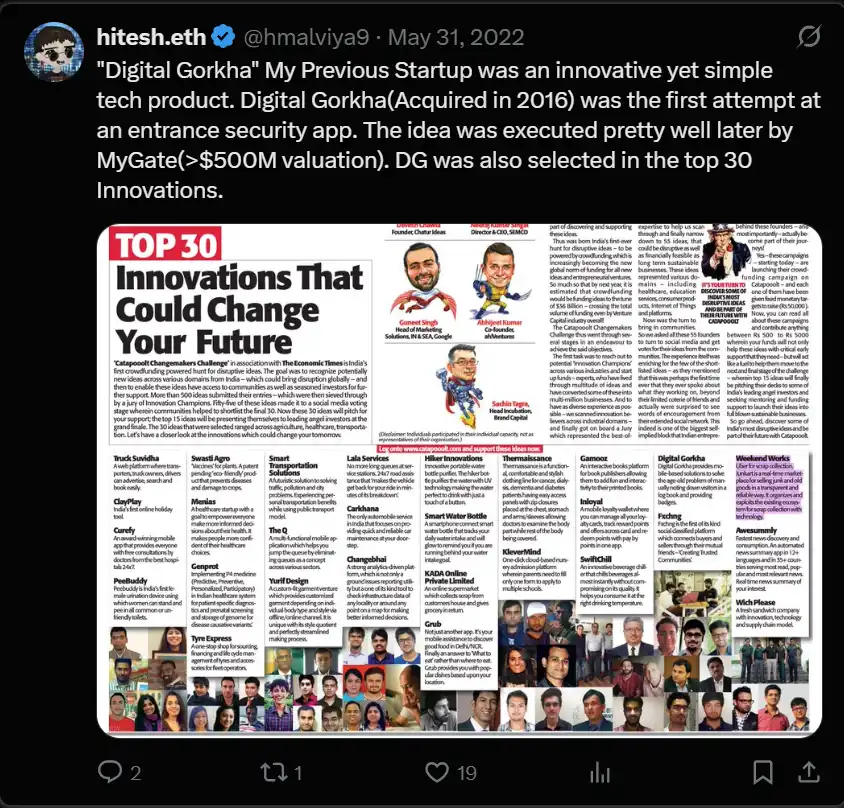
This mistake put us in a predicament. Despite decent user growth and revenue, raising Series A funding became nearly impossible—shareholder structure was a mess, and the tech we had built did not form a real moat.
As a founder, I watched my company head towards failure every day, pondering various ways to change its fate. It was at this point that I started looking for a technological moat—a way to help us complete that slipping round of funding.
Meanwhile, the immense pressure from my parents kept mounting as my wedding approached, and I had gone six months without a salary. I was living at my college friends' place—they covered my food and accommodation expenses.
I had nothing more to lose, and it was then that I stumbled upon blockchain in a late-night Google search.
With a background in cybersecurity and a good understanding of cryptography, I quickly grasped the blockchain architecture. I read about different use cases, explored its future potential, and eventually came across a blog post about a blockchain identity system. All of this instantly inspired me.
At Digital Gorkha, we have a verified visitor database covering 100+ locations in 20+ cities, recording over 1,000 data points daily. If I can get these identities on chain, we would be able to create something truly defensible.
Thus, GetXS was born — an identity layer on the blockchain under the umbrella of Digital Gorkha.
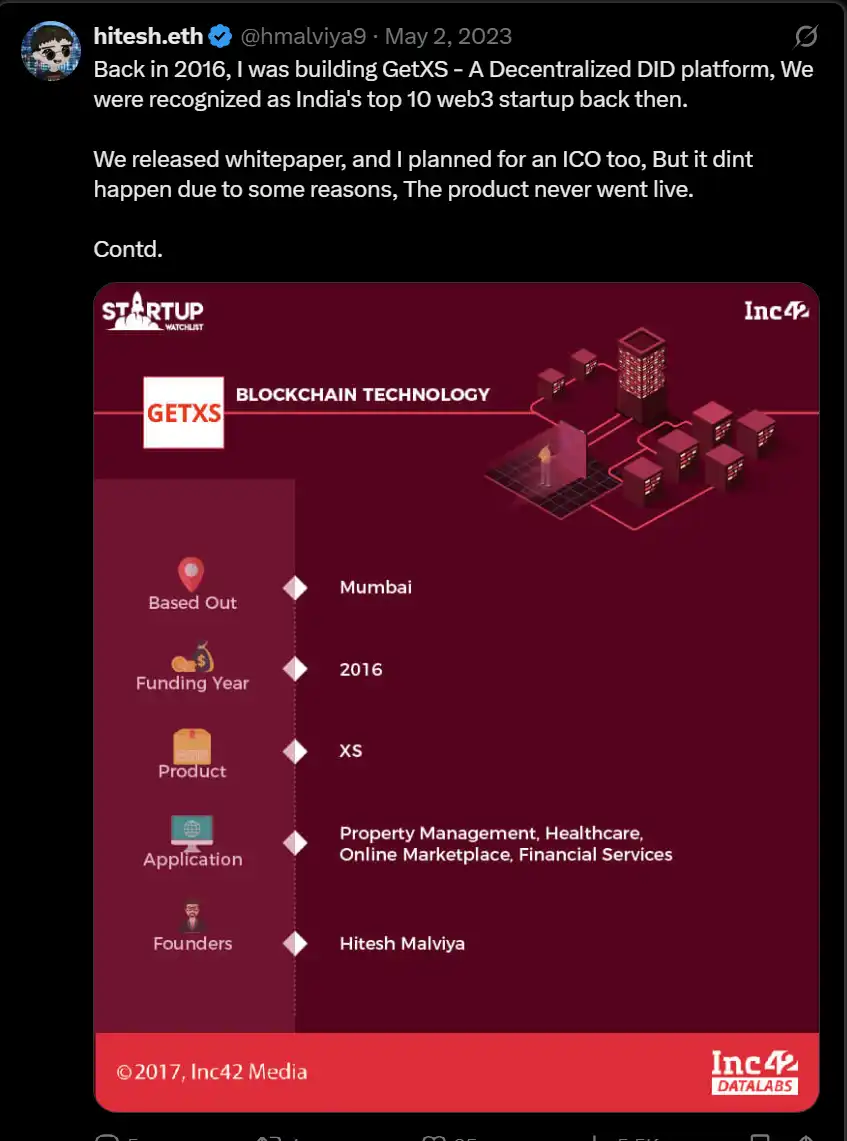
I started pitching it to investors, but it was mid-2016, and Indian VCs weren't interested in blockchain investments. I pitched to angel investors like Anupam Mittal, Kunal Shah, and even giants like Accel and Sequoia — but none saw the potential.
In hindsight, this was essentially an early version of Worldcoin, but at that time, I couldn't raise a penny. We persevered for six months, but the funding dried up quickly, and debts taken for survival were looming over us every day.
My parents mocked me every day for being broke and about to get married. Another person was about to enter my life, and I had nothing. I had no choice but to sell almost 30% of the equity at almost zero price, forcing me to leave the company I created.
The real estate developers who invested in Digital Gorkha didn't fancy my blockchain exploration — they wanted to run the company their way. Crushed under economic pressure, I had mentally given up. So, I gave up on entrepreneurship and started looking for blockchain jobs.
Entering the Crypto Rabbit Hole
I did three things: Started @ItsBlockchain, a blog documenting my blockchain learning. Launched GetXS as a standalone startup, operated with a new partner. Worked as a blockchain consultant at an IT firm in Bangalore. I made enough to get by but not enough to bring my wife over. And then, I remembered Bitcoin — I had bought one in October 2016. Three months later, I checked the price, and it had doubled.
That moment changed everything. I delved deep into cryptocurrency, looking for the next Bitcoin. I found ETH and XRP, made my first real investments — and in less than a month, my portfolio had grown tenfold. And just like that, I quit my job four months later.
I told my manager, "What's the point of coming to the office every day to do meaningless tasks? I stay at home, do something interesting, and earn four times my salary." Since then, I shifted @ItsBlockchain from blockchain to cryptocurrency, focusing on altcoins and ICOs.
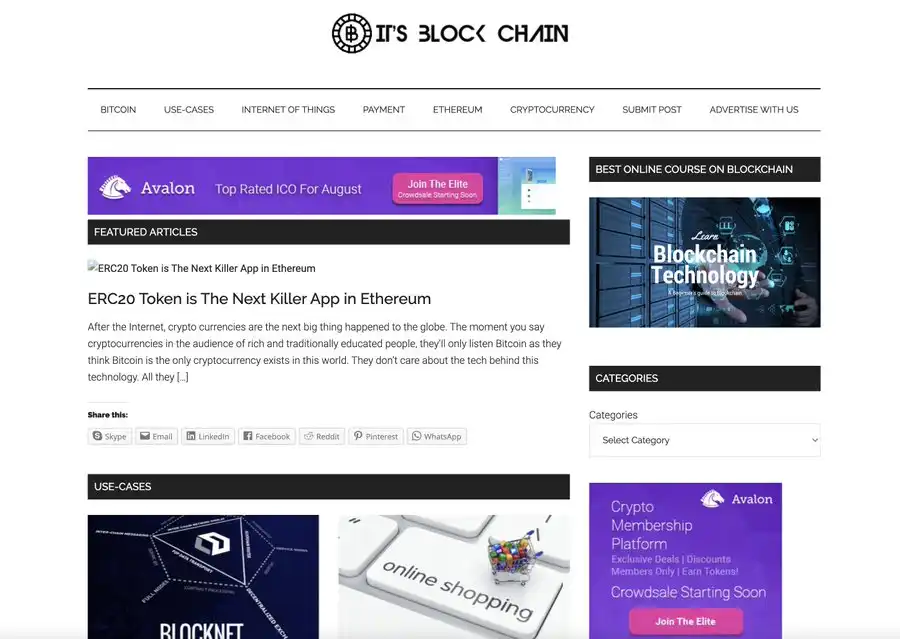
One day, I published an article titled "Top 10 Coins Worth Buying in August." The server crashed. Even after three upgrades, the website's monthly traffic reached 150K. I found the breakthrough in demand. We increased our investment in list articles, and traffic skyrocketed to 1 million page views at its peak. ICOs were booming, and we had a massive email list and amazing traffic. So, I started monetizing through ads, sponsored articles, and providing consultancy services to crypto investors.
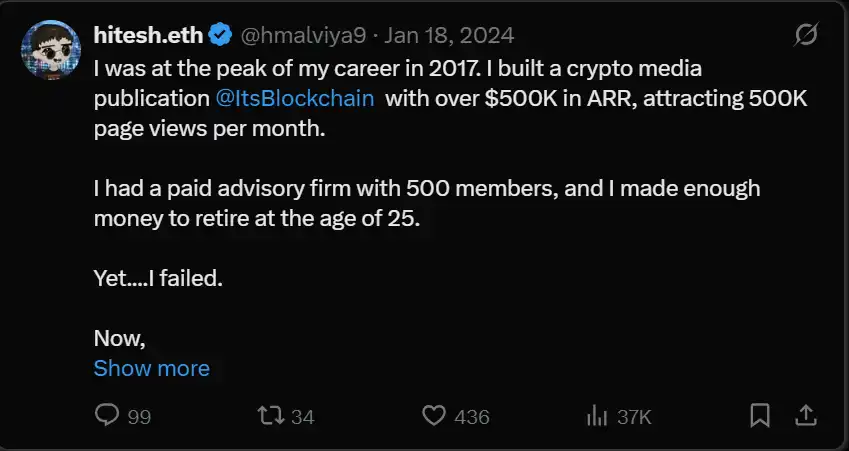
When I started in 2017, my bank account balance was zero, but by the year-end, I crossed $1 million in revenue from ItsBlockchain. Life was good for a while, but greed took over my mind.
2018 Bear Market: My portfolio tanked as everyone believed investing in altcoins was the way to outperform Bitcoin.
So, in January 2018, when altcoins saw explosive growth, I converted 90% of my Bitcoin into over 40 different altcoins — planning to HODL for life.
This was my biggest mistake as the market started slowly declining. Initially, it looked like a normal retracement, and I found solace in the bounce. I kept telling myself, "It will all be fine." Busy traveling, smoking weed, spending money like a crazy rich person, I thought the market would always reward me.
What was the biggest deception? Bitcoin bounced off the $6K support level 6-7 times. Everyone thought it was unbreakable.
Everyone kept on HODLing. Everyone believed it was just a healthy correction. Then reality hit me.
Bitcoin broke below $6K, plummeting to $3.2K. I gave up around $4K, sold all coins. In the end, less than 5% of my portfolio remained. Lost everything once again.
I was desperate to recover. I started futures trading, and by early 2019, when Bitcoin surged to $13.5K, I recovered 30% of my portfolio. But the sideways action killed me — technical analysis became ineffective, and I fell into a streak of continuous losses.
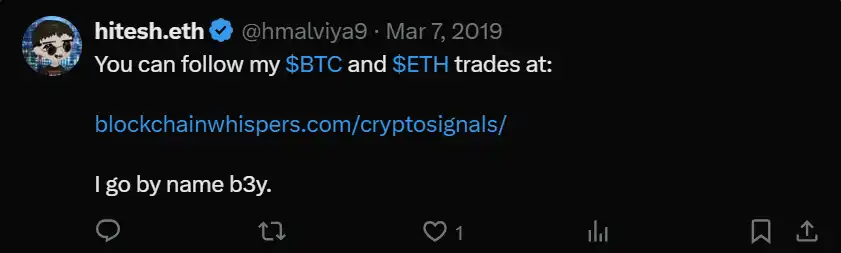
I found a job at Blockchain Whispers, writing analytical articles and receiving my salary in Bitcoin. I could have saved those bitcoins. But I didn't. I put all my funds into futures, and then, March 2020 happened.
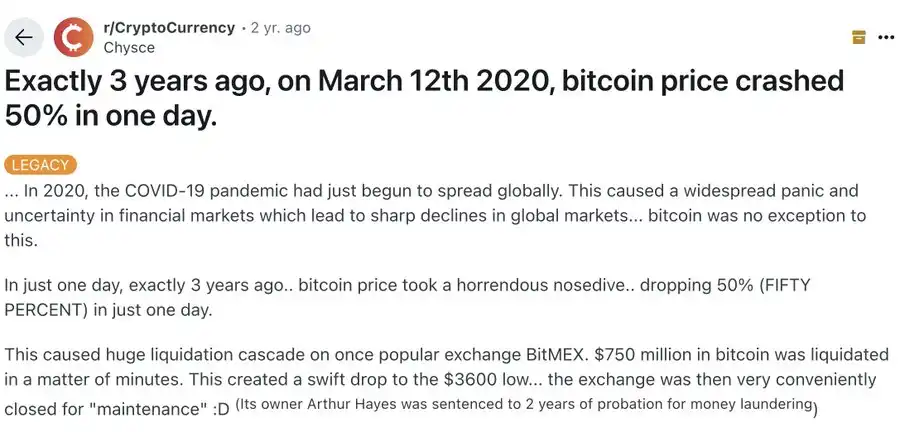
Bitcoin saw a flash crash, I was liquidated, lost everything, and in that moment of the lesson learned from this cycle, I decided to exit cryptocurrency and ventured into a year of movie production.
Looking back, I learned three key lessons:
Greed is your biggest enemy. When you make life-changing money, hold onto it, don't chase infinite gains. Your lifestyle might become a trap; I elevated my living standards too quickly. When I lost everything, I felt suffocated.
Emotional investing will lead you to ruin; I sought confirmation bias, disregarding clear warning signs. The market doesn't care about your beliefs. I completely exited cryptocurrency in 2020, but as we all know... no one really can leave cryptocurrency.
To be continued...
You may also like

Cryptocurrency market makers collectively seek change as it becomes increasingly difficult to make money

a16z Crypto Partner: Cash flow is the moat

Citibank releases "2030 Asset Tokenization Market Outlook": 6 major trends may create a $8.2 trillion market

The trillion-dollar valuation test: Are the three major super IPOs a celebration for tech stocks or a nightmare for the crypto market?

Morning Report | Digital Asset completes $355 million financing led by a16z Crypto; Meta completes operational separation from Manus

Morning News | CME Group launches Nasdaq Cryptocurrency Index futures; Asset management giant Janus Henderson strategically invests in Ethena

Bitcoin Layer 2 Network Botanix: Why Did We Choose to Dissolve?

Why did Oracle deliver the strongest financial report in history, yet its stock price fell?
When the P2P illicit funds from ten years ago turned into 60,000 bitcoins

Dialogue with OmenX Founder: Why does the prediction market need an evolution from "spot" to "derivatives"?
Galaxy in-depth report: Is Solana still worth paying attention to?

Young people in South Korea make a "final effort" in the epic bull market
The pricing controversy of Trade.xyz exposes the fatal weakness of Pre-IPO perpetual contracts
How much longer can Ethereum's last big buyer hold on?

World Cup 2026 Coming – WEEX Celebrates with $1M Prize Pool & Michael Owen Live

Morning Report | OpenAI has submitted an S-1 registration statement draft to the U.S. SEC; Morpho completes $175 million financing

Galaxy Deep Research Report: How Hyperliquid's HIP-4 Upgrade Changes the Landscape of Prediction Markets?

Latest research from 13 top universities including Cornell University: The current state, challenges, and misconceptions of the fusion of Crypto and AI
Cryptocurrency market makers collectively seek change as it becomes increasingly difficult to make money
a16z Crypto Partner: Cash flow is the moat
Citibank releases "2030 Asset Tokenization Market Outlook": 6 major trends may create a $8.2 trillion market
The trillion-dollar valuation test: Are the three major super IPOs a celebration for tech stocks or a nightmare for the crypto market?
Morning Report | Digital Asset completes $355 million financing led by a16z Crypto; Meta completes operational separation from Manus
Morning News | CME Group launches Nasdaq Cryptocurrency Index futures; Asset management giant Janus Henderson strategically invests in Ethena


