
- Buy Crypto
- Markets
 Futures
- Spot
- Copy Trade
- Earn
- More
Bloomberg: Weak Regulation Could ‘Break’ Crypto Industry’s Future

BlockBeats News, January 20th, the Bloomberg Editorial Board pointed out that while the U.S. Congress is attempting to establish a legal framework for digital assets to encourage innovation and curb illegal activities, this effort is likely to be ineffective in the context of weakened regulatory authority and insufficient resources.
The article mentioned that the stablecoin regulation bill "Genius Act" would decentralize key responsibilities to multiple regulatory agencies, and the primary agency, the Office of the Comptroller of the Currency (OCC), has suffered significant setbacks due to layoffs and cyberattacks. Another bill, the "Clarity Act," may weaken the SEC's authority by transferring oversight of most tokens to the CFTC, but the CFTC's budget is only one-sixth of the SEC's, and it also lacks manpower and enforcement capabilities.
Meanwhile, the Consumer Financial Protection Bureau (CFPB), which was once responsible for handling crypto-related consumer complaints, has been virtually dismantled, further weakening the regulatory framework.
Bloomberg believes that if the push for broader public and institutional investment in crypto assets continues in the face of inadequate regulatory capabilities, the industry could suffer a backlash once fraud and crime issues persist. The article calls for the establishment of a unified trading legal framework covering all unclassifiable digital assets (such as Bitcoin and Ethereum), jointly developed by the SEC and CFTC, to ensure market integrity, investor protection, and disclosure of information.
The commentary concludes with a warning that until Congress truly empowers regulatory agencies with sufficient authority, expertise, and resources, the crypto market will continue to face the reality of "buyer beware."
You may also like

Particle Founder: The entrepreneurial insights I have gained the most from in the past year

Huang Renxun's latest podcast transcript: The future of Nvidia, the development of embodied intelligence and agents, the explosion of inference demand, and the public relations crisis of artificial intelligence

OKX Ventures Research Report: AI Agent Economic Infrastructure Research Report (Part 1)

The migration of settlement rights: B18 and the institutional starting point of on-chain banks

From Tencent and Circle: Looking at the Simple and Difficult Questions of Investment

The second half of stablecoins no longer belongs to the crypto circle

Cursor "Shell" Kimi Controversy Reversed: From Copyright Infringement Allegations to Authorized Collaboration, China's Open Source Model Once Again Becomes a Global AI Foundation

The Real Reason Tokens Don't Sell: 90% of Crypto Projects Overlook Investor Relations

Is the income of pump.fun real, earning a million dollars a day despite the market downturn?

The real reason why tokens are not selling: 90% of crypto projects neglect investor relations

Who is the true winner of the "Tokenization" narrative?

Moss: The Era of AI-Traded by Anyone | Project Introduction

Chip Smuggling Case Exposes Regulatory Loophole | Rewire News Evening Update

How a Structured AI Crypto Trading Bot Won at the WEEX Hackathon
Ritmex demonstrates how disciplined risk control and structured signals can make an AI crypto trading bot more stable and reliable on WEEX, highlighting the importance of combining execution discipline with scalable AI trading systems.

Old Indicator Fails, Three Major New Signals Emerge: BTC True Bottom May Still Be Below $60K

Meeting OpenClaw Founder at a Hackathon: What Else Can Lobsters Do?
Huang Renxun's Latest Podcast Transcript: NVIDIA's Future, Embodied Intelligence and Agent Development, Soaring Demand for Inferencing, and AI's PR Crisis
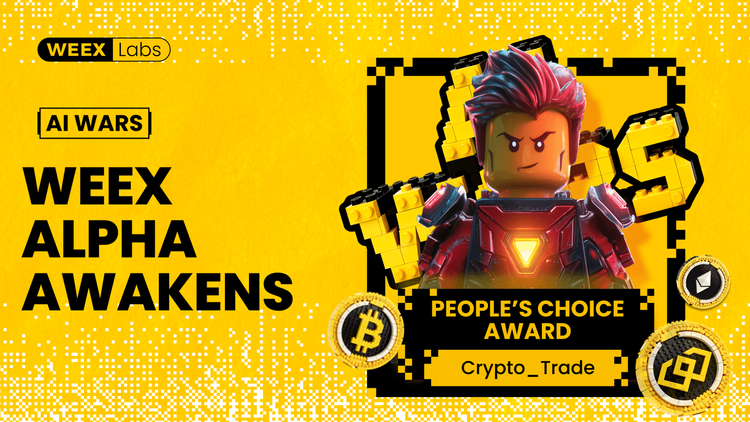
How a Structured AI Crypto Trading Bot Won at the WEEX Hackathon
Crypto_Trade shows how structured inputs and controlled adaptability can build a more stable and reliable AI crypto trading bot within the WEEX AI Trading Hackathon, highlighting a practical path toward scalable AI trading systems.


 App
App